Views: 0 Author: Site Editor Publish Time: 2026-04-11 Origin: Site

Many homeowners wonder if they can create a budget-friendly DIY spa by placing a standalone heating element inside an existing bathroom. It often seems like a clever hack to transform unused space into a makeshift sweat lodge. However, subjecting a standard bathroom to dry heat exceeding 150°F is functionally destructive and highly unsafe. Without dedicated structural modifications, extreme temperatures will quickly ruin standard building materials.
We see this mistake frequently. It always leads to severe safety hazards and expensive room repairs. This definitive guide will show you how to properly integrate a wellness space into your bathroom remodel. We will help you transition away from dangerous DIY methods toward compliant custom builds and safe plug-and-play infrared solutions. You will learn exactly what works, what fails, and how to choose the right approach for your home.
Directly heating an unmodified bathroom will melt plumbing seals, release toxic VOCs from paint, and cause deep structural rot.
A traditional sauna heater requires a built-in "room-within-a-room" with a specialized foil vapor barrier, cedar lining, and dedicated ventilation.
For small footprints (under 50 sq. ft.), a pre-built infrared unit is the most viable, low-impact solution, often running on standard 120V power.
Proper electrical capacity (typically a dedicated 240V circuit for traditional units) and active mechanical exhaust (50–80 CFM) are non-negotiable for safety.
You cannot simply place a heat source onto your bathroom tile and call it a day. Standard bathrooms use materials designed for room-temperature moisture. They are completely unequipped to handle extreme dry heat. Modifying a room through sheer temperature alone creates immense structural risks.
Prolonged heat interacts poorly with standard bathroom plumbing fixtures. Plumbers often encounter catastrophic subfloor leaks caused by DIY heat experiments. Standard toilets sit on wax rings. These rings maintain a watertight seal between the porcelain and your drain pipe. When room temperatures exceed 150°F, this wax easily melts. The seal breaks, allowing raw sewage and water to seep directly into your subfloor.
Modern building materials contain chemicals meant to remain stable at normal living temperatures. Standard drywall, bathroom caulking, and latex paint are not rated for 150°F to 200°F. Baking these materials forces them to break down. They will release harmful Volatile Organic Compounds (VOCs) directly into the air you breathe. Inhaling these toxic fumes completely negates any health benefits you hoped to achieve.
Extreme thermal cycling guarantees long-term structural decay. Heating a room without a specialized thermal barrier drives condensation deep into wall cavities. When hot air hits the cooler drywall, moisture forms instantly. Over time, this trapped moisture feeds hidden black mold. It rots wooden studs from the inside out. You will eventually face a complete structural tear-down.
Common Mistakes to Avoid:
Using standard plastic tarps to contain heat (they will melt).
Placing heating units near uncovered acrylic bathtubs.
Ignoring the gap under the bathroom door, assuming heat stays put.
Relying on standard latex paint to act as a moisture barrier.
If you want genuine, high-temperature heat, you need a different strategy. You must physically separate the hot zone from the rest of the bathroom.
Professional builders frame an isolated thermal envelope. You are essentially building a specialized wooden box inside your existing bathroom. This containment strategy prevents heat from escaping into vulnerable areas. It protects your plumbing, drywall, and everyday bathroom fixtures from direct exposure to an electric sauna heater.
A successful internal build requires highly specific materials. Do not substitute these elements.
Vapor Barrier: You must install a one-sided aluminum foil vapor barrier. The shiny side must face inward to reflect heat back into the room. Never use standard plastic poly-barriers. High heat will quickly melt standard plastic, releasing toxic fumes and ruining the moisture seal.
Air Gap (Strapping): You cannot nail wood paneling directly against the foil barrier. You need an air gap behind the wood paneling. Install vertical wooden strips, known as strapping, over the foil. This gap allows your expensive cedar timber to breathe. Proper airflow prevents trapped moisture and prevents the wood from rotting over time.
Hardware: Heat and humidity cause standard nails to corrode. You must specify the use of stainless steel or concealed fasteners. Cheap iron nails will rust. This rust bleeds down your beautiful cedar panels, leaving ugly black streaks.
Choosing the right wattage ensures efficient heating. Industry professionals use a simple baseline calculation known as the "Rule of 200." You calculate the room volume and multiply it by a set factor to determine needed wattage.
Calculation Formula: (Length × Width × Height in feet) × 200 = Required Wattage.
Room Dimensions (L x W x H) | Total Volume (Cubic Feet) | Recommended Wattage | Typical Kilowatt Rating |
|---|---|---|---|
4' x 4' x 7' | 112 | 22,400 Watts | ~3.0 kW - 4.5 kW |
5' x 5' x 7' | 175 | 35,000 Watts | ~4.5 kW - 6.0 kW |
6' x 6' x 7' | 252 | 50,400 Watts | ~6.0 kW - 8.0 kW |
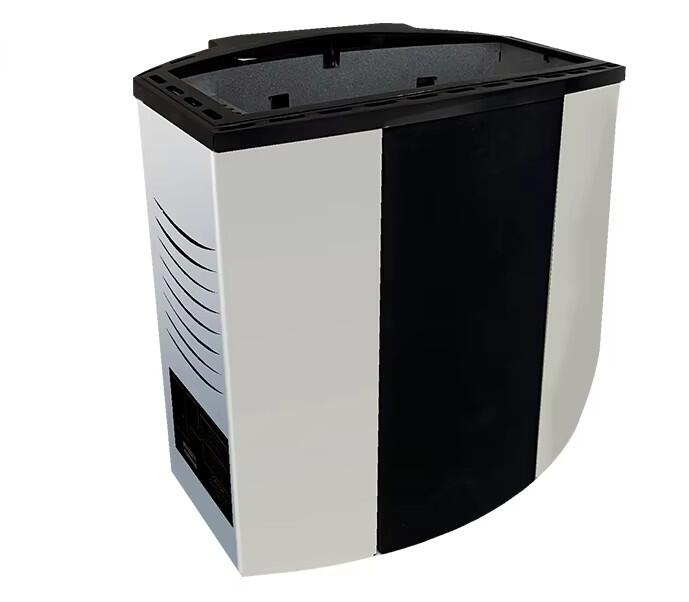
Not every bathroom can accommodate a custom wood framing project. If you lack space, pre-built infrared (IR) solutions offer an excellent alternative. They require minimal construction and carry far less risk.
Infrared technology operates differently from traditional setups. IR units heat your body directly using light waves. They do not superheat the surrounding air. Because the ambient room temperature remains lower (usually around 120°F to 150°F), they drastically reduce the risk to surrounding drywall and fixtures. Your bathroom faces minimal thermal stress.
Pre-fabricated IR cabins fit perfectly into tight floor plans. Compact one-person cabins require very little square footage. You can often squeeze one into a tiny 36" x 36" footprint. This compact size fits easily into the space of a standard bathtub alcove. You can also place them in an unused bathroom corner without disrupting the main traffic flow.
Modern manufacturers now offer ultra-compact, dual-purpose wet/dry zones. You can purchase IR glass panels designed for direct installation inside shower enclosures. These specialized units feature waterproof housings. They allow you to turn a standard walk-in shower into a daily heat therapy zone. This integration saves massive amounts of space while delivering a premium experience.
Safety heavily depends on proper utilities. You cannot plug high-draw appliances into standard bathroom outlets. You also cannot rely on a cracked window for airflow.
You must respect electrical limits. Standard bathrooms feature 120V/15A circuits. These standard outlets are usually sufficient for many small 1-2 person infrared kits. They simply plug into the wall.
However, traditional setups demand significant power. You will need a heavy-duty 240V/30-50A dedicated circuit to run a proper sauna heater. You cannot use existing bathroom wiring for this. Emphasize the necessity of hardwiring by a licensed electrician. Attempting to wire high-kilowatt equipment yourself risks catastrophic house fires.
Heat generates sweat, and traditional models use steam. Passive bathroom vents are completely insufficient to handle this moisture load. The main bathroom itself needs a mechanical exhaust fan rated for at least 50–80 CFM. This fan must vent directly to the outside exterior of your home, never into an attic.
Inside the actual thermal envelope, you need a separate airflow strategy. Builders outline a standard "low intake, high exhaust" model. You place an intake vent low on the wall, usually directly under the heating unit. You place the exhaust vent high on the opposite wall. This draws fresh air over the hot elements and exhausts stale air efficiently.
Choosing the best path depends entirely on your room size, budget, and renovation appetite. Use this framework to narrow down your options.
If your bathroom is under 50 sq. ft., recommend a pre-built infrared kit. These units offer faster heat-up times (typically 10-15 minutes) and require zero custom framing. They act as standalone furniture. They fit limited budgets and tight layouts beautifully.
If your bathroom is over 60 sq. ft., recommend a custom corner build. A larger remodel budget supports a bathtub-replacement layout utilizing a traditional electric unit. This path offers a deeply authentic, high-heat experience.
Feature | Infrared Kit | Traditional Custom Build |
|---|---|---|
Space Needed | < 50 sq. ft. | > 60 sq. ft. |
Prep Needed | Minimal (Flat floor) | Extensive (Framing, Insulation) |
Power Type | Often 120V Plug-in | Dedicated 240V Hardwired |
Ventilation | Standard Room Venting | Active 50-80 CFM Exhaust |
Always check for functional clearances before buying materials. You must maintain 21–24 inches of clear space in front of standard bathroom fixtures like toilets and sinks. Inside the cabin, respect standard seating heights. Recommend building the main bench at 18-20 inches high. The lower footrest should sit 12-16 inches high for optimal leg comfort.
Take these concrete steps before spending any money:
Measure your footprint: Record the exact length, width, and height of your available bathroom corner.
Consult an electrician: Have a professional audit your home's breaker panel capacity to ensure it can handle a new 240V circuit.
Select your system: Choose an IR kit or a traditional unit based on your confirmed electrical capacity and floor space.
You absolutely cannot drop a bare heating element onto bathroom tile. Doing so guarantees structural damage and safety risks. However, integrating a proper wellness space into a bathroom remodel remains highly achievable with the right strategy.
You must adhere to a strict safety-first mandate. Choose an isolated, properly framed custom build for traditional steam and heat. Ensure you use proper vapor barriers and active ventilation. Alternatively, select a pre-fabricated infrared unit for easy, low-impact integration into smaller bathrooms. Both paths offer excellent health benefits when executed correctly.
Measure your space carefully. Browse specific models or pre-built kits based on your confirmed footprint and available electrical capacity. With smart planning, your bathroom can safely become your favorite room in the house.
A: No. A shower can be converted into a low-temperature steam room using a specialized steam generator, but it cannot house a dry heating unit. Dry heaters require specific clearances from water sources. You cannot place dry electrical heating equipment inside wet shower zones due to extreme electrocution risks.
A: Initial installation costs vary widely. You can expect realistic ranges of $2,000 to $7,000 for standard plug-and-play infrared kits. Traditional custom builds require framing, specialized wood, and electrical work. These custom projects typically range from $3,500 to $12,000 or more, depending on materials.
A: Drains are highly recommended for traditional setups. In these rooms, users ladle large amounts of water over hot rocks to create steam. A drain handles excess runoff safely. However, floor drains are completely unnecessary for infrared cabins, as they remain totally dry during operation.


