Views: 0 Author: Site Editor Publish Time: 2026-04-29 Origin: Site

Sourcing free stones from a local riverbed often seems like a clever, cost-effective shortcut for your DIY project. We all appreciate a budget-friendly find. However, nature does not always provide the safest building materials. Using river rocks presents an immediate, evidence-based hazard due to trapped moisture hidden deep inside their structure. Rapid heating forces this moisture to expand violently. This poses a severe risk of sudden explosion and catastrophic hardware damage.
We want to help you avoid these dangerous mistakes. In this guide, we break down the physical risks of using foraged stones. We explain exactly how improper choices destroy internal heating elements over time. Finally, you will receive a clear evaluation framework. This helps you select the correct thermal mass. You can ensure your system remains safe, efficient, and reliable for years to come.
Safety hazard: River rocks contain trapped water inside micro-fissures; when rapidly heated, this water vaporizes and expands, turning the stones into dangerous "fragment missiles."
Hardware protection: Using unapproved, dense, or crumbling stones blocks critical airflow, causing an electric sauna heater to overheat and permanently damage its elements.
The industry standard: Always opt for high-thermal-mass, low-porosity stones like Olivine Diabase or Peridotite, specifically quarried and heat-treated for sauna use.
Maintenance ROI: Replacing deteriorating stones every 3–5 years prevents sand buildup, improving heating efficiency and lowering electricity costs.
Water naturally permeates stones submerged in streambeds. These rocks absorb moisture deep into their porous structures. They sit in water for decades. The moisture does not just rest on the surface. It penetrates microscopic fissures inside the mineral core. You cannot see this water from the outside.
Thermal shock occurs incredibly fast. A sauna heater rapidly brings a wet stone up to 500°C or more. Extreme heat triggers a violent physical reaction. The trapped water vaporizes into steam instantly. Steam requires vastly more physical space than liquid water. It expands rapidly inside the rock. The stone cannot contain the immense pressure. It shatters from the inside out.
Real-world consequences are severe. Community forums frequently share terrifying warnings about this exact danger. River rocks act as "fragment missiles" when they explode. Sharp stone shrapnel shoots across the room at high speeds. This poses serious injury risks to anyone sitting nearby. Flying rock shards also cause significant physical damage. They puncture wooden benches and shatter glass doors easily.
People often suggest a DIY workaround. They try drying river rocks out first. We must address this dangerous misconception.
Myth: Baking river rocks in a home oven removes all moisture and makes them safe.
Fact: Kitchen ovens rarely reach temperatures high enough to draw out deep-core moisture.
Myth: Sun-drying foraged stones stabilizes them for high-heat environments.
Fact: Surface drying ignores the unstable geological structure of sedimentary rock.
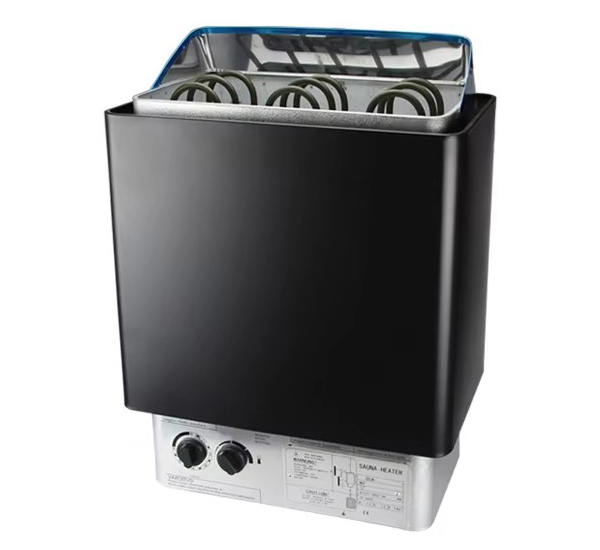
Incorrect stones destroy your equipment. River rocks, sandstone, and crumbling limestone pack too tightly together. They choke the crucial convective airflow inside the unit. Electric elements rely on this constant airflow to transfer heat into the room. Without adequate air movement, the heating elements suffocate and overheat.
Industry laboratory tests reveal alarming efficiency drops. Harvia laboratory findings provide strong benchmark data on this issue. Tightly packed, degrading stones cause severe localized overheating. Under these suffocating conditions, electric heating elements can spike up to 680°C. This extreme temperature accelerates coil burnout significantly. In contrast, properly spaced, high-quality stones maintain excellent airflow. Loose stones keep the delicate elements at a much safer 580°C.
Consider this chart summarizing the lab-tested efficiency impacts of stone arrangement:
Stone Condition & Arrangement | Element Temperature | Airflow Quality | Hardware Impact |
|---|---|---|---|
Old, crumbling stones packed tightly | 680°C | Severely restricted | Accelerated element burnout |
New, dense stones packed tightly | 620°C | Moderate restriction | Reduced operational lifespan |
High-quality stones placed loosely | 580°C | Optimal convection | Maximum element protection |
We must also examine the "sand trap" effect. Poor-quality rocks degrade quickly under intense thermal stress. They break down into coarse sand and gravel over a few months. This debris falls and pools at the bottom of the heater chassis. It forms a dense, suffocating layer over the lower elements. This sand layer absorbs poured water. It stops vaporizing it. You lose your essential steam generation completely. Worse, the wet sand sits directly against the metal housing. It rusts the chassis and ruins your electric sauna heater entirely.
You need the correct thermal mass. The main goal involves maximizing heat retention. You also need strong thermal shock resistance. Good stones endure splashes of cold water without cracking. You must achieve these goals without sacrificing hardware longevity.
We recommend choosing commercial-grade options. Here are the top-tier solutions:
Peridotite & Olivine Diabase: These represent the Finnish gold standard. They offer exceptional heat capacity. Their rough surface crevices hold water perfectly. This specific structure ensures superior steam generation.
Vulcanite: This provides a lightweight, fast-heating option. It works ideally for portable or outdoor tent setups. However, vulcanite proves less suited for long-duration thermal retention.
Heavy-Duty Ceramic Stones: Manufacturers fire these treated options at 1000°C or higher. They deliver incredible durability. Commercial, high-frequency facilities rely on them heavily.
Some materials pose too many risks. We created a definitive "Do Not Buy" list to keep you safe. Review these common mistakes before making a purchase.
Stone Type | Geological Characteristic | Reason to Avoid |
|---|---|---|
Granite | High density, prone to hidden faults | Poor heat shock tolerance (unless heavily aged/seamless). |
Sandstone | Highly porous sedimentary rock | Traps moisture easily and crumbles rapidly under heat. |
Limestone | Soft, calcium-based composition | Breaks down rapidly into caustic, alkaline dust. |
Soapstone | Soft, retains heat but degrades | Can degrade quickly and trap heat unevenly around elements. |
Quartz | Crystalline structure | Splits violently under sudden temperature changes. |
Foraging for stones remains a popular but risky endeavor. If you must forage, you need a strict validation process. We introduce the DIY "hammer test" for scavenged rocks. You take two dry stones. You strike them together forcefully. Observe the reaction closely. If they crack, spark, or crumble, you must discard them immediately. Only incredibly dense, flawless stones survive this blunt impact.
Nature hides invisible contamination risks everywhere. Never scavenge rocks near active train tracks. You should also avoid industrial sites completely. Train track stones often carry asbestos brake dust. Industrial rocks absorb heavy chemical runoff from nearby factories. When you heat these contaminated stones, they release toxic vapor. You end up breathing hazardous chemicals in a confined, heated space. This presents a massive health risk.
We strongly advise against cutting corners here. You likely invested heavily in your setup. Spending $40 to $80 on commercially verified stones makes sense. It acts as a necessary insurance policy. Sustainably sourced sauna stones protect a $1,000+ electric heating unit from premature failure. Buying the right rocks is simply the safest, smartest choice you can make for your health and your wallet.
Arranging stones requires a specific methodology. Think of it as intentionally "losing at Tetris." You must place stones loosely. Air needs to circulate freely from the bottom to the top. Do not wedge stones forcefully between the heating coils. Expanding metal elements bend and break if trapped by tightly packed rocks. Give the coils room to breathe.
You should follow a strict size hierarchy when filling the basket.
Base layer: Use larger stones measuring 4 to 6 inches at the bottom. These absorb core heat effectively. They also shield the delicate heating elements from direct water shock.
Top layer: Place smaller stones measuring 1 to 2 inches at the top. These provide rapid water vaporization when you toss water over them.
Establish a consistent maintenance routine. Visual and functional checks extend the lifespan of your equipment dramatically. Clean your stones annually using warm water and a stiff brush. Discard any cracked or crumbling pieces immediately. Replace the entire batch every 3 to 5 years. Act much sooner if water pools at the bottom or stops flowing down through the rocks.
River rocks represent a definitive safety hazard. They introduce severe operational risks to your equipment. You should never use them in any heating system. The risk of violent explosion and hardware destruction is simply too high.
Approach your build from a hardware-first perspective. The right stones do more than create better steam. They serve as essential thermal regulators. They keep your internal components operating safely and efficiently.
Take action today. Audit your current heater capacity. Use the standard commercial formula: calculate 1 to 1.5 lbs of stone per kilowatt of heater power. Remove any questionable rocks immediately. Finally, procure certified Olivine or Peridotite stones to complete your setup correctly. Your safety and your equipment depend on it.
A: Porous, water-logged stones rank as the worst possible choices. Avoid river rocks, sandstone, and porous fieldstones. These materials trap moisture inside microscopic fissures. When exposed to extreme heat, the trapped water turns to steam and expands. This reaction causes the rocks to explode violently.
A: We advise against it. Some people use lava rocks, but they are highly porous. They break down quickly under repeated thermal shock. Lava rocks also tend to hold onto odors over time. Traditional dense stones, like Olivine Diabase, perform much better and last significantly longer in electric models.
A: The standard commercial ratio relies on your heater's kilowatt output. You generally need 1 to 1.5 pounds of stone per kilowatt (kW) of power. For example, an 8kW heater requires roughly 8 to 12 pounds of appropriately sized stones. Always check the manufacturer's specific manual for optimal performance.
A: Pooling water indicates severe stone degradation. When poor-quality stones break down, they turn into sand and gravel. This debris falls and accumulates at the bottom. It blocks heat transfer and absorbs water. You must empty the unit, clean out the gravel, and replace the old stones immediately.


