Views: 0 Author: Site Editor Publish Time: 2026-05-18 Origin: Site

Public gym signs frequently display bold warnings. They strictly ban water on the heating units. This contradicts centuries of traditional Finnish practices. You might wonder who to believe. Conflicting rules create massive confusion for new owners. Pouring water on a traditional heater generates steam. The Finnish call this steam löyly. This practice is entirely safe. It remains physically necessary for a proper session. The damp heat provides a deeply enveloping sensation. However, the equipment must be engineered for it. The rocks must also reach the correct vaporization temperature first. This guide evaluates equipment compatibility and safety protocols. We assess risk factors like warranty invalidation. You will learn the engineering differences between an electric sauna heater and non-compatible heating units.
Equipment Compatibility: Traditional wood-fired and electric stone heaters are designed for water; infrared panels will critically fail if exposed to water.
The Vaporization Rule: Stones must reach 200–300°C. Water that bypasses cold stones and hits the heating elements directly can cause hardware failure.
Water Quality Imperative: Chlorinated pool water or hard water creates toxic off-gassing and mineral scaling that rapidly degrades heater elements.
Evaluation Criteria: High-performance steam generation requires assessing a heater’s stone capacity, element placement, and material durability.
You must establish clear boundaries on water application. Infrared saunas are strict no-water zones. They use electromagnetic radiation. This radiation heats your body directly. You will find carbon or ceramic panels mounted on the interior walls. These panels contain delicate wiring and sensors. They have zero stone capacity. Introducing water here guarantees short circuits. You risk electrical shock and immediate equipment ruin. Water destroys the infrared emitters instantly.
Traditional electric units are steam-ready. They feature exposed metal heating elements. A dense layer of specialized igneous rocks covers these elements. Engineers design the metal coils specifically to withstand rapid temperature changes. The rocks act as a thermal battery. They absorb the heat from the metal. They then transfer this heat to the liquid. The entire system is engineered for the thermal shock of water conversion. You simply need to apply moisture within the designated capacity limits.
Stones require specific thermal thresholds. Safe steam generation relies on basic thermodynamics. Rocks must reach 200–300°C. At this temperature range, they instantly flash-boil water. The liquid turns into vapor in mere milliseconds. Flooding the elements remains a major risk. If stones are too cool, water pools at the base. It trickles down past the rocks. It exposes the incoloy or steel heating elements to rapid cooling. This thermal stress causes the metal to expand and contract violently. This eventually causes structural cracking.
You should use a reliable validation framework. We call it the "Hiss Test."
Wait 30 to 45 minutes for the room to heat up completely.
Fill a wooden ladle with a tiny amount of liquid.
Drop roughly 80ml or a quarter cup onto the top rock layer.
Listen for an immediate, sharp hiss accompanied by instant steam. This indicates absolute success.
Watch for liquid trickling down into the unit housing. This indicates failure. It requires longer pre-heating.
Never pour massive amounts during the initial test. You must verify the thermal readiness first.
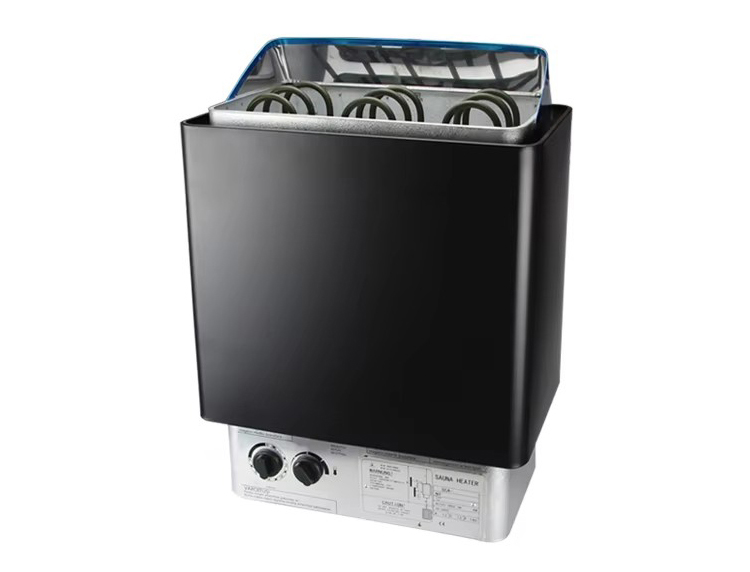
Buyers need clear technical criteria. You must evaluate options before shortlisting a proper sauna heater. High-performance steam generation requires assessing several design factors.
Stone chamber capacity matters immensely. Low-capacity units hold under 20kg of rocks. High-capacity "basket" styles hold over 80kg. Higher rock mass absorbs thermal shock much better. It effectively protects the internal electrical coils from sudden temperature drops. A larger rock mass produces softer, more sustained humidity.
You must also check heating element shielding. Some models weave elements tightly alongside the rocks. Others provide dedicated protective spacing between the metal and the stones. Protected elements generally last longer under heavy steam usage. Material durability dictates lifespan. Look for heavy-gauge stainless steel casings. They resist rust and corrosion perfectly. Frequent moisture cycles will destroy cheaper metals rapidly.
Design Feature | Standard Wall-Mounted Heaters | Tower/Basket Floor Heaters |
|---|---|---|
Stone Capacity | 15kg to 25kg | 80kg to 120kg |
Steam Delivery | Sharp, intense bursts | Smooth, lingering humidity |
Element Shielding | Elements directly touch stones | Often features structural spacing |
Water Tolerance | Requires careful, small pours | Handles larger volumes easily |
Public gym policies often spark buyer skepticism. Gyms place strict bans on adding moisture. Why do commercial facilities prohibit pouring? They face severe risks from constant misuse.
Chlorine Gas Risk: Users frequently pour chemically treated pool water onto the hot rocks. Pool water contains chlorine and chloramines. Heating these chemicals releases noxious chlorine gas into a confined space. It burns the lungs and eyes. It also severely corrodes the stainless steel components.
Liability & Abuse: Patrons often dump liters of liquid simultaneously. This causes extreme ambient heat spikes. The sudden rush of vapor creates severe scalding risks for other occupants. Excessive liquid also floods the electrical housing at the base.
Manufacturers will void warranties under specific failure conditions. They investigate the root cause of broken elements during claims. Warranties become invalid if failures trace back to three common errors.
Direct essential oil application. Pure oils bake a permanent, insulating resin directly onto the elements.
Improper, soft stones. River rocks explode under extreme heat. The flying shrapnel severs the coils.
Heavy mineral deposits. Unfiltered tap water leaves thick calcium layers behind.
You need a safe, step-by-step implementation process. Proper protocol prevents injuries. It also protects your investment.
Water specification is your first priority. You must use clean, filtered, or distilled fresh water. Absolutely zero pool water is allowed. You should also avoid high-iron or hard water sources. Hard water creates rapid mineral scaling.
Volume and pacing control the room climate. Restrict your application to 50–100ml per pour. Always use a traditional long-handled wooden ladle. Steam shoots upwards rapidly upon vaporization. The long handle keeps your hands clear of vertical steam burns. Enforce a 30-to-60-second recovery interval between pours. The rocks need this time to regain their thermal mass. Dumping large volumes too quickly suffocates the heat.
Aromatherapy requires strict adherence to safety protocols. Pure oils are highly flammable. Oils must be heavily diluted in a separate bucket of water. You can also use dedicated drip cups suspended above the rocks. Never drop neat, undiluted oils onto raw stones. It creates a severe fire hazard.
Steam-generating units require consistent lifecycle maintenance. We outline the implementation realities for long-term ownership below. Neglecting these tasks leads to hardware failure.
Quarterly Action (Element Inspection): Wait for the unit to completely cool down. Turn off the breaker for safety. Remove all rocks from the chamber carefully. Vacuum the housing interior thoroughly. This clears out dust, hair, and small rock fragments. Leftover debris causes unpleasant burning odors during operation.
Biannual Action (Stone Washing): Wash the rocks using warm water in a utility sink. Do not use harsh detergents or soaps. Gentle scrubbing removes accumulated hard water scale. Clean surfaces transfer heat much more efficiently. Wait for them to dry completely before replacing them.
Annual Action (Stone Replacement): Perform the physical "tap test" on every rock. Strike two pieces together gently. Discard any pieces crumbling or showing hairline fractures. Replace them immediately with new vulcanite or olivine diabase stones. Degraded rocks pack too tightly together. They restrict crucial airflow. They ultimately suffocate the electrical housing and cause premature burnout.
Pouring water is structurally safe. It is also culturally expected on a traditional heating unit. You simply need to respect the physical limits of the equipment. Always ensure the rocks are hot enough before adding moisture.
Take action to ensure a safe experience.
For existing owners: Check the manufacturer’s manual for specific capacity limits. Verify your exact equipment type before proceeding.
For buyers: Prioritize models offering high stone-to-element ratios. Select a tower design if frequent, dense steam is your primary success criterion.
For routine users: Implement the 80ml hiss test before every session. Make it a standard habit.
A: Yes, unless you live in an area with extremely hard water. Hard water will leave thick mineral deposits behind. This buildup coats the rocks and reduces overall heating efficiency. Clean, filtered water is always optimal for longevity.
A: It will cause immediate electrical failure. The panels are not designed for moisture. Water exposure triggers potential short circuits. It will permanently damage the carbon or ceramic heating panels and void your warranty entirely.
A: This typically indicates dust accumulation directly on the elements. It can also point to cracked stones trapping debris inside the housing. In many cases, it reveals the presence of baked-on essential oils that were not properly diluted.
A: Usually 30 to 45 minutes. The exact time depends on the unit's kilowatt rating and your room size. The rocks must reach optimal vaporization temperatures first. Always perform the small 80ml "hiss test" to confirm readiness.


