Views: 0 Author: Site Editor Publish Time: 2026-04-27 Origin: Site

Designing the perfect sauna layout always introduces a frustrating conflict. You want to maximize valuable bench space in a compact room without sitting so close you singe your knees. Everyone desires spacious, comfortable seating. However, strict safety rules must ultimately dictate your final layout.
Deciding on your proximity to the heat source is not simply about avoiding accidental burns. It directly dictates heat distribution, protects the lifespan of your equipment, and ensures strict fire code compliance. If you place benches improperly, you risk uncomfortable hot spots and dangerous safety hazards.
General industry guidelines provide a helpful starting point for planning your room. However, specific manufacturer clearance requirements will always have the final say. We will explore standard safe distances, the hidden risks of tight layouts, and clever ways to safely shrink those required gaps.
Seat Clearance: The standard safe distance from a traditional electric sauna heater to a wooden bench is generally 12 to 20 inches (30–50 cm), depending on kilowatt (kW) output.
Equipment Risks: Placing benches or walls too close doesn't just risk wood carbonization; it frequently triggers the heater’s high-temperature limit switch, shutting down your session prematurely.
Space Optimization: You can legally and safely reduce clearance requirements by utilizing approved non-combustible materials (like cement board) or brand-specific metal heat shields.
Technology Differences: Wood-burning stoves require significantly more front clearance for fueling, while infrared panels require direct, close proximity to be effective.
Every sauna build starts with understanding basic spatial parameters. You need enough room for hot air to rise, circulate, and heat the cabin evenly. Sitting right on top of your electric sauna heater disrupts this airflow. It also exposes bathers to intense, localized radiant heat.
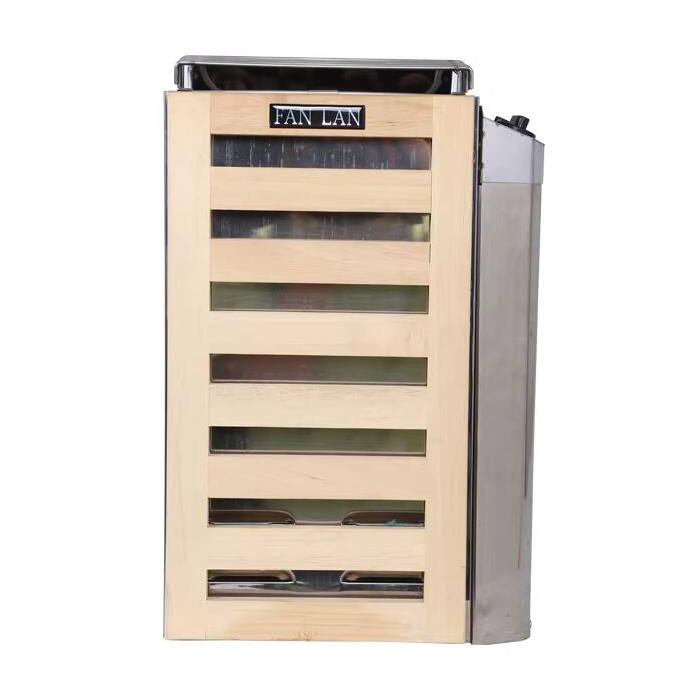
Industry standards mandate a 12-inch (30 cm) minimum distance between the heater body and any seating area. This gap protects bathers from accidental contact. It also prevents combustible bench wood from overheating. For optimum user comfort, experts recommend a 20-inch (50 cm) gap. Combine this 20-inch distance with a sturdy wooden safety guard. This configuration represents the gold standard for sauna layout design. It keeps knees safe from radiant harshness while allowing deep, relaxing breaths of steam.
Clearances extend beyond just the benches. Walls and ceilings face constant thermal stress. Standard units require a minimum 4-inch (10 cm) gap from combustible wood walls. If you install a more powerful unit exceeding 9kW, this wall clearance often scales up to 6 or 8 inches. Vertical clearance is even more critical. Heat naturally travels upward. You must maintain a strict 35- to 47-inch (90–120 cm) gap between the top of the unit and the ceiling.
Clearance Zone | Minimum Requirement | Best Practice / Large Heaters (>9kW) |
|---|---|---|
To Seats & Benches | 12 inches (30 cm) | 20 inches (50 cm) + Wooden Guard |
To Wooden Walls | 4 inches (10 cm) | 6 - 8 inches (15 - 20 cm) |
To Ceiling (Vertical) | 35 inches (90 cm) | 47 inches (120 cm) |
To Floor | Varies by model | 6 - 7 inches (15 - 18 cm) |
Common Mistake: Never assume these general baseline numbers override your specific product manual. Local building codes and home insurance policies strictly require adherence to the exact UL or CE listed manual for the unit you purchased. Failing to meet these printed specifications can void your warranty. Worse, it could leave you liable in the event of a fire.
Not all heat sources operate the same way. The type of energy your unit produces drastically changes where you can safely sit.
Wood-burning stoves generate intense, unmitigated radiant heat. Their surface temperatures vastly exceed those of electric models. Because of this extreme heat output, wood stoves demand aggressive clearance zones.
Front Clearance: You must maintain at least 20 inches (50 cm) of clear space directly in front of the stove. This space is strictly necessary for safely opening the door, loading firewood, and managing ash.
Vertical Clearance: Wood stoves push massive amounts of heat straight up. They require much stricter vertical clearances. You must leave a minimum of 47 inches (1.2 meters) between the stove top and the ceiling. The exhaust flue pipe also requires specialized insulated shielding to prevent roof fires.
Infrared technology completely flips the proximity rules. Far-infrared panels utilize specific wavelengths (5.6-15 µm). These wavelengths heat the body directly rather than warming the ambient cabin air. Therefore, you must sit very close to them.
Close Proximity Needed: Users often sit within just a few inches of infrared panels to properly absorb the therapeutic heat. If you sit too far away, the energy dissipates.
The Surround Strategy: Instead of distancing the user, infrared design focuses on surrounding the user. High-quality layouts position panels on the front, back, sides, and near the calves. This 360-degree approach prevents extreme hot or cold spots across the body.
Many ambitious DIY builders try to cheat the clearance numbers. They shave off a few inches to fit an extra seat. This decision creates cascading failures inside the sauna environment.
The "Over-Temp" Shutdown Loop: This is the most frequent DIY planning failure. Every modern unit features a high-temperature limit switch. If a bench or a custom wall restricts natural airflow too close to the unit, heat becomes trapped. This localized heat buildup will repeatedly trip the high-temp limit sensor. Your unit will preemptively shut off long before the room reaches your target temperature. You will constantly reset the breaker instead of sweating.
Wood Carbonization: Wood degrades when exposed to constant, intense heat. This process is called carbonization. Radiant heat has a cumulative effect on softwoods like cedar or hemlock. Any wood placed inside the minimum clearance zone will aggressively dry out. Over time, it will darken, become brittle, and eventually transform into a severe fire hazard. A dark, scorched wall behind your unit is a clear warning sign.
Thermal Discomfort (The "Fried/Frozen" Effect): Proper sauna bathing relies on convection. Hot air rises, travels across the ceiling, drops down the opposite wall, and returns along the floor. Sitting too close to a highly localized heat source disrupts this natural convection loop. It blocks the air flow, leaving the user with scorched legs but a surprisingly cold upper body.
What happens when your room is simply too small for standard clearances? You do not have to abandon your project. You can legally and safely reduce clearance requirements using tested materials.
The most reliable solution for compact spaces is an official manufacturer heat shield. Many premium brands offer specialized metal protective sheaths designed exclusively for their units. These shields physically deflect radiant heat away from nearby wood.
Using an official shield allows users to safely cut the required clearance distance by up to 50%. Because the manufacturer tested and certified the shield alongside the unit, building inspectors will approve the tighter layout. It offers peace of mind while clawing back precious bench space.
You can also alter the compliance math by swapping out the wall materials near your heat source. Replacing combustible wood siding with non-combustible materials drastically lowers the required gap.
Approved non-combustible materials typically include:
Cement board (e.g., HardieBacker)
Specific high-heat ceramic tiles
Exposed brick or natural stone
Surface Type | Typical Wall Clearance | Space Saved |
|---|---|---|
Standard Wood Paneling (Combustible) | 4 to 6 inches | Baseline |
Cement Board / Tile (Non-Combustible) | 2 to 3 inches | Up to 50% reduction |
Official Metal Heat Shield | 1.5 to 2 inches | Up to 60% reduction |
Critical Installation Caveat: You cannot simply screw a metal sheet or cement board directly onto wooden wall studs. Heat transfers directly through solid materials via thermal bridging. Metal or cement shields attached to walls must have an air gap behind them. Installers usually achieve this by mounting the shield on 1- or 2-inch ceramic or metal spacers. This vital air gap prevents the underlying wooden framing from quietly overheating and catching fire.
Choosing where to mount your sauna heater impacts how many people can sit comfortably. Different room shapes demand different placement strategies.
Placing the unit in a corner is highly popular for standard square rooms. This configuration frees up the primary, longer walls for continuous seating. It naturally accommodates L-shaped bench designs. Corner mounting allows for smooth, predictable convection loops as heat travels diagonally across the ceiling. It also requires minimal guard railing, since two sides are already protected by the room's walls.
Best Practice: Keep the lower air intake vent directly beneath the unit on one wall, and place the exhaust vent high on the opposite diagonal wall to maximize fresh air exchange.
If you have a wider, rectangular cabin, centering the unit on a long wall works beautifully. Center placement provides the most even steam distribution (known as löyly). When you pour water over the hot stones, steam blooms upward and spreads evenly to seats on both ends of the room.
While it creates a superior thermal environment, it does have a drawback. It requires bisecting your lower bench layout. You will likely need two separate lower step-benches instead of one continuous bottom tier.
Hidden under-bench layouts represent the ultimate space-saving tactic. Popular in commercial spas, these designs conceal the unit entirely. The heat rises smoothly through wide gaps in the bench slats. This leaves the entire floor plan open for movement and seating.
Warning: You face strict requirements for specialized equipment here. Standard wall units cannot ever be repurposed for under-bench use. They are not engineered for enclosed spaces. Installing a standard unit beneath a bench guarantees restricted airflow, tripped sensors, and an extreme fire risk. You must purchase a unit explicitly certified by the manufacturer for hidden or under-bench installation.
Balancing room capacity with seating comfort requires careful planning. Do not let the desire for a deeper bench compromise your safety. Consider these final action steps before starting construction:
Prioritize your equipment manual's clearance tables over aesthetic desires. The printed numbers are non-negotiable for fire safety.
Evaluate your room's true heating volume before committing to a layout. Account for heat sinks like glass doors or windows. Remember that 10 square feet of glass equals roughly 50 cubic feet of additional heating load.
Do not guess your layout dimensions. Download the official installation manual of your shortlisted unit to map out exact clearances before framing a single wall.
Invest in an approved heat shield if your room size absolutely demands tighter seating proximity.
A: No, you cannot place it flush against the unit. Even protective safety rails must strictly adhere to minimum combustible clearance rules. Depending on your specific model, this typically requires a 2-inch to 4-inch gap between the hot metal casing and the inner edge of the wooden rail.
A: A higher thermal mass of stones certainly softens the harshness of the radiant heat. It makes sitting nearby feel much more comfortable. However, adding extra stones does not legally or safely reduce the required fire safety clearances outlined in your manual.
A: Modern units feature a built-in high-limit temperature sensor. If you sit too close, or if a bench blocks the front of the unit, you restrict natural airflow. The sensor detects this dangerous, localized heat buildup and preemptively cuts power to prevent a fire.


