
Views: 0 Author: Site Editor Publish Time: 2026-05-08 Origin: Site


Stepping into a perfectly heated room instantly melts away daily stress. But achieving this soothing environment involves much more than simply plugging in a hot metal box. Selecting the right sauna heater requires looking past visual aesthetics. You must understand underlying thermal mechanics, electrical demands, and critical safety engineering. If you install a mismatched unit, you risk inefficient heating, uncomfortable temperature gaps, or premature component failure. A truly reliable unit delivers consistent heat transfer, safely manages steam generation, and matches your specific spatial dimensions. It also carries verified electrical certifications alongside accessible replacement parts. This guide breaks down the internal mechanics of standard models. We detail how specific components impact daily performance, overall safety, and electrical efficiency to support your final evaluation.
Traditional heaters rely on convection (heating air to heat the body), while infrared options use radiant heat (direct tissue heating).
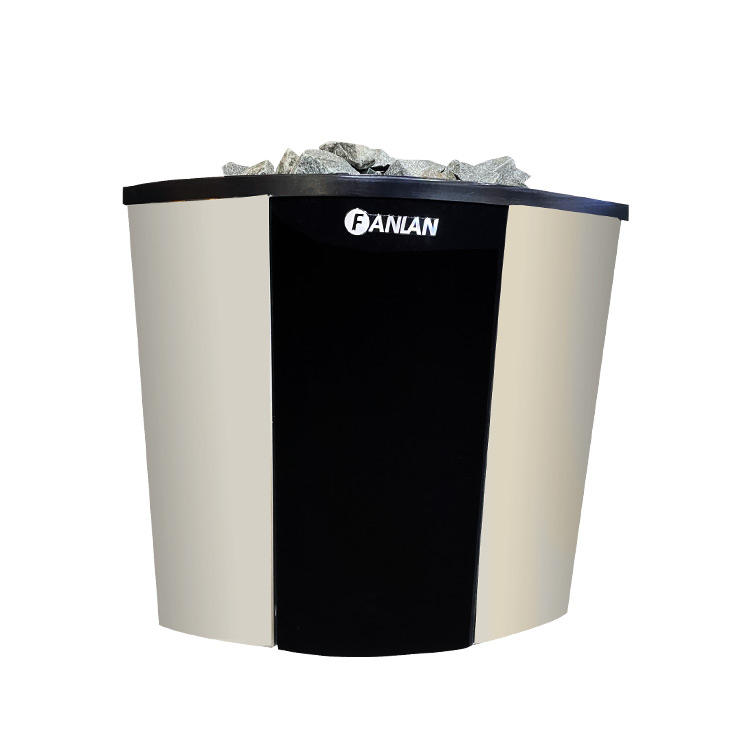
An electric sauna heater uses ceramic-insulated elements shielded by thermal rocks, allowing safe steam generation ("Löyly") without electrical shorting.
Proper evaluation requires matching spatial volume (cubic footage) to kilowatt (kW) output and verifying electrical phase compatibility (240V residential vs. 208V commercial).
Long-term performance relies heavily on proper implementation: correct rock density and unblocked ventilation are critical to preventing heating element burnout.
Traditional units operate as powerful thermal engines. They follow fundamental laws of thermodynamics to warm your environment. The heater warms the surrounding air immediately adjacent to its core. This heated air becomes less dense and naturally rises toward the ceiling. As it ascends, it displaces cooler air. The cooler air gets pushed downward toward the floor. The heater then draws this cooler air in and warms it again. This process creates a continuous circulatory loop known as convection. Over time, this constant movement elevates the ambient room temperature to a traditional range of 160°F to 190°F. The heavy reliance on airflow explains why proper vent placement remains critical for these systems.
Infrared panels offer a stark contrast to traditional convection models. They do not prioritize heating the ambient air. Instead, they emit specific wavelengths of electromagnetic radiation. This radiant energy travels through the air invisibly until it strikes a solid object. It penetrates human tissue directly to generate profound warmth from within. Consequently, the ambient air inside an infrared room remains relatively cool, often hovering between 120°F and 140°F. This makes radiant heat highly desirable for individuals who struggle to breathe comfortably in intensely hot, traditional environments. You sweat profusely without enduring blistering air temperatures.
Manufacturers now offer advanced systems combining both convection and radiant methods. These hybrid units deliver exceptional versatility. You can run the convection engine for an intense, traditional sweat session. Alternatively, you can activate only the infrared panels for gentle, deep-tissue therapy. You might even use both simultaneously for rapid pre-heating. However, you must weigh these benefits against reality. Hybrid systems demand a significantly higher initial hardware investment. They also require more complex electrical routing during installation.
The core engine relies entirely on electrical resistance. When electrical current flows into the unit, it encounters high resistance within specialized metal alloys. This friction generates intense heat. Premium units utilize heavy-duty, scalable elements designed specifically to withstand brutal conditions. These internal metals face extreme thermal expansion and contraction cycles every single day. If you choose a low-quality unit, the metal elements will warp, become brittle, and eventually snap under the stress.
Many first-time users mistakenly view the rocks as mere decorative touches. In reality, they serve a vital functional role. Dense volcanic rocks act as the primary thermal mass for the entire room. They absorb massive amounts of heat directly from the metal elements. They store this energy and release it steadily. This stabilization prevents drastic temperature fluctuations when the door opens. Furthermore, they provide the necessary, porous surface area for instantaneous steam vaporization. Without them, generating steam safely becomes physically impossible.
Modern heaters incorporate redundant safety brains to prevent catastrophic failure. High-limit switches and precise temperature sensors monitor the environment constantly. They watch for thermal runaway. If the ambient temperature at the ceiling exceeds safe parameters—typically around 194°F in North America—the safety relay automatically severs power to the resistors. This mechanism guarantees that a forgotten heater will never ignite the surrounding wooden structure.
The user interface dictates how you interact with the heat. You generally choose between two primary control types:
Mechanical Dials: These standard controllers sit directly on the lower base of the unit. They usually feature a basic 60-minute active timer and a 1-to-8-hour delay function. They are robust, simple, and immune to minor moisture exposure.
Digital Controllers: Commercial and premium residential units separate the controller from the heat source. Digital panels mount on the exterior wall. They offer precise temperature readouts, integrated lighting controls, and programmable 24-hour cycle management. High-traffic facilities rely heavily on these digital systems to automate their daily schedules.
Component | Primary Function | Impact on Performance |
|---|---|---|
Resistor Elements | Convert electrical current into raw thermal energy. | Determines the speed of room heating and overall longevity of the unit. |
Igneous Stones | Absorb heat and provide surface area for water. | Stabilizes room temperature and enables safe steam creation. |
High-Limit Switch | Monitors maximum allowable ceiling temperatures. | Prevents thermal runaway and structural fire hazards. |
External Controller | Manages active running times and target temperatures. | Improves user convenience and energy management. |
Consumers frequently express deep skepticism regarding traditional sauna practices. Pouring water directly over a high-voltage electrical appliance contradicts every basic safety rule we learn from childhood. People naturally fear electrocution. However, centuries of engineering refinement have solved this exact problem. Modern units handle moisture through clever applications of physics and material science.
The secret lies within the tubular heating elements. The live electrical current never touches the outer metal shell. A highly specialized ceramic powder completely encases the internal wiring. This ceramic layer possesses unique properties. It is highly thermally conductive, meaning it pushes heat outward rapidly. Simultaneously, it acts as a perfect electrical insulator. Even if water drips directly onto the outer metal casing of an electric sauna heater, the moisture cannot interact with the live current hidden deep inside. Water simply never touches live wiring.
Properly heated stones act as an essential physical buffer between the water and the metal elements. When you ladle water onto properly stacked rocks, physics takes over. The water hits the massive thermal storage and instantly flashes into vapor. This phase change creates the traditional "Löyly" steam wave. Importantly, steam gas is non-conductive. It carries heat to your skin without carrying electrical risk. The stones absorb the violent thermal shock, protecting the delicate elements beneath.
Despite these safeguards, poor maintenance introduces real danger. If you arrange the rocks improperly, you leave the metal heating elements exposed. Pouring cold water directly onto bare, red-hot metal bypasses the stone buffer entirely. The metal experiences brutal thermal shock. It contracts violently. Over time, this leads to accelerated metal fatigue. The tubular casing will crack. Once the outer casing cracks, moisture can finally reach the internal components. This catastrophic failure will trip your breaker and ruin the machine.
Sizing your equipment correctly requires precise calculation. You must match the kilowatt output directly to the interior spatial volume. The baseline evaluation heuristic dictates one kilowatt of power for every 45 to 50 cubic feet of highly insulated interior space. You face severe consequences if you ignore this math. Underpowering the room means the equipment runs constantly. It struggles to reach the target temperature, driving up your energy bills. Conversely, overpowering the space causes the sensors to trip rapidly. The unit cycles on and off too frequently. This rapid cycling dramatically shortens the lifespan of the internal resistors.
Sauna Volume (Cubic Feet) | Recommended Heater Size (kW) | Typical Breaker Requirement |
|---|---|---|
100 - 150 | 4.5 kW | 30 Amp |
150 - 250 | 6.0 kW | 40 Amp |
250 - 400 | 8.0 kW | 40 or 50 Amp |
400 - 500 | 10.0 kW | 50 or 60 Amp |
The baseline chart assumes you built a perfectly insulated box indoors. Reality often dictates otherwise. Environmental variables force you to modify your calculations. If you install the room outdoors in a cold climate, the ambient starting temperature is much lower. If your design utilizes extensive uninsulated materials—such as large glass doors, rustic stone walls, or uninsulated concrete floors—heat escapes rapidly. In these scenarios, you must scale up the unit's capacity by at least one full kW tier. Failing to adjust for environmental modifiers guarantees a permanently lukewarm experience.
Electricity arrives at buildings in different formats. You must map your purchase to your specific infrastructure. Residential homes generally operate on 240V, single-phase power. You will need a licensed electrician to install a dedicated hardwired circuit and a matching breaker. Commercial gym setups and large hospitality venues operate differently. They typically utilize 208V, three-phase power. An electric unit designed for a residential single-phase panel will not function correctly in a commercial three-phase building, and vice versa. Check your electrical panel before browsing catalogs.
The wellness market suffers from an influx of inexpensive, white-labeled imports. You must exercise strict due diligence. Avoid units lacking clear UL (Underwriters Laboratories) or CE (Conformité Européenne) electrical certifications. Without these stamps, you introduce a significant fire hazard into your property. Furthermore, verify the supply chain. Heating elements inevitably degrade after years of use. If you buy a generic import, you will rarely find replacement parts later. Prioritize established brands holding robust domestic inventories.
Even the finest hardware fails if you implement it poorly. The most common user error involves stacking the thermal mass. Many owners pack the sauna rocks incredibly tightly, trying to squeeze every last stone into the basket. This restricts vital internal airflow. The convection engine relies on cold air passing effortlessly through the porous rock bed. This passing air extracts heat from the lower elements and carries it upward. Choked elements cannot shed their heat. They will overheat rapidly, triggering premature safety shut-offs. Always place larger stones loosely at the bottom and smaller stones gently at the top.
Another prevalent myth involves sealing the room. People believe closing all vents traps the heat and improves efficiency. This represents a fundamental misunderstanding of thermodynamics. Proper cross-ventilation actively fuels the convection loop. You need an intake vent positioned low, directly beneath the heat source. You also need an exhaust vent positioned high on the opposite wall. Without this cross-draft, hot air stagnates at the ceiling around the temperature sensor. The sensor believes the room is completely hot and shuts the machine down. Meanwhile, the dense cold air remains trapped near the floor, leaving your feet freezing.
Preheat fully: Allow the room 30 to 45 minutes to reach equilibrium before entering.
Maintain ventilation: Keep the lower intake and upper exhaust vents partially open during the entire session.
Inspect elements: Once a year, remove all rocks to vacuum out dust and inspect the metal tubes for stress cracks.
Replace fractured stones: Rocks break down over time. Discard any crumbling stones, as their debris blocks vital airflow pathways.
You can use a simple, practical test to determine optimal operational readiness. Wait 30 minutes after turning the dial. Drop a very small amount of water onto the top layer of rocks. Observe the reaction carefully. If the water instantly vaporizes with a sharp hiss, the core has reached target capacity. If the water sits on the rocks, pools, and takes longer than 6 to 8 seconds to boil off, you must wait. The thermal mass is not fully preheated. Adding heavy ladles of water too early simply floods the basket and risks damaging the cold metal below.
Selecting the ideal hardware demands careful consideration of physical realities. Choosing a successful unit remains an exercise in matching interior volume, electrical phase capacity, and intended daily usage frequency. You cannot force a small residential unit to perform commercial duties, nor can you ignore the basic laws of airflow and convection.
To finalize your project successfully, take specific action. First, calculate your exact cubic space, factoring in heavy glass panels or cold outdoor temperatures. Second, consult a licensed electrician to verify your breaker panel capacity and voltage phase. Finally, prioritize verified brands offering extensive domestic replacement parts. By respecting the underlying mechanics, you guarantee a safe, deeply therapeutic environment for decades.
A: It typically takes 30 to 45 minutes for modern electric units to reach optimal target temperatures. However, if your room is located outdoors in a very cold climate, or if you use extensive uninsulated glass, preheating can take up to an hour.
A: No. You can only pour water on traditional rock-bearing heaters specifically designed for it. Pouring water on infrared panels, bare electrical coils, or wood stoves lacking a dedicated rock basket is highly dangerous and damages the equipment.
A: This is usually a symptom of blocked airflow. Overly dense rock packing traps heat near the elements. Alternatively, an improperly located temperature sensor or completely closed ventilation vents will trap stagnant hot air at the ceiling, instantly triggering the high-limit safety switch.


