Views: 0 Author: Site Editor Publish Time: 2026-04-15 Origin: Site

Investing in a home wellness sanctuary brings tremendous physical benefits to your daily routine. Many homeowners dream of having a dedicated space for heat therapy. Yet, many buyers hesitate right before pulling the trigger on a purchase. They fear exorbitant monthly energy bills will inevitably follow the high initial installation cost. They picture their utility meter spinning out of control.
Fortunately, modern saunas are far from energy black holes. Their financial impact remains highly predictable across various climates. You do not need a massive budget to enjoy daily heat sessions. In fact, their consumption mathematically mirrors running standard heavy household appliances for very short bursts.
True energy use ultimately depends on the specific heating technology, your room's cubic volume, and your daily operational habits. Below, we will break down exactly how much power these units draw. We will examine the exact math behind different system types. You will learn simple operational tricks to keep your monthly utility bills perfectly manageable.
Low actual run-time: An electric sauna heater only draws maximum power during the 30–45 minute pre-heat phase; afterward, it cycles on and off to maintain temperature.
Manageable monthly costs: Based on national average electricity rates ($0.15/kWh), typical traditional saunas cost between $15–$30 per month, while infrared models cost $5–$15 per month.
The sizing paradox: Buying an undersized heater to "save energy" actually increases long-term costs by forcing the unit into a continuous, inefficient 100% duty cycle.
Many buyers misunderstand how an electric sauna heater actually operates in real-world conditions. You might look at the technical specifications of a 6kW unit and feel intimidated. People often assume it pulls 6,000 watts continuously for the entire duration of a session. This assumption is simply incorrect from a thermodynamic standpoint.
The device only draws peak power during the initial preheat phase. It needs this massive energy surge to warm the rocks and ambient air. Once the room reaches your target temperature, the built-in thermostat engages cycle mode. The heating elements then turn off and on intermittently. They only use a fraction of their maximum capacity to maintain steady heat. This intermittent cycling significantly drops continuous energy consumption.
Let's compare this power draw to everyday household items. Contextualizing the wattage eliminates psychological friction regarding electricity usage. An infrared model typically draws 1.5kW to 2kW of power. This equals the energy demand of a standard blow dryer or a small space heater. Conversely, a traditional sauna heater draws between 6kW and 8kW. This equates to running a central AC unit or baking a large meal in an electric oven. However, you strictly cap this usage at a 45 to 60-minute session. You do not run it continuously like a kitchen refrigerator.
Furthermore, you must consider the energy recovery offset. Indoor sauna heat does not disappear into a void. In winter, residual warmth naturally escapes the wooden cabin. It acts as a secondary heat source for your surrounding home environment. This effectively offsets your primary HVAC heating usage. Additionally, a sweaty session frequently replaces long, high-energy hot water showers. Reducing your daily water heater runtime significantly balances out the overall electrical consumption profile.
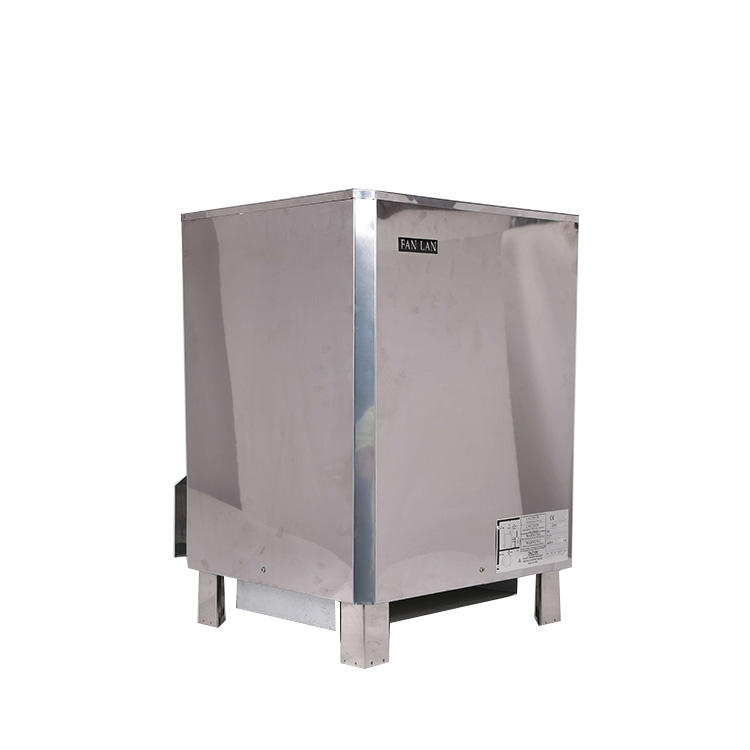
To remove the mystery from your monthly utility bills, we can establish a transparent calculation sandbox. The formula is surprisingly straightforward for any homeowner to use. You multiply kilowatts by hours of use. Then, multiply this figure by your local electricity rate. This calculation reveals your exact cost per session.
A standard traditional unit requires adequate time to warm the dense stone mass. Let us assume a 45-minute preheat followed by a 30-minute bathing session. This creates 1.25 hours of total runtime per session. Factoring in the steady-state cycle mentioned earlier, you do not use the full wattage constantly. You consume approximately 6 to 8 kWh per complete session.
At a national average electricity rate of $0.15/kWh, the session costs roughly $0.90 to $1.20. If you enjoy this relaxing ritual four times a week, your math is simple. Your monthly cost hovers comfortably around $15 to $20.
Infrared models heat your body directly rather than warming the surrounding air mass. They demand a much shorter 15-minute preheat sequence. Add a 30-minute session, and you hit 0.75 hours of total runtime.
This specialized setup consumes approximately 1.5 kWh per session. Using the same $0.15/kWh national rate, your cost is merely $0.20 to $0.25 per use. Operating it four times a week yields an incredibly low monthly cost of $3 to $5.
Energy prices fluctuate drastically based on your geographical location and local utility providers. Buyers in high-tier energy states like California or New York face steeper baselines. European markets dealing with peak grid pricing experience similar hurdles.
In these zones, you must adjust the sandbox multiplier accordingly. Rates can easily exceed $0.35 per kWh during peak hours. In these scenarios, selecting highly efficient equipment becomes absolutely critical. You might also want to schedule your sessions during off-peak billing hours to maximize savings.
Sauna Type | Estimated Power | Avg. kWh per Session | Cost per Session ($0.15/kWh) | Estimated Monthly Cost (4x/Week) |
|---|---|---|---|---|
Infrared | 1.5kW - 2kW | 1.5 kWh | $0.20 - $0.25 | $3.00 - $5.00 |
Traditional (Small/Medium) | 6kW - 8kW | 6.0 - 8.0 kWh | $0.90 - $1.20 | $15.00 - $20.00 |
Traditional (Large) | 9kW+ | 9.0 - 12.0 kWh | $1.35 - $1.80 | $21.00 - $28.00 |
Buying a smaller unit to save electricity seems perfectly logical at first glance. However, this is a catastrophic evaluation error in the realm of sauna building. We call this phenomenon the sizing paradox.
An undersized unit struggles constantly against ambient heat loss within the cabin. It simply cannot reach the thermostat cutoff point. This forces the equipment into a continuous 100% duty cycle. Operating at maximum capacity non-stop wastes massive amounts of electricity. It completely defeats the purpose of buying a lower-wattage model.
Furthermore, this constant strain severely damages the internal components. It burns out the stainless steel heating elements prematurely. Replacing these broken elements will cost far more than any perceived electricity savings.
To avoid this expensive trap, you must follow proper volume-to-power ratios. The industry standard baseline metric is quite reliable for standard home builds. You generally need 1kW of heating power for every 45 cubic feet of well-insulated interior space.
Insulation variables heavily disrupt this standard mathematical formula. Many modern designs incorporate large glass doors or exterior windows for aesthetic purposes. Some cabins feature uninsulated brick, bare concrete, or exposed stone walls. These materials bleed thermal energy rapidly into the surrounding environment.
You must apply a 1.5x power multiplier to your volume calculation for every square meter of uninsulated surface. Compensating for thermal bleed prevents your system from running inefficiently.
Best Practice: Always round up when sizing your equipment. A slightly overpowered unit will heat the room quickly and cycle off gracefully, saving power in the long run.
Implementing a few basic operational habits can drastically reduce your monthly power consumption. You do not have to sacrifice comfort to achieve these savings.
Many users mistakenly force their equipment to maximum ambient temperatures like 195°F (90°C). This extreme approach consumes excessive electricity and strains the hardware. Instead, try heating the room to a moderate 160°F (70°C).
You then generate authentic Löyly (steam) by ladling water over the hot stones. This physical reaction dramatically spikes your perceived bodily heat. It raises humidity instantly without forcing the internal electrical elements to work overtime. The damp air transfers heat to your skin much faster than dry air. This allows you to sweat profusely at lower, more energy-efficient ambient temperatures.
You must actively manage the physical degradation of your rocks. As stones heat and cool repeatedly over the months, they eventually crack. Small fragments settle at the bottom of the rock basket. This dense debris chokes vital air convection channels within the unit.
Follow this simple annual maintenance routine:
Remove all rocks from the metal basket completely once a year.
Discard any crumbling, cracked, or broken pieces.
Wash the remaining intact stones thoroughly to remove mineral dust.
Place larger stones loosely at the bottom and smaller ones near the top.
Re-stacking annually ensures proper airflow over the heating elements. It accelerates room heating speeds and drastically reduces electrical waste.
Airflow control directly impacts your energy consumption and heating speed. You should close all exhaust vents entirely during the initial preheat phase. This simple action traps thermal mass inside the wooden cabin. It helps the room reach its target temperature much faster.
You should only open the vents upon entering the space. Fresh oxygen cycling becomes necessary once you start applying water to the stones. This method maintains preliminary warmth while ensuring a comfortable, breathable environment during your session.
Evaluate the return on investment for Wi-Fi-enabled digital controllers. Analog dials often lead to accidental energy waste. You might turn the mechanical dial and get distracted by other household tasks. The room sits entirely empty while idling at peak temperature.
Precise digital scheduling prevents this wasteful scenario entirely. You can trigger the preheat cycle right from your smartphone. The cabin reaches optimal readiness exactly when you plan to step inside. Additionally, advanced controllers allow you to schedule sessions during off-peak utility hours. This capitalizes on cheaper electricity rates in areas with time-of-use pricing.
Off-grid enthusiasts frequently ask about solar integration for their home wellness setups. Running standard heating equipment directly off solar panels remains highly unfeasible. A traditional unit requires massive continuous wattage to function properly and safely.
A single passing cloud drops solar panel output almost instantly. This sudden voltage drop interrupts the heating cycle and resets the thermostat. Direct solar drive simply lacks the necessary stability for heavy resistive heating loads.
You must incorporate substantial battery storage to make off-grid functionality work. To power an 8kW unit independently, buyers need specialized, heavy-duty inverters capable of handling huge power surges. They also require massive lithium battery banks, often exceeding 2000Ah in capacity. This specialized hardware bridges the power gap when ambient sunlight fluctuates.
While technically possible from an engineering standpoint, the financial reality remains incredibly harsh. The necessary battery and inverter infrastructure easily exceeds $6,000 in upfront costs. You then compare this expensive setup against standard grid electricity prices. The break-even return on investment stretches across several decades. Ultimately, pulling off-grid power remains financially impractical for most typical homeowners.
The ongoing operational cost of your wellness setup remains surprisingly low. It pales in comparison to the initial hardware and structural installation investment. By understanding basic thermodynamic principles, you can manage your utility bills highly effectively.
Follow these next steps to move forward confidently:
Measure your exact interior cabin dimensions carefully.
Calculate the required wattage using the standard power-to-volume ratio.
Identify your local grid electricity rates per kilowatt-hour to set realistic expectations.
Shortlist appropriately sized equipment matching your specific layout and material choices.
Do not let energy consumption fears delay your wellness journey. Smart planning guarantees an affordable, luxurious, and deeply relaxing daily retreat right in your home.
A: Yes, a steam room typically uses more electricity. Steam generators must boil water constantly to maintain 100% humidity. Traditional units only work hard during the preheat phase. Once hot, they cycle off. They rely heavily on the thermal mass of the heated rocks to maintain the room's climate efficiently.
A: You should always turn it off immediately after your session ends. Home environments do not benefit from constant idling. Leaving the unit running all day wastes massive amounts of electricity. It also severely shortens the lifespan of the internal stainless steel heating elements due to continuous heat stress.
A: A 9kW unit running at absolute full capacity consumes 9 kilowatt-hours of electricity per hour. Based on the US national average rate of $0.15 per kWh, it costs exactly $1.35 per hour to operate during the continuous preheat phase. Once at temperature, this hourly cost drops significantly.
A: Yes, almost all traditional models require a hardwired 240V dedicated circuit. Standard 120V household outlets simply cannot safely supply the required high amperage. You must hire a licensed, professional electrician. They will install the proper wiring, breaker, and disconnect switch to meet strict local safety codes.


