Views: 0 Author: Site Editor Publish Time: 2026-05-06 Origin: Site
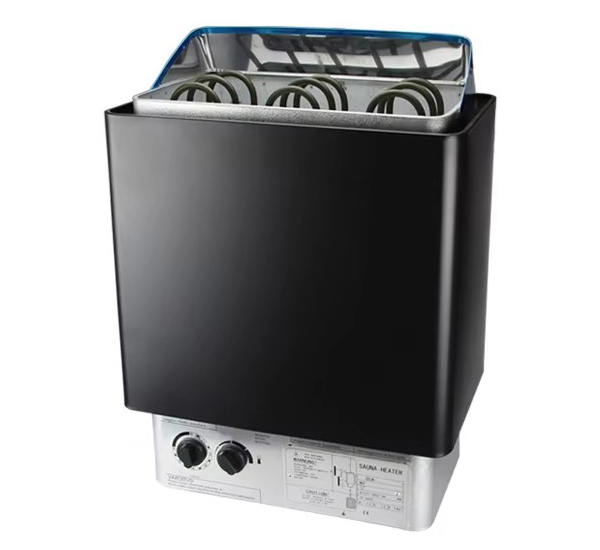
Setting up your own hot room is an exciting project. But installing a sauna heater is not a standard plug-and-play appliance setup. You cannot simply plug the unit into a wall and expect instant heat.
It requires specific spatial clearances, high-temperature-rated materials, and strict adherence to local electrical codes. A poorly installed heater risks nuisance breaker tripping, inadequate heat generation, or severe fire hazards. Missing a single clearance margin or using standard wire inside the hot zone can easily compromise both safety and performance.
This guide breaks down the technical specifications, necessary preparations, and exact physical steps required to safely implement an electric sauna heater. We bridge the gap between buying the hardware and a safe, functional operation. You will learn exactly how to handle clearances, electrical rules, stone placement, and initial system testing.
No GFCI Required: Most electric sauna heaters explicitly require hardwiring without a Ground Fault Circuit Interrupter (GFCI) to prevent nuisance tripping.
Specialized Wiring: Installations mandate high-temperature (90°C/194°F) insulated copper wire; standard Romex is insufficient and dangerous inside the hot room.
Stone Placement Dictates Performance: Tightly packed sauna stones block airflow, causing the high-limit switch to trip and preventing the room from reaching optimal temperatures.
Mandatory Burn-Off Phase: The initial startup requires a 3-5 minute open-door run to safely burn off manufacturing protective coatings.
You must evaluate physical constraints before cutting into any wood paneling. The hardware you choose must directly match the environmental volume of your room. An undersized unit will run constantly without hitting target temperatures. An oversized unit will short-cycle, heating the air quickly but leaving the room's surfaces cold.
Always calculate your room volume first. You multiply length by width by height (in feet) to find the total cubic footage. The industry baseline dictates 1kW of power per 45–50 cubic feet of room volume. However, uninsulated surfaces alter this math. Glass doors, stone walls, or exposed concrete absorb massive amounts of radiant energy. You must add 10 cubic feet to your calculated volume for every square foot of uninsulated surface.
Room Volume (Cubic Feet) | Recommended Heater Size (kW) | Typical Breaker Size (Amps) |
|---|---|---|
100 - 150 | 4.5 kW | 30 Amp |
150 - 210 | 6.0 kW | 30 Amp |
210 - 300 | 8.0 kW | 40 Amp |
300 - 400 | 10.0 kW+ (Often requires separate contactor) | 50 Amp |
Fire safety dictates rigid clearance zones around the heating element. You cannot alter these numbers. Manufacturers engineer specific heat shields based on these exact measurements.
Floor: Wall-mounted units typically require a 7-inch clearance from the lowest point of the sauna floor. This gap allows proper cold air intake.
Walls: You must leave 2–4 inches of clearance from combustible wall panels. Standard cedar lining will scorch if placed closer.
Ceiling: Leave a minimum of 44–48 inches between the top of the unit and the ceiling. This space prevents structural fire damage and creates enough room for the hot air to roll over and circulate.
A standard sauna heater holds 30 to 50 pounds of dense rock. Traditional wall paneling cannot support this weight alone. You must identify or install heavy-duty wood blocking behind the cedar lining. Secure a solid 2x4 or 2x6 cross-brace between the studs. This brace gives the mounting brackets a structurally sound anchor point.
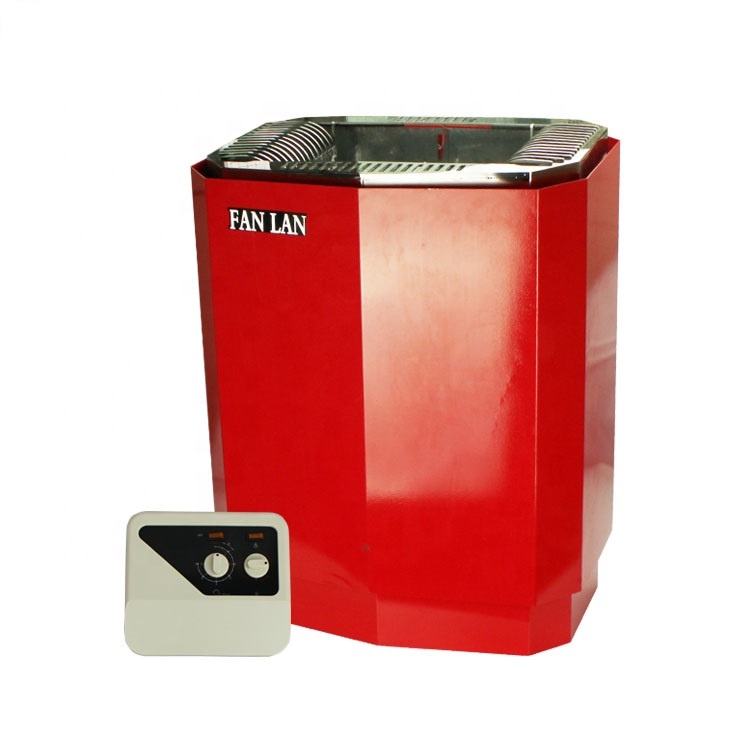
Treat this process as a high-voltage infrastructural project. Defining power requirements ensures compliance boundaries remain unbroken. You must hire a licensed electrician to handle the final panel connections.
North American residential setups require dedicated 240V power. The breaker box supplies this via two 110V hot lines. You cannot tap into an existing lighting or standard outlet circuit. Your breaker sizing correlates directly to your kW output. For example, an 8.0kW unit typically demands a dedicated 40-amp double-pole breaker.
The interior of a hot room reaches extreme temperatures. Standard indoor wiring insulation will degrade, melt, and short out under these conditions. You must use copper wiring rated for at least 90°C (194°F). Installers often use 8/2 gauge high-temperature wire for larger residential units. Aluminum wiring is strictly prohibited. Aluminum expands and contracts under thermal stress, loosening terminal connections and creating dangerous arc faults.
The National Electrical Code (NEC) includes specific exceptions for these units. Sauna heaters are practically the only wet-environment appliance where manufacturers explicitly exclude Ground Fault Circuit Interrupter (GFCI) breakers. The combination of intense heat and natural moisture expansion inside the elements causes continuous, false tripping. A standard double-pole breaker is mandatory for continuous, reliable operation.
You can manage several steps safely, but professionals must handle the live voltage.
DIY Scope: Measuring clearances, installing mounting brackets, routing empty conduit lines, and washing and placing the stones.
Electrician Scope: Making the main panel connections, pulling the high-temp wire through the conduit, and hooking up the contactor box and high-limit safety switches.
This physical rollout transitions your project from bare walls to a mounted, functional system. Follow these sequential steps carefully.
Locate the structural blocking hidden behind your wall panels.
Measure your 7-inch floor clearance and mark the bracket height.
Secure the mounting bracket firmly into the heavy-duty wood blocking.
Hang the unit on the bracket. Place a level across the top edge. You must ensure it sits completely level to guarantee even heat distribution across all internal elements.
Locate the designated knockout holes at the bottom or back of the chassis.
Route your 90°C high-temp wire through these openings.
Strip the wire ends and secure the connections to the terminal block.
Tighten all lugs firmly. Loose connections cause electrical arcing, which melts wires and destroys terminal blocks over time.
The rocks do the actual heavy lifting in your room. They capture element heat and release it slowly into the air.
Pre-wash: Thoroughly rinse all stones in a bucket of clean water. This removes fine shipping dust. Unwashed dust smells foul when heated and forms a hardened crust on your elements, causing early failure.
Layering strategy: Sort your stones by size. Place the largest stones at the bottom between the heating elements. Save the smaller, more uniform stones for the top layer.
Airflow rule: Stack the stones loosely. You should slightly see the heating elements between the gaps. Forcing stones tightly together restricts natural airflow. Trapped heat causes the internal safety sensor to falsely read an overheat scenario, shutting down your system prematurely.
Proper airflow prevents stale air buildup. Monitoring systems keep the environment safe and comfortable.
The thermostat sensor tells the logic board when to cut power. You must never place this sensor directly above the unit. Rising heat columns will trigger artificially high spikes, shutting the power off while the lower room remains cold. Standard placement requires an offset. Move the sensor 12 inches to the side of the unit. Mount it exactly 15 inches down from the ceiling line. Always defer to your specific manual, but this offset rule generally prevents short-cycling.
Convection drives a traditional hot room. You need fresh oxygen to fuel this process. Position a passive air intake vent directly beneath or immediately adjacent to the base. As cold air draws in, the hot rocks instantly heat it. This creates a natural convection loop. The heated air rises toward the ceiling, sweeps across the room, and pushes stale air out through a high diagonal exhaust vent on the opposite wall. Without this loop, the room stratifies into uncomfortable hot and cold layers.
You must validate the installation before using the room for relaxation. This phase identifies immediate faults and prepares the hardware for safe human exposure.
Factory elements arrive coated in a protective lubricant to prevent corrosion during shipping. You do not want to breathe this coating. Turn the unit on maximum heat. Set the timer for 3–5 minutes. Leave the door completely open. Step outside. You will see visible smoke and smell a strong, burning metallic odor. This reaction is entirely normal. The non-toxic manufacturing coating is simply vaporizing off the heating elements.
Once the smoke clears, close the door. Set the timer for a standard 1-hour cycle. Monitor the room from the outside. You must verify the high-limit control mechanisms work correctly. Ensure the unit automatically shuts off at the end of the 60-minute timer. Check that the thermostat clicks off when the room hits the maximum temperature limit (usually around 190°F / 88°C).
Sometimes the initial test reveals minor installation errors. Use this troubleshooting table to resolve common faults.
Observed Issue | Primary Cause | Correction / Action Required |
|---|---|---|
Unit stops completely mid-cycle | High-limit safety switch tripped | Press reset button (under base). Re-pack stones loosely to fix blocked airflow. |
Room won't exceed 140°F | Sensor misplacement or drafts | Check for cold air leaking directly onto the sensor. Ensure sensor is offset 12 inches. |
Loud popping or cracking noise | Moisture expanding in new stones | Normal during first use. Will subside after stones cure and settle. |
Elements do not glow red | Incorrect voltage wiring (110V instead of 240V) | Have electrician verify both hot lines are supplying power to the contactor. |
Treating this installation as a high-voltage infrastructural project guarantees long-term safety and performance.
Finalize your exact schematic layout, including sensor drops and vent placements, before you purchase wire or cut into your cedar lining.
Never pack rocks tightly; loose placement ensures the convection loop thrives and prevents nuisance high-limit trips.
Always consult your specific manufacturer’s manual for exact dimensions, and formally book a licensed electrician for the final panel hookup to maintain your warranty and home safety.
A: No. Manufacturers explicitly state not to use GFCI breakers. The natural moisture and heat expansion inside the elements cause continuous, unwarranted tripping. Standard double-pole breakers are required by national electrical codes for this specific application.
A: This is a normal part of the first-time installation. Heating elements arrive coated with a protective factory lubricant. You must perform a 3-to-5-minute "burn-off" run with the door fully open to clear and vaporize this coating safely.
A: You must use copper wire insulated for at least 90°C (194°F). Standard indoor wiring like Romex will degrade, melt, and potentially cause a fire under extreme room conditions. Never use aluminum wiring.
A: The most common cause is packing the stones too tightly. This blocks air from flowing past the heating elements. Heat gets trapped inside the chassis, which falsely trips the internal high-limit safety switch. Simply remove and re-pack the stones loosely.


