Views: 0 Author: Site Editor Publish Time: 2026-04-02 Origin: Site

Installing an electric appliance often implies a simple plug-and-play process for most homeowners. However, integrating a high-draw heat source into an insulated wooden room requires an entirely different level of electrical planning. Installing an electric sauna heater is not a standard setup. It demands dedicated 240V circuits, high-temperature-rated materials, and strict adherence to local electrical codes. Without these precautions, you risk severe fire hazards, voided warranties, and frequent breaker trips. A safe, code-compliant installation ensures consistent heating and long-term reliability.
This guide provides a comprehensive architectural overview of the entire wiring process. You will learn how to properly prepare your physical space and evaluate power requirements. We also explain how to purchase the correct materials and effectively scope the project before hiring a licensed electrician. You must understand these principles to manage your installation safely. Proper planning saves time, reduces contractor costs, and guarantees a seamless inspection process.
Dedicated Power is Mandatory: Nearly all modern electric sauna heaters require a dedicated 240V circuit with a hardwired connection; plug-in models are exceptionally rare and typically low-power.
High-Heat Wiring is Non-Negotiable: Standard household Romex wire will melt near the heater. The final connection to the unit requires high-temperature, silicone-insulated copper wire rated for at least 194°F (90°C).
GFCI is Generally Avoided: Unlike pool equipment, most sauna heater manufacturers strictly advise against connecting the heater to a Ground Fault Circuit Interrupter (GFCI) to prevent nuisance tripping when water is applied to the sauna stones.
Outdoor Installations Require Extra Infrastructure: Detached saunas require underground trenching, wet-rated THWN wire, and often a dedicated electrical subpanel with its own grounding rods.
Selecting the correct wire gauge (AWG) and breaker size represents your first critical task. The kW rating of your chosen unit dictates these specifications. You must also measure the physical distance from your main electrical panel to the room. Undersized wires overheat dangerously. Oversized breakers fail to trip during a fault. You need precise matching to maintain a safe environment.
Let us review the standard electrical requirements based on varying unit outputs.
Heater Size (kW) | Wire Gauge (AWG) Requirements | Breaker Size (Amps) | Expected Room Size |
|---|---|---|---|
3.0 kW – 4.5 kW | 10–12 AWG pure copper | 20–25 A double-pole | Small indoor room (100-150 cu.ft) |
6.0 kW – 8.0 kW | 8–10 AWG pure copper | 30–40 A double-pole | Mid-sized home unit (150-250 cu.ft) |
10.5 kW+ | 6 AWG pure copper | 50 A double-pole | Large residential or commercial |
Distance plays a massive role in electrical efficiency. If your cable run exceeds 50 feet between the panel and the unit, you face a voltage drop risk. Long wire distances resist electrical flow naturally. This resistance lowers the voltage reaching your equipment. Upgrading to a thicker wire gauge becomes necessary here. Failure to upsize the wire drastically reduces heating performance. It delays warmup times and forces internal contactors to work harder. Over time, this shortens the lifespan of your unit.
Always specify pure copper wire. Aluminum wire is highly discouraged in these applications. Aluminum expands and contracts heavily under extreme thermal cycling. This constant movement loosens terminal connections over time. Loose connections create dangerous arcing risks and generate immense localized heat. Stick exclusively to copper for safety and compliance.
Best Practice: Check your main panel for available physical space before purchasing equipment. You need two adjacent vertical slots for a double-pole breaker.
Common Mistake: Guessing the wire gauge based on a friend's installation. Always calculate based on your specific kW rating and cable run distance.
Where you place the room dictates the complexity of your electrical infrastructure. Indoor installations leverage your existing home framework. Outdoor cabins demand robust weatherproofing and underground trenching.
Routing power inside a house feels straightforward. Standard non-metallic cable (NM-B or Romex) works perfectly for the main run. You pull it from your main panel through wall studs or ceiling joists. This standard wire runs up to the external control panel.
External control panels must always mount outside the heated room. High heat degrades sensitive printed circuit boards fast. Keeping the brain of the system in an ambient room temperature ensures longevity.
Detached structures introduce weather and burial compliance challenges. You cannot string wires overhead safely in most residential yards. You must route them underground.
Trenching Depths (NEC Guidelines)
Trenching depths follow National Electrical Code (NEC) guidelines strictly. Inspectors check this detail first.
Direct burial cables (UF) typically require a 24-inch trench.
Using PVC conduit allows for an 18-inch depth.
Rigid metal conduit provides the strongest physical protection and can be buried at just 6 inches.
Wet-Rated Wiring
Any wire running through underground conduit counts as a "wet location." Condensation naturally builds up inside buried pipes over time. Therefore, you must mandate wet-rated THWN conductors. Standard wire insulation will degrade and fail underground.
The Subpanel Strategy
You might run a high-draw unit alongside lighting, Wi-Fi modules, and sound systems. Installing a 40A–70A subpanel on the exterior of the outbuilding makes sense. It isolates the heavy heater load from standard 110V outlets. This strategy prevents a single ground fault from knocking out power to your entire property. It also simplifies future troubleshooting.
Independent Grounding
Subpanels on detached outbuildings legally require their own grounding electrode system. The standard approach involves driving two grounding rods deep into the earth. You must space them at least 6 feet apart. This localized grounding protects the outdoor structure from lightning strikes and massive electrical surges.
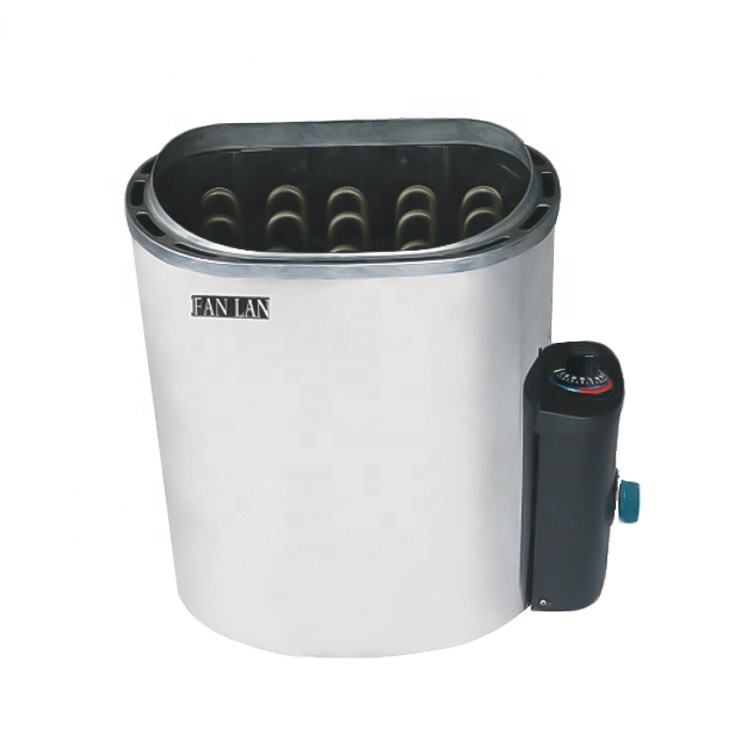
The environment directly surrounding the heating element acts like an oven. Standard building materials fail rapidly here. You must deploy specialized high-heat components.
Standard household wiring holds a temperature rating around 194°F (90°C). Air directly surrounding the rocks routinely exceeds 200°F. Pulling standard Romex wire directly into the enclosure poses a severe fire risk. The plastic insulation will literally melt away, exposing bare, live copper lines.
You must plan a safe transition point to solve this problem. Power lines transition from standard wire to high-temperature silicone-insulated wire. This splice happens inside a junction box or the external control panel. Only after this transition do you make the final run to the heating element.
The exposed wire run drops from the lower wall opening directly to the terminal block. You must protect this final segment using liquidtight flexible metal conduit. It shields wires from moisture when users splash water on the rocks. It also prevents physical damage from accidental kicks or dropped ladles.
Electrical codes frequently mandate a safety disconnect switch. Install this switch within the direct line of sight of the room. It ensures anyone can immediately sever power during an emergency or routine maintenance. A visual disconnect provides peace of mind and satisfies stringent local inspector requirements.
Understanding the sequence of events helps you coordinate with contractors. A successful project follows a logical progression.
Step 1: Power Supply Verification. Confirm your main breaker box has adequate capacity. Avoid overloading an older 100A home panel with an 8kW draw. Check your total household load calculations first. You also need physical space for a new double-pole breaker.
Step 2: Rough-In and Conduit Placement. Install metal or PVC conduit during the framing stage. Mount the external control panel box safely outside the hot zone. Respect the required wall clearances around the unit. Manufacturers usually specify 2-4 inches of space from combustible wooden walls. Finalize your wire exit points only after verifying these strict clearances.
Step 3: Pulling and Terminating Wires. Run the correct AWG wire through your conduit. Standard 240V setups typically require two hot lines (L1, L2) and a bare copper ground wire. You rarely need neutral wires. Neutrals only apply if the unit features a built-in 120V component, like a standard light switch or accessory outlet.
Step 4: Sensor Integration. Wire the high-limit temperature sensor carefully. Sensor placement determines your safety and comfort. Mount it exactly where the manual specifies. You usually place it on the ceiling directly above the unit or at user sitting height. Correct placement accurately regulates heat and prevents dangerous thermal runaways.
Step 5: Continuity Testing. Never power the system blindly. Use a reliable multimeter first. Test for shorts or ground faults across all terminals. Verify the grounding integrity before flipping the main breaker. This final check prevents immediate equipment damage upon startup.
We strongly advise against amateur electrical work. A sauna heater installation carries zero margin for error.
Attempting to wire high-voltage equipment without proper licensing is dangerous. It exposes your property to hidden electrical fires. You also face lethal shock hazards in a notoriously wet environment. Furthermore, DIY electrical work causes immediate voiding of the manufacturer's warranty. If you damage the internal circuit board through improper phasing, you replace it at your own expense.
High-amperage 240V modifications demand city permits. They also require official sign-off by a licensed electrician. If property damage occurs, insurance companies routinely deny claims linked to unpermitted electrical work. You carry the full financial burden of a failure. Unpermitted work also stalls home sales during buyer inspections.
Use this guide to determine your preferred unit size. Map out your ideal conduit path. Gather all relevant specification sheets from the manufacturer. Hand these detailed plans to a certified local electrician. Clear planning ensures a highly accurate, code-compliant quote and prevents costly mid-project revisions.
Successfully powering your unit merges high-load 240V distribution with extreme temperature management. Proper gauge selection and precise conduit routing dictate the safety of your space. Adherence to NEC burial and high-heat wiring standards guarantees the longevity of your equipment.
Before breaking ground or cutting drywall, execute these final actions:
Finalize your room layout and secure your appliance specifications first.
Calculate your total electrical load to ensure your main panel can handle the massive amperage draw.
Source specialized silicone-insulated copper wire for the high-temperature zone.
Hire a licensed electrician to execute the hardwiring phase, ensuring your investment operates safely at peak efficiency.
A: In most jurisdictions, traditional units do not use a GFCI breaker. Because users pour water over hot stones, the resulting steam frequently causes nuisance tripping in GFCI circuits. Always defer to the manufacturer's manual and your local electrical inspector. Note that standard lighting and 110V outlets near the room do require GFCI protection.
A: No. Infrared cabins can often plug into standard 110V/120V household outlets. However, traditional electric units draw massive amounts of power ranging from 15 to 50+ amps. They require dedicated, hardwired 240V circuits to function safely and effectively.
A: The final connection from the wall or control unit to the heating element must use pure copper wire. It requires high-temperature silicone insulation rated between 194°F and 221°F (90°C - 105°C). You must encase this wire in liquidtight flexible metal conduit for moisture protection.


