
A sauna heater acts as the powerful engine driving your entire sweat experience. It dictates the overall performance, monthly utility expenses, and long-term longevity of your sauna cabin. The basic concept of heating a small room seems simple. However, choosing the wrong unit type or under-sizing your equipment often causes major headaches. You might face skyrocketing electricity bills, painfully uneven heating, or premature hardware failure within just a few years.
Finding the perfect fit requires looking far beyond the basic sticker price. This guide breaks down exactly how different systems work. We reveal hidden installation realities you must know before making a purchase. We also provide strict criteria you should use to evaluate an electric sauna heater versus wood, gas, or infrared alternatives. You will learn how to identify high-quality engineering, calculate real-world energy consumption, and select the ideal heating engine for your specific wellness goals.
The fundamental mechanism: Traditional heaters use convection (heating air and rocks to 150°F–190°F), while infrared uses radiant heat (heating the body directly at 120°F–140°F).
Operating costs vary wildly: A standard electric unit might cost ~$0.93 per hour to run, while infrared drops to pennies per session.
Infrastructure dictates choice: Electric heaters almost always require dedicated 240V hardwiring by a licensed electrician, a hidden upfront cost many buyers ignore.
Quality is in the engineering: High-end models feature direct rock-to-element contact to buffer 1400°F surface temperatures and guarantee 20+ years of replacement part availability.
Understanding how a heating unit warms your body helps you make a smarter purchasing decision. Modern saunas primarily rely on two distinct thermodynamic approaches. Each method drastically changes how your body experiences the heat.
There are two primary heating mechanisms available on the market today. They serve very different wellness goals and physical preferences.
Convection (Traditional): Internal elements heat the surrounding stones. The hot stones then heat the ambient air inside the cabin. You sit in this hot air, prompting a deep, heavy sweat. When you pour water over the scorching stones, they create a sudden burst of steam known as löyly.
Radiant (Infrared): This method uses advanced carbon or ceramic panels. These panels emit electromagnetic radiation. The radiation penetrates human tissue directly. It bypasses the need to drastically heat the ambient air. You sweat heavily, but the room itself stays at a much milder temperature.
Many buyers hold a common misconception about sauna stones. You might think they exist strictly for generating steam. In reality, stones serve as a critical thermal battery and an essential safety buffer. Inside traditional units, bare metal heating elements glow red-hot, radiating heat at nearly 1400°F.
Stones absorb this incredibly harsh, intense heat. They act as a physical shield. They convert aggressive energy into soft, evenly distributed ambient heat. A dense rock cavity also helps minimize direct electromagnetic field (EMF) exposure. Without adequate stone coverage, the air feels sharp and painfully dry. You need dense, high-quality stones to guarantee a comfortable, relaxing session.
Selecting the right sauna heater involves matching the power source to your lifestyle, location, and available infrastructure. Here is a detailed breakdown of the four main categories.
Electric models dominate the residential and commercial markets. They offer unmatched convenience and reliability for daily use.
Pros: You gain precise thermostatic control over your session. They offer incredibly fast preheat times, usually taking just 20 to 35 minutes. Many models feature programmable timers. You can set a 9-hour delay start, ensuring the cabin is hot exactly when you get home from work. They also require very low ongoing maintenance.
Cons/Risks: The system relies entirely on the electrical grid. Power outages mean no sauna. They also require professional electrical installation, adding to your initial setup costs.
Best for: The vast majority of indoor residential users and commercial gyms prioritizing everyday convenience.
Wood stoves represent the authentic, traditional Finnish experience. They appeal to purists seeking an off-grid ritual.
Pros: They provide true off-grid capability. Enthusiasts agree they produce the softest heat and the most robust steam. This superior steam generation comes from massive stone capacities. Some premium models hold upwards of 200 lbs of rock.
Cons/Risks: The ritual demands patience. They require 45 to 60 minutes to heat up fully. You must perform constant manual stoking and regular ash cleanup. You must also adhere to strict chimney and hearth fire safety compliance codes.
Best for: Outdoor cabin saunas, remote off-grid locations, and dedicated traditionalists.
Infrared systems revolutionized the market by lowering the barrier to entry for home installations.
Pros: You get plug-and-play installation. Many smaller units run on a standard 120V household outlet. They boast ultra-low energy consumption, using only 1.6 to 2.4 kW per session. They require almost zero maintenance.
Cons/Risks: They completely lack the high-heat intensity of traditional units. You also cannot pour water on them, meaning zero steam capability.
Best for: Users focused strictly on cardiovascular recovery and relaxation who have limited electrical infrastructure.
Gas units remain a specialized choice, primarily found in commercial settings or very large custom builds.
Pros: They run highly efficiently for massive spaces. They easily heat commercial rooms up to 600 cubic feet or more.
Cons/Risks: The equipment is expensive. You face complex plumbing, gas line routing, and strict venting installation requirements.
Heater Type | Preheat Time | Operating Temperature | Maintenance Level | Primary Use Case |
|---|---|---|---|---|
Electric | 20 - 35 mins | 150°F - 190°F | Low | Convenient home & gym use |
Wood-Burning | 45 - 60 mins | 160°F - 200°F+ | High | Outdoor cabins & purists |
Infrared | Instant (Body) | 120°F - 140°F | Ultra-Low | Recovery & low-heat tolerance |
Gas | 30 - 45 mins | 150°F - 190°F | Medium | Large commercial spaces |
Buyers frequently overestimate the cost of running a sauna. However, you must accurately assess both upfront setup requirements and ongoing utility expenses. Doing so eliminates budget surprises down the road.
The retail sticker price of the heater represents only phase one of your investment. You must factor in several peripheral elements. You will likely need to purchase specialized peridotite or vulcanite sauna stones separately. External digital controllers often cost extra. Finally, professional labor makes up a significant portion of your budget. Electricians charge premium rates to run heavy-gauge wire from your breaker panel to the cabin.
Let us break down the math to eliminate your anxiety about monthly energy bills. A standard electric unit runs far more efficiently than most people assume.
Electric Benchmark: Consider a typical 4.5 kW electric unit. This size perfectly suits a standard 150-cubic-foot home cabin. It usually costs under $1.00 per hour to operate. If you run it three to four times a week, your monthly utility impact translates to roughly $15. This amount often costs less than a basic gym membership.
Infrared Efficiency: Infrared units offer even greater savings. They draw significantly less power and require no ambient air pre-heating. You typically spend only $10 to $15 per month total, even with daily use.
We strongly warn buyers against purchasing undersized units just to save money upfront. Buying a small 3 kW unit for a large 200-cubic-foot room is a major mistake. An overworked unit must run continuously to maintain the target temperature. This constant strain will burn out the heating elements much faster. Replacing blown elements wipes out any initial purchase savings. Always size your equipment appropriately for your room volume.
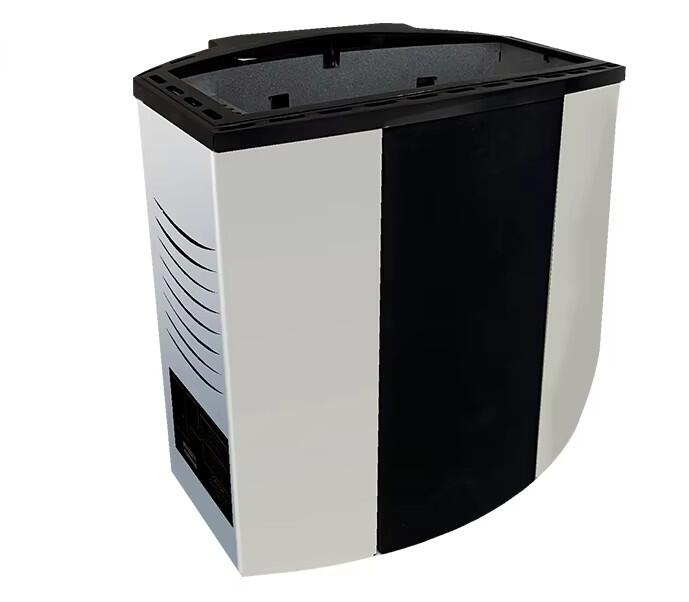
You cannot just drop a powerful heating device into a wooden box and turn it on. Strict physical and electrical rules govern safe operation.
You must understand the strict voltage requirements before you buy anything. Residential units usually require a dedicated 240V single-phase circuit. You cannot plug these into standard wall outlets. Commercial gym units typically utilize 208V three-phase power. We strongly emphasize consulting a licensed electrician before finalizing your purchase. You need to confirm your home panel has enough open breaker slots and overall amperage capacity to handle the load.
Every unit demands specific physical safety perimeters. The intense heat radiation poses a fire risk to nearby combustible materials.
Your chosen equipment must carry proper UL or CE safety certifications.
Manufacturers specify exact minimum distances from the unit to the wooden walls and ceiling.
Wood-burning stoves demand extra precautions. You must install non-combustible heat shields, like cement board or brick, if you place them in compact spaces.
A heater cannot function properly in a vacuum. Intelligent venting is an absolute necessity. Wood fires need a constant supply of fresh oxygen to burn cleanly and safely. Electric units require steady air circulation passing over their elements. Proper airflow pushes the hot air into the room. If you lack ventilation, the heat gets trapped inside the steel housing. This trapped heat causes the system's high-limit switch to trip prematurely, shutting the session down entirely.
The market currently suffers from a flood of cheap, imported knock-offs. These generic white-label units look shiny online but fail quickly in real-world conditions. You must look for specific engineering markers.
Always check the construction materials. Look for commercial-grade stainless steel heating elements. The outer housing must feature heavy-duty metals. These components endure decades of extreme thermal expansion and contraction. They must also survive severe water shock every time you generate steam. Cheap metals warp, rust, or crack under these intense conditions.
Highlight premium engineering markers when reviewing product specifications. Leading manufacturers use a "3-wall construction" design. This multi-layered approach keeps the outer surface of the metal housing significantly cooler to the touch. It actively prevents accidental skin burns if you brush against the unit in a tight space.
We advise buyers to apply the replacement parts litmus test. Internal elements, thermostats, and mechanical timer dials are consumable parts over a 10-to-20-year lifespan. They will eventually need replacing. A highly reputable brand guarantees parts availability for decades. A cheap white-label brand will completely disappear from the internet. They force you to buy an entirely new machine when a single $50 element fails.
Selecting the ideal heating unit dictates the quality of your future wellness routines. Making a smart choice requires balancing your desired experience against your available infrastructure.
Calculate accurately: Always start by measuring your exact room dimensions. Multiply length by width by height to find your cubic footage.
Audit your power: Check your home electrical panel capacity early in the process. Confirm you can support a dedicated 240V circuit.
Choose your heat style: Decide between the intense, steamy ritual of traditional convection or the gentle, lower-heat convenience of radiant infrared.
Take action: Use an online sizing calculator today. Consult a local electrician or a trusted specialist to match a specific kW output perfectly to your cabin size.
A: Electric models typically take 20 to 35 minutes to reach optimal bathing temperatures. Wood-burning stoves require roughly 45 to 60 minutes, depending on the fire's intensity. Infrared panels warm the body almost instantly, though the physical cabin takes about 10 to 15 minutes to feel pleasantly warm.
A: No, they run surprisingly efficiently. Depending on your local utility rates and the unit's exact kW size, you can expect to pay between $0.50 and $1.00 per hour of operation. Running one several times a week usually costs less than $15 a month.
A: Yes, absolutely. Unless you own an infrared unit, stones are mandatory. They filter the extreme, harsh heat radiating from the bare metal elements. They distribute the ambient heat evenly across the room and are necessary if you want to pour water to create steam.
A: Over-dousing floods the internal system. The water bypasses the hot stones and drops directly onto the glowing elements. This shocks the metal components, potentially causing premature degradation, cracking, or eventual short-circuiting over time. Always pour small ladles of water slowly.


