Views: 0 Author: Site Editor Publish Time: 2026-08-03 Origin: Site

Facility managers and homeowners frequently face a dilemma when designing wellness spaces. They want to accommodate users who prefer intense dry heat alongside those who crave high-humidity steam sessions. Space constraints, electrical capacity limits, and strict equipment footprints often force a compromise. A major point of buyer confusion surrounds the wet versus dry sauna debate. Many make the mistake of expecting a traditional heating unit to function as a dedicated steam room generator. This fundamental misunderstanding leads to damaged equipment, voided warranties, and subpar user experiences. Maximizing a single wellness space requires a clear understanding of sauna climate control. You must evaluate standard heating units against specialized hybrid models to achieve dual-functionality. Doing this correctly ensures you do not compromise safety, performance, or equipment lifespan. This guide breaks down the technical realities of sauna heating and provides actionable steps to help you select the right equipment for your specific environmental goals.
Terminology Matters: A traditional sauna heater creates dry heat, and while pouring water on the stones generates a temporary burst of steam (löyly), it cannot replicate the 100% humidity of a dedicated steam room.
The Hybrid Alternative: To achieve sustained high humidity alongside traditional dry heat, buyers must invest in a Combi heater (often featuring a built-in steam generator or a sauna room heater with steam tube).
Infrastructure Constraints: Dual-function heaters require specific electrical configurations, rigorous ventilation strategies, and specialized room materials to prevent moisture damage and mold.
Strict Limitations: No single sauna heater can safely or effectively convert a wood-lined sauna cabin into a fully saturated, tile-lined steam room.
A widespread misconception exists regarding wet and dry saunas. People often assume these are two completely different types of rooms. In reality, traditional saunas are inherently dry environments. They typically operate at a baseline humidity of 10 to 20 percent. The terms wet and dry simply describe the same traditional space at different moments in time. The level of moisture is dictated solely by the manual application of water over hot stones. Without this manual intervention, the room remains a dry heat environment. Understanding this baseline is the first step in designing a functional wellness space.
This manual application of water is known as löyly. Pouring a ladle of water over the heated stones creates a temporary spike in humidity. This sudden burst of steam increases the perceived heat in the room, causing an immediate sweat response. However, there is a golden rule for this practice. You should only pour a single ladle of water every three to five minutes. This interval allows the stones to recover their core temperature. Pouring water too frequently cools the stones, preventing water from vaporizing and causing it to pool at the base of the unit. When water pools, it exposes the internal components to unnecessary moisture, which can lead to premature wear.
Stone mass plays a critical role in how a Sauna Heater performs. The volume of stones directly affects heat retention and steam generation. Units with fewer stones heat the room rapidly, providing intense dry heat. Conversely, heaters with a high stone capacity take longer to reach peak temperature but hold that heat much longer. A larger stone mass converts poured water into steam efficiently without significantly cooling down the primary electrical heating elements. When you have 100 pounds of stones versus 30 pounds, the thermal mass acts as a battery. It absorbs the shock of the cold water, vaporizing it instantly while protecting the metal elements below.
Standard electric and wood-fired heaters have strict technical limitations. They are not designed for continuous, heavy water exposure. Flooding standard heating elements with excessive water causes severe thermal shock. This rapid cooling and heating cycle accelerates the degradation of the metal elements. Over time, this leads to premature failure and replacements. Standard units succeed only when the primary goal is achieving high temperatures between 160°F and 195°F, supplemented by brief, intermittent moisture. If you try to force a standard unit to act as a steam generator by constantly dumping water on it, you will destroy the elements within a few months.
| Stone Capacity (lbs) | Heat-Up Time | Steam Generation Capability | Best Use Case |
|---|---|---|---|
| Under 40 lbs | Fast (30-45 mins) | Low (Quick recovery needed) | Strictly dry heat, minimal water use |
| 40 - 80 lbs | Moderate (45-60 mins) | Medium (Standard löyly) | Traditional sessions, regular water ladling |
| Over 100 lbs | Slow (60-90 mins) | High (Massive thermal retention) | Heavy steam bursts, lower ambient temp |
The physics of thermal shock cannot be ignored. When cold water hits a metal heating element operating at several hundred degrees, the metal contracts violently. Repeated contraction and expansion cause micro-fractures in the element's outer sheath. Eventually, moisture penetrates these fractures, shorting out the internal resistance wire. This is why standard heaters require the stones to act as a buffer. The stones must absorb the water and vaporize it before it ever reaches the elements. If your stone layout is too sparse, or if the stones have degraded and crumbled over time, water will bypass them and hit the elements directly.
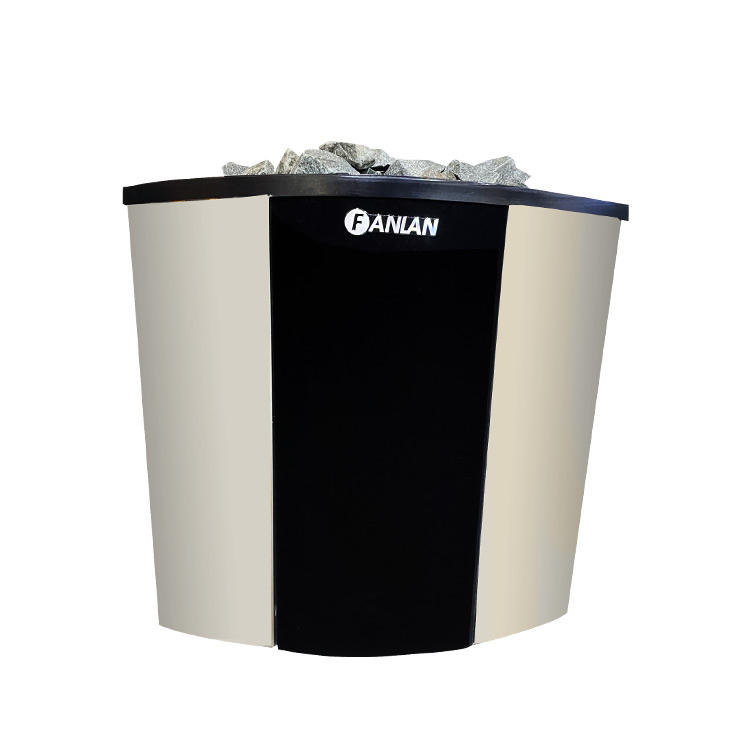
For users who want sustained humidity without building a separate steam room, Combi heaters offer a reliable hybrid solution. These units integrate standard rock compartments with independent water reservoirs. They feature dedicated boiling mechanisms separate from the primary heating elements. This dual-functionality allows the heater to maintain ambient room temperature while actively boiling water to release a steady stream of vapor. You get the best of both worlds without risking damage to the primary heating infrastructure.
Specific models enhance this process by utilizing a Sauna Room Heater with Steam Tube. These specialized evaporators continuously release moisture directly into the cabin. This design allows for precise humidity control. Because the steam generation is isolated, it prevents users from drowning the primary heating elements with manual water ladling. The steam tube ensures an even distribution of moisture, creating a soft, enveloping heat. The steam is generated in a separate chamber, usually located at the front or side of the unit, and is vented upward, mixing with the convective heat rising from the stones.
Operating a hybrid unit requires understanding the temperature-to-humidity ratio. The industry standard for evaluating this balance is the Rule of 200. The sum of the room's temperature in Fahrenheit and the humidity percentage should generally not exceed 200. For example, a traditional dry session might sit at 180°F with 20% humidity. Combi heaters manage this balance safely by lowering the ambient temperature to around 140°F, which allows them to sustain higher humidity levels of 40 to 60 percent without creating an unsafe or suffocating environment. Pushing beyond the Rule of 200 pushes the human body past its ability to regulate core temperature through sweating.
The internal mechanics of a Combi unit are straightforward but require precise engineering. The water reservoir typically holds between one and two gallons of water. A separate, lower-wattage heating element sits inside this reservoir. When activated, it boils the water independently of the main rock-heating elements. Sensors monitor the water level. If the reservoir runs dry, a high-limit switch trips, shutting off the evaporator element to prevent a fire hazard or element burnout. Premium models connect directly to a water line, utilizing a float valve to maintain the water level automatically, much like a toilet tank mechanism.
When evaluating these hybrid units, you must consider the physical footprint. Combi heaters are generally wider and deeper than standard units of the same kilowatt rating because they must house the additional water tank and plumbing connections. This means your safety clearances to combustible materials (the wooden walls and benches) will be different. You cannot simply swap a standard 8kW heater for an 8kW Combi heater without verifying that your room dimensions allow for the required air gaps specified by the manufacturer.
Selecting the right equipment requires matching the hardware capabilities to the desired user experience. Different heating technologies produce vastly different environmental outcomes. Understanding these distinctions prevents mismatched expectations and ensures optimal facility performance. You must define what the primary users actually want before running a single wire or framing a single wall.
This setup is best for users seeking an intense cardiovascular response. It promotes rapid sweating and offers quick heat-up times. The ideal heater requirement here is a standard electric or wood-fired unit. A low-to-moderate stone capacity works best for rapid ambient heating. If users prefer occasional manual steam, a high-capacity stone unit is recommended to handle the intermittent water application without losing core temperature. The focus here is on raw thermal output. You want elements that get red hot quickly and transfer that heat to the room via convection.
This environment is best for users who prefer longer, gentler sessions. It provides respiratory relief and mimics a traditional Banya style experience. The mandatory heater requirement for this outcome is a Combi sauna heater. It must have active steam generation capabilities to maintain consistent moisture levels without relying on manual water ladling. The ambient temperature is kept lower, usually between 130°F and 150°F, allowing users to stay in the room comfortably for 30 to 45 minutes while the steam tube does the heavy lifting for humidity.
A true steam room is best for maximum respiratory hydration at much lower temperatures (typically 110°F to 120°F). The requirement here is a dedicated, external steam generator. This generator must be piped into a completely waterproof room lined with tile, stone, or acrylic. No traditional sauna heater can or should ever be used for this application. Attempting to do so will destroy the heater and rot the room. Wood absorbs moisture. If you pump 100% humidity into a cedar room daily, the wood will swell, warp, and eventually rot, regardless of how well you ventilate it afterward.
| Experience Type | Ideal Temperature | Target Humidity | Required Equipment | Wall Material |
|---|---|---|---|---|
| Traditional Dry | 160°F - 195°F | 10% - 20% | Standard Electric / Wood-Fired Heater | Cedar, Hemlock, Spruce |
| Soft / Moist Sauna | 130°F - 150°F | 40% - 60% | Combi Heater / Evaporator Unit | Cedar, Thermo-treated Wood |
| True Steam Room | 110°F - 120°F | 100% | External Steam Generator | Tile, Stone, Acrylic |
Installing hybrid heating units involves specific infrastructure requirements. Electrical and plumbing configurations dictate which units you can safely operate. Combi units generally draw more power than standard heaters because they operate two distinct systems simultaneously. They require hardwiring and dedicated, high-amperage circuits. For example, a standard 8kW heater might require a 40-amp breaker and 8 AWG wire. A Combi unit of similar heating capacity might require a 50-amp breaker and 6 AWG wire to handle the simultaneous load of the main elements and the evaporator element. You must verify your electrical panel has the capacity for this before purchasing.
Plumbing needs also vary by model. Some units feature manual water reservoirs that you fill before a session. This is simpler to install but requires the user to carry water into the room. Premium commercial models often feature automated plumbing lines for continuous auto-filling. If you choose an auto-fill model, you must run a cold water line to the heater location during the framing stage. This line should include an accessible shut-off valve and, ideally, a water hammer arrestor to prevent banging in the pipes when the float valve closes.
Many buyers face the retrofitting dilemma. They purchase generic, pre-fabricated indoor cabins and later attempt to upgrade to premium heaters. Swapping heaters is not always a straightforward process. You must evaluate compatibility risks carefully. Upgraded heaters often require specific wall reinforcements to support heavier stone capacities. A wall-mounted heater holding 60 pounds of stones requires solid blocking behind the tongue-and-groove paneling. If the pre-fab cabin only has thin paneling, the heater will rip right off the wall. Control panel wiring may differ significantly between brands, requiring you to fish new low-voltage cables through finished walls.
Ventilation and moisture control present significant risks when introducing high humidity into wood-lined spaces. Proper airflow is an absolute necessity. Sustained high humidity in a cedar or hemlock room increases the risk of wood rot. It also creates an ideal environment for bacterial growth if the room cannot properly dry out after the session ends. Stagnant, moist air degrades the structural integrity of the cabin over time. You need an intake vent located low, near the heater, and an exhaust vent located high on the opposite wall. This creates a convective loop that pulls fresh air in, heats it, and exhausts the stale, moist air.
To mitigate these risks, you must implement strict moisture control strategies. Install mechanical exhaust fans to pull damp air out of the room efficiently, especially in commercial settings or basements where natural draft is insufficient. Utilize rot-resistant wood types, such as Western Red Cedar or Thermo-treated woods, for interior paneling. Most importantly, run the primary heating elements dry for at least 15 to 20 minutes after completing a humid session. This bakes the room dry, evaporates residual moisture on the benches, and preserves the wood.
Evaluating the long-term viability of dual-function heaters requires looking at operational maintenance. Standard heaters have simpler maintenance requirements. You check the stones annually, replace any that have cracked or crumbled, and wipe down the stainless steel exterior. Combi units and dedicated steam generators carry heavier maintenance demands due to their complex internal components and constant exposure to boiling water. You must decide if your facility management team or household is prepared for this upkeep.
Maintenance trade-offs are a reality when operating hybrid systems. A heater equipped with a steam evaporator requires regular upkeep. You must perform routine descaling to remove mineral buildup from the water reservoir. Managing water quality is critical; hard water calcification quickly degrades steam elements. If you live in an area with hard water, calcium and magnesium deposits will coat the evaporator element. This acts as an insulator, forcing the element to work harder to boil the water, which eventually causes it to overheat and burn out.
To prevent this, you must establish a strict descaling schedule. Depending on usage and water hardness, this might mean running a citric acid or white vinegar solution through the reservoir every month. You fill the tank with the solution, let it heat up slightly, allow it to sit for an hour, and then drain and flush it completely. If you are installing an auto-fill Combi unit, installing an inline water softener or scale inhibitor on the dedicated water line is highly recommended. This single step will drastically extend the life of the evaporator element.
Warranty considerations strongly influence equipment selection. Manufacturers design standard heaters for specific use cases. Using a standard heater improperly, such as excessive water dumping or flooding the element chamber, instantly voids manufacturer warranties. Technicians can easily tell when an element has failed due to thermal shock from excessive water versus a standard manufacturing defect. Combi units, however, are explicitly engineered and warrantied for sustained, high-moisture use. Choosing the correct unit for your intended use case protects your investment and ensures warranty coverage remains intact.
A standard sauna heater cannot support sustained, 100% steam sessions. Attempting to force a traditional unit to act as a steam generator will result in equipment failure. However, a specialized Combi heater effectively bridges the gap. It provides a versatile solution that transitions seamlessly between a traditional dry sauna and a high-humidity soft sauna.
Apply clear shortlisting logic when making your final selection. Choose a standard heater if you only want occasional steam through manual water application. Select a Combi heater if you require versatile, moderate-heat and high-humidity sessions. Build a completely separate, waterproof steam room if 100% humidity is your strict requirement.
Take the following steps to move forward with your installation:
Assess your available electrical panel capacity to ensure it can handle the dedicated circuit requirements of a hybrid unit.
Review your cabin's ventilation setup to confirm you can adequately exhaust moist air after a session.
Consult a cubic-foot sizing calculator to determine the exact kilowatt requirement for your specific room dimensions.
Inspect your local water hardness levels to determine if a water softener is needed before installing an auto-fill steam unit.
A: No. Excessive water will flood the unit, damage the electrical elements, and fail to reach steam room humidity levels. It only creates a temporary spike in perceived heat while risking permanent equipment damage.
A: A Combi heater is a hybrid unit equipped with both traditional heating elements for stones and a built-in water reservoir or evaporator to generate continuous, controlled humidity.
A: It depends on the model. Some require manual filling of the reservoir before a session, while premium commercial models feature auto-fill functions requiring a dedicated water line.
A: Not always. You must ensure the cabin's structural supports can handle the weight of the new heater, that its electrical infrastructure supports the higher power draw, and that the cabin meets safety clearance specifications.
A: Yes, up to about 50-60% humidity, provided the room is built with suitable woods like cedar and is thoroughly dried out using residual heat and proper ventilation after every use.
A: Generally, yes. Running both the primary heating elements and a secondary steam evaporator simultaneously draws more power, often requiring a higher-amperage dedicated circuit.


