Views: 0 Author: Site Editor Publish Time: 2026-07-31 Origin: Site

Equipment failure in a commercial wellness facility directly impacts revenue and reputation. When a gym, spa, or hotel sauna goes cold, members complain, memberships get canceled, and management scrambles for emergency repairs. The root cause of this downtime usually stems from a fundamental miscalculation during the build-out phase: installing a residential-grade unit in a high-traffic environment. Standard units simply cannot handle the relentless thermal cycling required for all-day operation. The result is burned-out heating elements, melted contactors, and voided warranties.
Selecting the right equipment requires treating the purchase as an investment in commercial infrastructure. A true Sauna Heater built for continuous use relies on industrial-grade components, robust electrical architecture, and the capacity to recover heat rapidly despite constant door openings. This guide breaks down the engineering, sizing, and operational factors you must evaluate to choose a heater that guarantees reliable, all-day performance.
Commercial sauna heaters require heavy-duty heating elements and larger stone capacities to maintain stable temperatures during continuous business hours.
Accurate sizing must account for total room volume, wall insulation values, and the thermal mass of uninsulated surfaces (glass, stone, tile).
Electrical infrastructure, available physical space, and local safety compliance dictate installation feasibility and operational safety.
The operational demands placed on a commercial sauna differ vastly from a home unit. Understanding duty cycles helps explain why standard equipment fails in public settings. A residential heater is engineered to run for one to two hours intermittently, maybe three times a week. In contrast, a commercial environment demands continuous operation, often 12 to 24 hours daily, seven days a week. This relentless duty cycle requires a completely different class of engineering and material selection.
Component durability separates true commercial units from their residential counterparts. Commercial heaters utilize thicker, industrial-grade stainless steel or Incoloy heating elements. These heavy-duty components withstand constant thermal cycling—heating up, maintaining temperature, and cooling down—without warping or degrading over time. They also endure the heavy water application typical in public saunas, where patrons frequently pour water over the stones to generate steam. Standard elements will crack and short out under this kind of thermal shock.
Manufacturers know these operational differences well. If you install a residential heater in a commercial facility, the manufacturer will explicitly void the warranty upon discovering the installation location. They know the internal components will fail prematurely under continuous use. Investing in a commercial-grade unit ensures you have a valid warranty and equipment actually designed for the daily abuse of your facility.
Beyond the elements themselves, the internal wiring and contactors in a commercial unit are rated for higher continuous amperage. Residential units often use standard relays that can fuse shut if left on for 14 hours straight. Commercial units use heavy-duty contactors, often housed in a separate external control box, to keep the sensitive electronics away from the extreme heat of the sauna room. This separation of components drastically reduces the failure rate of the control boards.
Furthermore, the chassis of a commercial heater uses thicker gauge steel to prevent warping. When a heater runs all day, the metal expands and contracts continuously. Thin sheet metal will eventually warp, causing the stones to shift and potentially rest directly on the elements, which accelerates element failure. A rigid, heavy-duty chassis maintains the structural integrity of the rock basket over years of use.
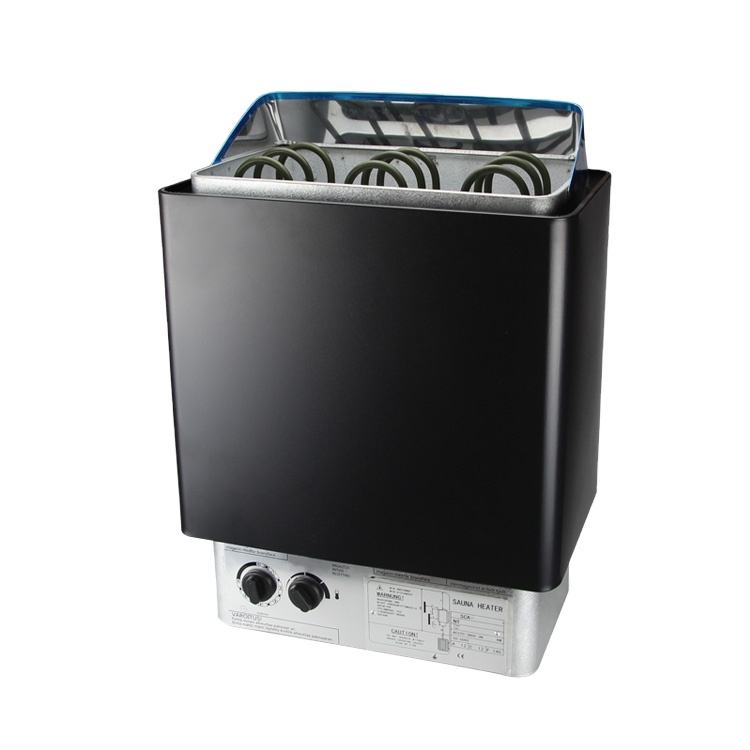
When specifying equipment for a commercial build, the choice of power source dictates the entire installation process. Electric heaters are the overwhelming standard for modern commercial facilities, but gas-powered units still serve specific niche applications depending on the facility size and local utility infrastructure.
A Premium Commercial Electric Sauna Heater dominates commercial specifications for several compelling reasons. Electric units offer precise PID temperature calibration, ensuring the room remains exactly at the set point regardless of user load. They produce zero indoor emissions, eliminating the need for complex exhaust venting through the roof. The simplified ducting and lack of gas lines significantly lower initial capital expenditure and streamline the installation process. Electric heaters also integrate seamlessly with modern building management systems for remote monitoring.
Gas-powered alternatives are typically reserved for extremely large thermal cabins or regions where the local utility cost of gas is drastically lower than electricity. While gas heaters can produce massive amounts of heat rapidly, they come with significant drawbacks. They have much higher maintenance profiles, requiring regular inspections of burners, ignition systems, and gas lines. Furthermore, they require complex, fire-rated exhaust venting to safely expel combustion byproducts, which adds substantial cost and complexity to the building's architecture.
Electric heaters also offer better zoning capabilities. In a large commercial spa with multiple sauna rooms operating at different temperatures, electric units allow for independent, precise control. Gas systems often require larger, centralized boiler-style setups that are harder to modulate for individual small rooms. The footprint of an electric heater is also generally smaller, freeing up valuable floor space for additional bench seating.
From a safety perspective, electric heaters eliminate the risk of carbon monoxide leaks. While modern gas heaters have extensive safety shut-offs, the inherent risk of combustion in a sealed, heavily insulated room requires strict adherence to local fire codes, often necessitating annual inspections by the fire marshal. Electric units bypass these specific combustion-related regulatory hurdles.
Proper sizing is the most critical factor in achieving reliable performance. You must start by calculating the true cubic volume of the sauna room. Use the standard formula: Length × Width × Height. This baseline measurement dictates the minimum kilowatt (kW) output required to heat the air space.
Undersizing a heater is a catastrophic error in a commercial setting. An undersized unit will run continuously at maximum capacity, straining the elements and leading to premature failure. Conversely, oversizing wastes electricity and creates harsh, uneven heat, as the unit will short-cycle—heating the air rapidly before the stones have time to absorb the thermal energy, resulting in a room that feels hot but lacks the deep, penetrating heat of properly warmed stones.
The baseline cubic volume is rarely the final number. You must account for the thermal mass penalty introduced by uninsulated surfaces. Materials like glass doors, viewing windows, concrete, stone walls, and uninsulated flooring absorb massive amounts of heat, drawing energy away from the ambient air.
To compensate, you must calculate the additional required kW output. A standard industry multiplier is to add 1.2 cubic meters of volume for every 1 square meter of glass or stone surface. Additionally, the quality of the wall insulation heavily impacts energy retention. Poorly insulated walls will require a higher-capacity heater to maintain the set temperature.
| Surface Material | Volume Addition per Sq. Meter | Impact on Heat Retention |
|---|---|---|
| Standard Glass Door | + 1.2 Cubic Meters | High heat loss; requires rapid recovery. |
| Heavy Stone/Tile Wall | + 1.5 Cubic Meters | Absorbs heat slowly; acts as a heat sink. |
| Uninsulated Concrete Floor | + 1.0 Cubic Meters | Draws heat downward; slows initial heat-up time. |
| Full Glass Front Wall | + 2.0 Cubic Meters | Extreme heat loss; requires significant kW up-sizing. |
Commercial saunas experience a dynamic thermal load that residential units never face: high foot traffic. Every time the door opens, a significant volume of hot air escapes, and cool ambient air rushes in. In a busy gym or spa, this happens every few minutes, creating a constant drain on the room's temperature.
To handle this rapid heat loss, commercial engineers recommend introducing a sizing buffer. You should scale up the heater's kW capacity by 10% to 20% beyond the calculated volume. This buffer allows the system to handle rapid heat recovery without overworking the heating elements, ensuring the room stays hot even during peak hours.
Frequent door openings drastically impact the ambient temperature, causing it to plummet rapidly. A heater's ability to recover from these drops defines its commercial viability. If the heater takes too long to recover, patrons will complain that the sauna is broken or not hot enough.
Higher stone capacity acts as a thermal battery. When the door opens and hot air escapes, the massive volume of heated stones releases stored thermal energy back into the room. This allows the sauna to recover heat rapidly without forcing the heating elements to engage immediately or overperform, extending the lifespan of the internal components. A heater with 150 pounds of stones will recover much faster than a unit with only 50 pounds, even if both have the same kW rating.
The heating elements are the engine of the sauna. Standard elements degrade quickly under commercial stress. Heavy-duty elements, often constructed from Incoloy or coated in Teflon, are essential for resisting corrosion and thermal shock. Incoloy is an alloy specifically designed to withstand high temperatures and resist oxidation, making it far superior to standard stainless steel in a wet sauna environment.
The physical placement of these elements is equally important. Premium units feature wide element spacing and physical separation from the stones. This design prevents the stones from resting directly on the elements, which reduces the risk of premature degradation caused by water shock when patrons pour water over the heater. When stones pack too tightly around the elements, they restrict airflow, causing the elements to overheat and burn out.
Stone mass directly correlates with the quality and consistency of the steam, known as löyly. Commercial units often hold 100 to 250 lbs of stones. This massive thermal mass absorbs heat deeply and releases it slowly, creating a comfortable, enveloping heat rather than a sharp, aggressive burn.
Deep stone cavities protect the heating elements from direct water contact. When water is poured, it vaporizes on the hot stones rather than hitting the glowing elements. This generates a softer, more consistent heat profile and prevents the harsh, biting steam associated with low-stone-capacity heaters. It also prevents the elements from cracking due to sudden temperature drops.
Commercial saunas require robust external control systems. On-board dials are insufficient and prone to tampering by patrons. Commercial control panels must offer 24/7 programmable timers, allowing the facility to automate heating schedules based on operating hours, ensuring the room is hot when the doors open and off when the facility closes.
Advanced controls provide remote diagnostics and integrate with facility management systems. They include essential safety features like high-limit switches, automatic shut-offs, and tamper-proof settings, ensuring public safety and preventing unauthorized temperature adjustments. The contactor box should be installed in a dry, accessible utility room, keeping the high-voltage switching away from the moisture of the sauna.
Continuous operation draws significant power. Analyzing the power draw is essential for managing utility costs. Premium commercial heaters utilize advanced logic to optimize energy consumption, preventing massive spikes in electrical demand.
Sequential heating is a key efficiency feature. Instead of an all-or-nothing approach, the control system turns off individual heating elements once the target temperature is reached. It then cycles elements on and off individually to maintain the heat, drastically reducing overall energy consumption compared to units that run all elements simultaneously. This staged heating also provides a more stable room temperature, avoiding the extreme highs and lows of a basic thermostat.
Commercial units require strict routine maintenance to ensure longevity. This includes regular stone resetting—removing broken stones and repacking the cavity to ensure proper airflow—and routine element inspection. Over time, sauna stones crack and crumble from thermal shock. If left in the heater, this gravel packs tightly around the elements, choking off airflow and causing the elements to overheat.
Serviceability is critical for minimizing downtime. Evaluate the availability of modular replacement parts. A true commercial heater allows technicians to replace individual elements, contactors, or sensors rapidly, ensuring repairs are completed quickly without the need to replace the entire unit. Facilities should keep spare elements and a backup contactor on hand to ensure any downtime is measured in hours, not weeks.
Commercial heaters demand robust electrical infrastructure. Most commercial heaters over 8kW require 3-phase power (208V or 480V) to operate efficiently and balance the electrical load across the building's panel. Single-phase power is rarely sufficient for heaters pushing 12kW to 20kW.
Before purchasing, you must verify your facility's electrical capacity. If your current electrical panel cannot support the required amperage or lacks 3-phase capability, you face significant retrofitting costs. Upgrading a commercial electrical service is expensive and time-consuming, often requiring new conduit runs and upgraded transformers from the utility company.
Space optimization is crucial in commercial floor plans. You must analyze whether a floor-mounted or wall-mounted heater configuration best suits your layout. Floor-mounted units typically offer higher stone capacities but require more floor space and specific structural support.
Evaluate physical space requirements and structural floor load limits, especially for high-stone-capacity heaters that can weigh hundreds of pounds when fully loaded. The layout of the sauna benches must also be designed relative to the heater position to ensure even heat distribution and safe access. The heater should be placed near the door to heat the incoming cold air immediately.
Commercial safety codes dictate mandatory combustible clearances. The heater must be installed at specific distances from wood walls and benches to prevent fire hazards. Physical safety guards or railings are also required to prevent patrons from accidentally touching the hot exterior chassis.
Mechanical ventilation—both intake and exhaust—is non-negotiable. Proper ventilation maintains air quality, prevents wood rot by removing excess moisture, and ensures the heater's internal sensors function correctly by providing a steady flow of fresh air over the thermostat. An intake vent should be located low near the heater, with an exhaust vent located high on the opposite wall to promote cross-ventilation.
Selecting a sauna heater for commercial use is an infrastructure investment. Cutting corners on equipment quality or sizing will inevitably lead to operational failures, safety risks, and inflated long-term repair bills. By prioritizing heavy-duty construction, precise sizing, and robust electrical controls, you protect your facility's reputation and ensure a consistent experience for your guests.
To ensure a successful installation, follow these next steps:
Calculate the exact cubic volume of your room, factoring in all glass, stone, and uninsulated surfaces using the appropriate multipliers.
Consult with a licensed commercial electrician to verify your facility's power capacity and 3-phase availability before finalizing any equipment purchase.
Select a heater with heavy-duty Incoloy elements, high stone capacity, and an external control system capable of facility management integration.
Establish a strict maintenance schedule for stone inspection and replacement to ensure continuous airflow and element protection.
A: A residential heater will fail rapidly under continuous commercial use. The heating elements will burn out due to relentless thermal cycling, the manufacturer will void the warranty, and the unit will struggle to maintain temperature during frequent door openings, leading to customer complaints.
A: The general rule of thumb is roughly 1 kW per 45-50 cubic feet of volume. However, this must be adjusted heavily upward to account for uninsulated surfaces like glass and stone, as well as the high-frequency foot traffic typical in commercial settings.
A: While some lower-power models can run on single-phase power, the vast majority of premium commercial units require 3-phase power (208V or 480V) to ensure an efficient, balanced electrical load and reliable continuous operation.
A: In continuous-use facilities, stones should be inspected and replaced typically every 3 to 6 months. Broken or degraded stones restrict airflow, which can cause the heating elements to overheat and fail prematurely.
A: Yes, true commercial units are specifically engineered for continuous, all-day operation. However, they must be paired with commercial-grade external contactors and control systems designed to handle the sustained electrical load safely.
A: Floor-mounted heaters require a larger physical footprint and must adhere to strict combustible clearances defined by local safety codes. They also require protective safety railings to prevent patrons from coming into direct contact with the hot unit.


