Views: 0 Author: Site Editor Publish Time: 2026-06-15 Origin: Site

Many buyers dream of stepping into an authentic Finnish sauna right in their own backyard. You likely crave deep, penetrating warmth. You want the rich aroma of burning birch or cedar. But building a proper sweat bath brings up an immediate conflict. You must balance your desire for traditional heat quality against heavy infrastructure demands. Not every property supports a large chimney, complex fireproof clearances, or strict building codes. If you guess wrong during the planning phase, you risk creating a fire hazard. You might also end up with a space you rarely use. We will introduce a clear framework for evaluating your heating options. This guide helps you determine if your location and lifestyle support a traditional setup. You will also learn when a high-capacity electric sauna heater becomes the most viable path for your daily wellness ritual.
Wood-fired models are the historical standard for traditional saunas, offering distinct radiant heat, higher stone capacities, and natural ventilation dynamics.
Installing a traditional wood-burning stove requires significant site prep, including structural fireproofing, chimney routing, and strict adherence to local building codes.
Modern high-mass electric sauna heaters can closely replicate the traditional experience without the combustible risks, making them the pragmatic choice for indoor or urban builds.
Final selection should depend on site location (outdoor vs. indoor), insurance constraints, and willingness to manage ongoing maintenance (fuel sourcing, ash removal).
Defining authenticity sets realistic success criteria for your project. Many enthusiasts argue a wood-fired unit represents the only true way to sweat. But true authenticity relies on specific thermal physics, not just the fuel source. You need soft, sustained steam. Finns call this löyly. To achieve excellent löyly, your equipment must perform specific functions incredibly well.
Traditional models prioritize a massive rock volume. They do not just heat the surrounding air. They heat the stones deeply. When you toss water onto them, you generate a gentle, enveloping steam cloud. A standard sauna heater needs at least 40 to 50 pounds of rocks to function properly. Authentic wood-fired stoves often hold over 150 pounds of peridotite or vulcanite. This heavy thermal mass prevents harsh, dry heat. It stabilizes the room temperature beautifully over long sessions.
Wood stoves emit long-wave radiant heat. Heavy steel walls and dense stone blocks absorb the fire's intense energy. They radiate it evenly into the room. This heat penetrates your skin deeply. Low-end modern alternatives rely too heavily on convective heat. They simply blow hot air around the room to raise the ambient temperature. This approach creates a harsh environment. It dries out your respiratory tract quickly.
Proper airflow separates a mediocre sweat bath from a spectacular one. A wood fire actively consumes oxygen for combustion. It drafts air up the chimney constantly. This mechanical action naturally pulls fresh outside air into the hot room through lower intake vents. You receive a constant oxygen turnover. High oxygen levels keep you comfortable. They prevent the room from feeling stuffy or suffocating. If you use non-combustible alternatives, you must carefully recreate this airflow mechanically.
Best Practices for Traditional Airflow:
Place the main intake vent directly below the stove to feed the fire.
Install the exhaust vent on the opposite wall, ideally under the benches.
Ensure the draft pulls fresh air completely across the primary breathing zone.
Comparing the two primary heating mechanisms helps you finalize your blueprint. You sit at the bottom of the decision funnel. You must choose a definitive path based on logic, not just aesthetics.
A wood fire demands active participation. You must feed it logs continuously. You control the air intake draft to adjust the flame intensity. This requires skill, attention, and patience. Conversely, an electric sauna heater provides thermostat-controlled precision. You simply set the dial. It monitors the internal room sensors and maintains the heat perfectly. You get a highly predictable environment every single time.
Wood-fired units take 45 to 90 minutes to come up to temperature. You must build the fire, tend it, and wait patiently for the rocks to soak up the thermal energy. This becomes a deliberate weekend ritual. Electric models offer set-and-forget scheduling. You can program them to turn on automatically. Your hot room awaits you immediately after your evening commute.
Wood setups require significant physical storage space. You must source, split, stack, and dry firewood for months. You also need to clean out the ash box regularly to maintain airflow. Electric systems require a heavy electrical draw. You typically need a 220V or 240V dedicated circuit wired by a licensed professional. Once installed, you just flip a switch.
Common Mistakes in Decision Making:
Underestimating the physical labor required to move firewood all winter.
Assuming an existing standard 110V household outlet can power a large unit.
Forgetting to factor in the time needed to sweep ashes and clean the glass door.
Feature | Wood-Fired Models | Electric Models |
|---|---|---|
Temperature Control | Manual draft and fuel management | Automated thermostat precision |
Heat-Up Time | 45 to 90 minutes | 30 to 45 minutes |
Infrastructure Needs | Chimney, fireproof pads, large clearances | 220V/240V hardwired circuit |
Daily Routine | Heavy physical involvement | Set-and-forget convenience |
We must look closely at the physical and legal barriers. Traditional installations are highly demanding. You cannot cut corners safely. Understanding these requirements prevents catastrophic structural failures.
You cannot just place a hot metal box next to a wooden wall. Unshielded wood stoves require massive clearance distances to prevent spontaneous combustion. You often need up to 36 inches of empty space around the unit. This eats up valuable interior room. You can reduce this footprint by installing certified heat shields. You must also install a heavy, non-combustible floor pad underneath the unit. This protects your wooden floorboards from stray embers.
You must safely route dangerous exhaust gases entirely out of the room. This involves major structural complexity. You have to cut precise holes through your roof or exterior walls. You must install heavy, insulated, double-wall chimney pipes. Maintaining proper draft is essential to keep harmful smoke out of your eyes. Poorly routed chimneys lead to backdrafts. Backdrafts ruin the entire experience instantly.
Local municipalities regulate solid fuel appliances strictly. You might face seasonal burn bans during dry summer months. Zoning laws might dictate exactly how tall your chimney must be above the roofline. Homeowner insurance providers evaluate wood-burning stoves carefully. They often require specialized site inspections. Some policies strictly prohibit unpermitted solid-fuel additions on the property entirely.
If your property supports a traditional build, you must select the right equipment. Follow these evaluation dimensions closely to ensure maximum performance.
You must size the stove accurately. Measure your internal room volume first. Then, you must add extra capacity for uninsulated surfaces. Glass doors, windows, and exposed stone walls drain heat quickly.
Measure the room length, width, and height. Multiply them for total volume.
Calculate the square footage of any glass or masonry surfaces.
Add an artificial volume multiplier for those uninsulated areas.
Select a stove rated for that final, adjusted volume number.
Let us look at a practical example. Imagine you have a standard outdoor barrel sauna. The internal volume is relatively small. However, half of the front wall might be a glass window. If you fail to account for the glass, your stove will underperform. It will struggle to reach optimal temperatures during cold winter months. Always round up to the next power tier if your calculation lands between two models.
Look closely at the build quality. Heavy stainless steel construction resists thermal shock and water degradation much better than thin, painted metals. The firebox takes massive abuse. It expands and contracts rapidly. Heavy cast iron doors provide longevity and prevent warping over decades of heavy use.
The best designs maximize stone-to-metal contact. You want the firebox completely surrounded by rocks. This transfers heat into the thermal mass efficiently. It prevents the ambient air from getting too hot before the stones are fully ready for water. Deep stone baskets perform significantly better than shallow trays.
You have two distinct options for loading wood into the firebox. Inside-feed models let you load the wood from directly inside the hot room. You sit on the bench and watch the glowing flames through a glass door. It feels highly atmospheric. Outside-feed models solve a major cleanliness problem. They feature an elongated collar. You push the unit against a specially framed wall opening. You load logs from an adjacent changing room or outside porch. This setup keeps bark and dirt entirely out of your bathing space. It also prevents the fire from consuming oxygen from inside the hot room.
Many buyers find wood-fired constraints too limiting. They need a highly practical alternative that still delivers incredible löyly.
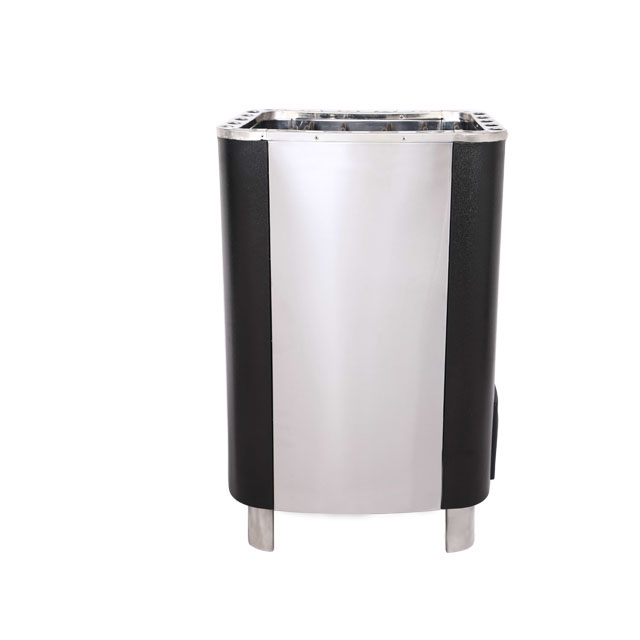
High-end electric models now feature massive rock capacities. Pillar-style or tower units hold 150 to 200 pounds of stone. They stand vertically, exposing a huge surface area of rocks. They perfectly mimic the traditional radiant heat profile. You get copious amounts of soft, hissing steam when you ladle water over them. The heavy mass prevents the sharp temperature spikes associated with cheap wall-mounted boxes.
You trade the ancient ritual of fire-tending for modern lifestyle convenience. Smart Wi-Fi controls let you start a heating session directly from your smartphone. You get predictable, daily wellness without the heavy lifting. You sacrifice the smell of woodsmoke, but you gain back hours of your week.
Use this simple evaluation framework to make your final choice.
Scenario | Best Heater Choice | Primary Reason |
|---|---|---|
Off-grid remote cabins | Wood-Fired | No access to 240V grid power. Plentiful natural fuel. |
Dedicated outdoor structures | Wood-Fired | Ample space for roof chimneys and fireproof clearances. |
Indoor home conversions | Electric | Zero carbon monoxide risks. Fits tight basement clearances. |
Urban/Suburban backyards | Electric | Avoids neighbor smoke complaints and municipal burn bans. |
While a wood-fired unit defines the historical standard, the traditional experience ultimately relies on heat quality, heavy stone mass, and robust ventilation. You do not strictly need a crackling fire to achieve authentic löyly. A high-mass electric option delivers incredible performance without the intense logistical hurdles.
Your immediate next step is calculating your exact room volume carefully. You must also consult your local municipal building codes. Understand your physical constraints completely before you add any unit to your cart. Protect your investment by planning your infrastructure thoroughly first.
A: Installing one indoors is extremely difficult. It requires strict adherence to building codes, complex fireproof floor pads, and massive clearances. You must also route a double-insulated chimney through the roof. Most homeowner insurance policies heavily restrict indoor solid-fuel appliances. Electric units are much safer for indoor conversions.
A: Yes. They mandatorily require a chimney to exhaust dangerous smoke and carbon monoxide. You must install a proper flue system, typically using Class A insulated double-wall pipes. This ensures a safe updraft and prevents structural fires.
A: This is a common myth. Proper electric models are designed to be wet saunas. They feature designated rock chambers. You can and should pour water directly over these hot stones. This generates the exact same traditional wet steam (löyly) as a wood stove.
A: Unshielded wood models often require up to 36 inches of clearance from combustible walls. You can drastically reduce this distance by using manufacturer-approved heat shields. You must always check the specific manual for your model, as required clearances vary by design.