
Views: 0 Author: Site Editor Publish Time: 2026-10-15 Origin: Site

Cold water immersion hits the human body like a freight train. The moment you submerge, your autonomic nervous system reacts violently. Heart rates spike, blood vessels constrict, and breathing becomes rapid and shallow. Many people struggle with conflicting information regarding the optimal therapeutic temperatures required to harness these biological responses. Finding the right temperature is not a test of pain tolerance. It requires a clinical approach to systemic physiological adaptation.
A true ice bath operates within specific clinical parameters that standard cold showers simply cannot replicate. Showers fail to provide the sustained, full-body thermal extraction necessary to trigger deep metabolic shifts. Maintaining precise, repeatable water temperatures remains the core challenge for anyone pursuing daily cold therapy. Fluctuating temperatures undermine protocol adherence, and relying on manual ice delivery creates inconsistent conditions that stall your progress. You need a reliable framework for determining your clinically effective temperature range based on individual tolerance and recovery goals, supported by the right hardware to sustain it.
Optimal Ranges Vary by Experience: Clinical consensus places effective cold water immersion between 10°C and 15°C (50°F–59°F) for most users, with advanced protocols dropping below 10°C.
Progressive Adaptation is Crucial: Bio-individuality dictates that users should start at the warmer end of the spectrum and incrementally lower the temperature as their autonomic nervous system adapts.
Time-to-Temperature Ratio: Colder does not universally mean better; duration must scale inversely with temperature to prevent hypothermic risk and maximize metabolic benefits.
Consistency Requires Infrastructure: Achieving daily, reliable temperature control necessitates moving beyond manual ice addition to active chilling and high-retention materials.
Material Dictates Efficiency: The thermal properties of the tub directly impact the operational cost and lifespan of the cooling unit.
When you submerge in water between 10°C and 15°C, your body executes a hardwired survival sequence. This temperature bracket triggers immediate peripheral vasoconstriction. The smooth muscle in your blood vessels contracts, forcing blood away from your extremities and driving it toward your vital organs to protect your core temperature. Simultaneously, your brain releases a massive surge of norepinephrine. This neurotransmitter acts as a central nervous system stimulant, regulating focus, attention, and mood. You do not need freezing, single-digit temperatures to initiate this chemical release. The 10°C to 15°C range provides the exact thermal stimulus needed to achieve these baseline physiological markers.
Clinical duration guidelines for this temperature bracket generally recommend 5 to 10 minutes of continuous immersion. This timeframe provides the optimal window for acute inflammation reduction and allows the central nervous system to reset effectively. Staying within this duration prevents the onset of deep tissue damage. Your body absorbs the metabolic benefits of the cold without crossing the threshold into dangerous hypothermic territory. Consistency at this baseline yields far better long-term results than sporadic, ego-driven exposure to extreme cold.
The first thirty seconds of immersion dictate the success of your entire session. You will experience an intense psychological and physical rush during the initial dip. The sudden drop in skin temperature triggers an involuntary gasp reflex, and your heart rate spikes dramatically. Your body perceives the cold as an immediate existential threat. This panic response is completely natural. You cannot prevent the cold shock response, but you can manage it through deliberate action.
Breathwork serves as your primary tool for overriding the autonomic nervous system. You must consciously control your respiration the moment your chest hits the water. Implement a strict breathing protocol to signal safety to your brain:
Inhale deeply through your nose for four seconds.
Hold the breath at the top for two seconds.
Exhale slowly through pursed lips for six seconds to manually lower your heart rate.
Repeat this cycle until the involuntary gasping stops.
This deliberate breathing pattern dampens the panic response. Within one minute, your body will stabilize at the target temperature. The initial stinging sensation subsides, replaced by a deep, numbing calm.
Pushing water temperatures below the 10°C mark changes the entire risk profile of your session. The physiological returns begin to diminish rapidly while the physical risks escalate. Sub-10°C water drastically reduces your safe immersion window. You face an increased risk of frostnip on your toes and fingers, characterized by white, waxy skin and complete numbness. Severe afterdrop also becomes a significant concern. Afterdrop occurs when cold blood from your limbs returns to your core after you exit the tub, causing your internal body temperature to continue falling even while you stand in a warm room.
Extreme cold immersion serves very specific athletic and metabolic use cases. Elite athletes may utilize single-digit temperatures to blunt severe acute inflammation immediately following high-impact trauma. Some practitioners use extreme cold to trigger intense metabolic shivering for brown fat activation. These advanced protocols demand strict duration limits. Immersion should rarely exceed 1 to 3 minutes. Pushing beyond these limits at sub-10°C temperatures invites hypothermia and completely negates the recovery benefits.
Water temperature and immersion duration share a strict inverse relationship. As the water gets colder, your time in the tub must decrease. There is no single universal temperature that optimizes benefits for every human body. You must build a decision framework based on your specific physiology. A larger individual with more body fat possesses more natural insulation and may tolerate colder temperatures longer than a leaner individual. You must respect your bio-individuality rather than copying someone else's routine.
Apply the concept of the minimum effective dose to your cold therapy. Find the highest temperature and shortest duration that still triggers the desired physiological response. Over-exposure leads to excessive fatigue and nervous system burnout. Implement a strategy of self-titration. Start your initial sessions at a higher temperature, such as 15°C. Utilize your equipment to effortlessly lower the water temperature by a single degree every few weeks. This progressive overload allows your autonomic nervous system to adapt safely over months of consistent practice.
The DIY approach to cold therapy relies on manual temperature control. You fill a tub with tap water and dump in bagged ice. The logistical reality of this method quickly becomes a massive burden. Calculating the exact ice volume required to drop ambient tap water to 15°C requires constant adjustments. Tap water temperatures fluctuate wildly depending on the season and your geographic location. If your summer tap water sits at 21°C (70°F) and your tub holds 100 gallons, dropping that water to 10°C (50°F) requires roughly 80 to 100 pounds of ice. That means hauling four to five large bags from the gas station every single day.
Manual control carries significant hidden costs. Daily ice purchases add up rapidly over a year, often exceeding the cost of dedicated hardware. The time consumed driving to the store, hauling heavy bags, and waiting for the ice to melt destroys the convenience of a daily routine. Furthermore, manual setups cannot maintain a static temperature. Your body heat continuously warms the surrounding water during a 10-minute session. The water temperature slowly rises, diluting the thermal stimulus before your session even concludes.
Automated systems provide the mechanical advantage necessary for serious practitioners. Utilizing a cold plunge chiller for daily recovery eliminates the manual labor entirely. You set the desired temperature on a digital thermostat, and the compressor handles the rest. This automation ensures absolute protocol consistency. You enter the exact same thermal environment every single day. This repeatability allows you to accurately track your physiological adaptation over time without second-guessing the water temperature.
Active chilling systems also provide continuous water circulation through an internal pump. Still water creates a thermal aura around your body. Your body heat warms the thin boundary layer of water directly touching your skin. This insulating layer makes the water feel significantly warmer than the actual ambient temperature of the tub. Active circulation constantly breaks this boundary layer. It forces fresh, cold water against your skin, preventing thermal layering and ensuring you experience the true set temperature throughout the entire duration of your plunge.
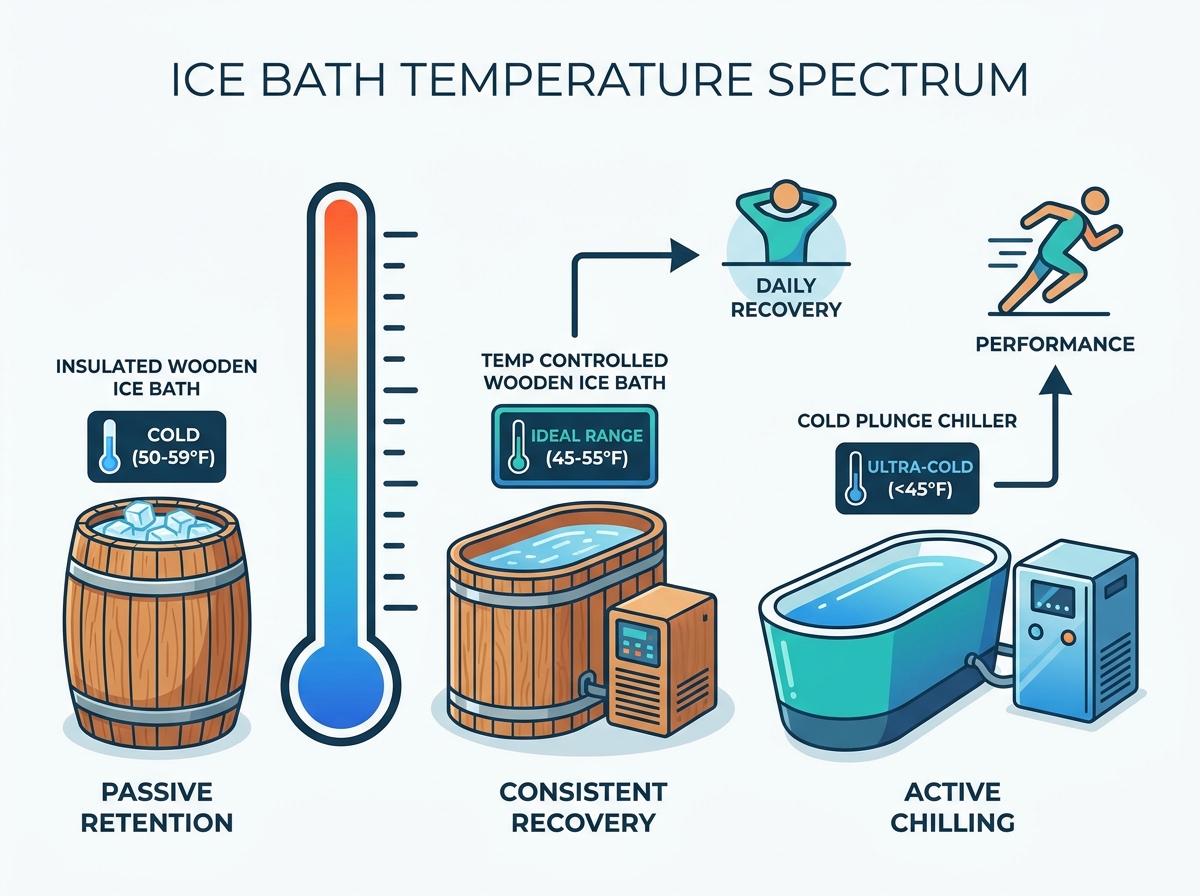
The material composition of your tub dictates its thermal efficiency and long-term viability. Natural wood, particularly cedar or thermowood, possesses significant thermal mass and a naturally high R-value. It resists temperature transfer far better than single-wall plastics or thin acrylics. Inflatable tubs offer minimal structural insulation, allowing the cold to bleed out into the surrounding environment rapidly. Wood acts as a natural, heavy-duty barrier, locking the cold inside the water volume where it belongs.
High-grade insulated wooden ice bath temperature retention directly impacts your equipment's operational efficiency. Superior insulation reduces the workload on the chilling unit. The compressor does not need to run continuously to maintain the set point. It cycles on less frequently, which reduces operational strain and significantly extends the lifespan of the compressor components. It also drastically lowers your daily electricity consumption, making the system highly efficient for year-round operation. Furthermore, heavy wood prevents the exterior condensation and sweating commonly seen on uninsulated metal or plastic tubs.
A fully integrated system merges structural longevity with advanced thermal control. Wood provides an aesthetic quality that integrates seamlessly into high-end residential spaces, outdoor decks, or professional wellness centers. Beyond aesthetics, proper timber construction withstands the harsh environmental demands of constant moisture and temperature fluctuations. The integration of precise thermostat controls allows users to make incremental temperature adjustments with absolute accuracy, shifting from a 15°C beginner plunge to a 5°C advanced session with the push of a button.
Investing in a temperature controlled wooden ice bath provides distinct advantages for specific user groups. Commercial facilities require equipment that maintains strict sanitary and thermal standards despite back-to-back usage from multiple clients. High-frequency home users demand immediate, 24/7 readiness. You cannot wait three hours for water to cool before a 5:00 AM morning workout. An integrated wooden system holds the target temperature indefinitely, ensuring the water is ready the exact moment you need it.
Proper sizing ensures you achieve full systemic cold exposure. You must calculate sizing based on user height and total water displacement. A tub that is too small forces you to keep your knees bent or your chest exposed to the ambient air. You need adequate depth to achieve full-body submersion up to the base of your neck. The vagus nerve runs through the neck, and submerging this area is critical for maximizing the parasympathetic nervous system response and triggering the full cascade of cold therapy benefits.
Total water volume directly impacts your hardware requirements. Pairing an ice bath barrel with water chiller requires matching the chiller's horsepower and BTU rating to the tub's capacity. A larger volume of water requires a more powerful compressor (typically 1/2 HP to 1 HP) to achieve rapid cooling from ambient temperatures. Undersized chillers will run continuously, burn out prematurely, and fail to reach sub-10°C temperatures during peak summer months when ambient heat fights against the cooling process.
| Material Type | Thermal Retention (R-Value) | Condensation Risk | Compressor Workload | Durability |
|---|---|---|---|---|
| Insulated Wood | High | Very Low | Low (Cycles infrequently) | Excellent (Decades with care) |
| Single-Wall Acrylic | Low | High (Sweats heavily) | High (Runs constantly) | Moderate (Prone to cracking) |
| Inflatable PVC | Very Low | Moderate | Very High | Low (Puncture risk) |
Active chilling systems require robust electrical infrastructure. Compressors draw significant amperage during their startup phase, often spiking before settling into their continuous running wattage. You must connect the chilling unit to a dedicated 15-amp or 20-amp circuit to prevent tripped breakers. Never run a high-powered chiller on a shared circuit with other heavy appliances like garage freezers or power tools. Install GFCI (Ground Fault Circuit Interrupter) outlets for all external power connections. Water and electricity present a lethal combination, making proper grounding and fault protection non-negotiable safety requirements for any installation.
Ambient environmental conditions heavily influence system performance. Placing the unit in direct sunlight forces the compressor to fight against intense solar heat gain. This reduces cooling efficiency, increases power consumption, and shortens the lifespan of the hardware. Freezing ambient conditions present a completely different threat. If the ambient temperature drops below freezing, the water inside the chiller's internal PVC piping and heat exchanger can freeze and expand. This expansion will shatter the internal components. You must ensure your system has a built-in freeze-protection mode or active heating function for winter outdoor use.
Cold water slows bacterial growth, but it does not stop it entirely. Stagnant water kept at cold temperatures for extended periods will eventually develop a slick biofilm on the interior walls of the tub. You must implement active filtration to maintain sanitary conditions. A comprehensive sanitation setup includes an ozone generator to oxidize organic matter and break down bacterial cell walls. It requires a UV-C clarifier to neutralize viruses. It also needs a 20-micron pleated filter to capture physical debris like dead skin cells, hair, and environmental dust.
Establish a realistic and strict maintenance schedule to protect your investment and your health:
Remove and rinse the micron filter cartridge weekly with a high-pressure hose to clear trapped debris.
Replace the filter cartridge entirely every four to six weeks, depending on usage volume.
Check the water chemistry weekly to ensure the ozone system is functioning correctly and the water remains clear.
Skim the surface daily with a small net if the tub is located outdoors under trees.
Drain, scrub the interior walls with a non-abrasive cleaner, and refill the entire tub every three to six months.
Cold water therapy presents severe risks for individuals with specific medical conditions. Clear medical contraindications exist and must be respected. Individuals with cardiovascular conditions, high blood pressure, or a history of heart arrhythmias must avoid extreme cold exposure. The sudden spike in blood pressure during the initial cold shock can trigger adverse cardiac events. Individuals suffering from Raynaud's disease should also avoid cold plunges, as the severe vasoconstriction can cause painful, long-lasting, and damaging flare-ups in the extremities.
Implement strict protocols for safe rewarming after your session. Do not jump immediately into a hot shower or a sauna. Rapid external rewarming forces the constricted blood vessels in your skin to open quickly. Cold blood from your extremities rushes back to your core, causing a severe drop in internal temperature. This rapid afterdrop can lead to violent shivering, dizziness, and fainting. Instead, allow your body to rewarm naturally. Use light movement, such as walking, gentle air squats, or horse stance, to generate internal metabolic heat and slowly bring your core temperature back to baseline.
Audit your current recovery frequency to determine if an automated system justifies the investment.
Measure your available installation space to ensure proper clearance for airflow around the chiller vents.
Assess your electrical infrastructure and schedule a dedicated GFCI circuit installation if necessary.
Select a tub size based on the height of the tallest user to guarantee full-body submersion.
Establish a weekly maintenance calendar to protect your equipment and maintain pristine water chemistry.
A: The optimal starting point is 15°C (59°F) for 3 to 5 minutes. Focus entirely on breath control to manage the initial cold shock. Master slow, nasal breathing at this baseline before attempting to lower the temperature in any future sessions.
A: Cooling time depends heavily on the starting water temperature, ambient environmental temperature, and the chiller's horsepower. It typically takes 3 to 5 hours for the initial cooldown from tap temperature. Once the target is reached, the chiller maintains it continuously.
A: Yes. High-quality insulation prevents external condensation, drastically reduces daily electricity costs, and stops the chiller's compressor from running continuously by locking the cold inside the water volume.
A: Five degrees Celsius is considered extreme. It is generally reserved for advanced practitioners for very short durations of 1 to 2 minutes. Pushing beyond this time limit at such low temperatures significantly increases the risk of hypothermia and frostnip.
A: With proper UV and Ozone sanitation systems running alongside a clean micron filter, the water can last 3 to 6 months. This timeline depends heavily on your usage frequency and whether you shower before plunging.
A: Yes, but the chilling unit must feature a dedicated heating function or an active freeze-protection mode. This prevents the internal PVC pipes and compressor components from freezing and bursting when ambient temperatures drop below freezing.
A: Expect an intense initial rush and a natural, involuntary gasp reflex. The water will feel aggressively cold. The key is to stay calm, focus on slow nasal breathing, and allow your body 30 to 60 seconds to adapt to the thermal shock.


