Views: 0 Author: Site Editor Publish Time: 2026-07-31 Origin: Site

Operating a sauna presents harsh environmental realities. The equipment must endure a destructive combination of sustained extreme heat, typically ranging from 150°F to 195°F, alongside sudden spikes in humidity whenever water hits hot stones. Standard heating equipment often fails under these intense conditions. Lower-grade metals suffer from rapid oxidation, structural warping, electrical shorts, and premature element burnout caused by thermal shock and constant moisture exposure.
Material science serves as the primary differentiator in equipment longevity. Choosing the right alloy prevents catastrophic failures and extends operational life. Stainless Steel 304 (SS304) stands as the industry-standard baseline for high-moisture sauna applications. It successfully balances corrosion resistance and thermal conductivity, ensuring reliable performance even when subjected to extreme temperature fluctuations and dense steam generation. Understanding how this material interacts with heat and humidity reveals exactly why it remains the superior choice for modern sauna environments.
Material Resilience: SS304 utilizes an 18/8 chromium-nickel composition, creating a passive oxide layer that prevents structural degradation when exposed to high-humidity "dry steam" conditions.
Thermal Efficiency: The alloy maintains structural integrity during rapid temperature fluctuations without sacrificing the thermal conductivity required to heat sauna stones effectively.
Safety and Compliance: Proper housing and isolated electrical components in SS304 heaters mitigate the risks of operating high-voltage equipment in moisture-dense rooms.
Cost-to-Lifespan Ratio: While requiring a higher initial investment than galvanized steel, an SS304 Dry Steam Sauna Stove drastically reduces replacement frequency and maintenance overhead.
Understanding the sauna environment requires defining the exact nature of the heat and moisture involved. A dedicated steam room operates at near 100% humidity with relatively lower heat. In contrast, a traditional sauna utilizing a Sauna Heater relies on high ambient heat with fluctuating humidity levels. These levels typically range from 10% to 40%, spiking only when water is poured directly over the heated stones.
This process creates "löyly," the Finnish term for the steam generated by water hitting hot rocks. While löyly enhances the bathing experience, it creates an immediate, localized impact on the heater components. The sudden introduction of water causes rapid cooling on the surface of the stones and the surrounding metal, followed by an aggressive burst of vaporized moisture. This vapor settles on cooler surfaces, testing the corrosion resistance of every exposed metal part within the room.
The physics of perceived heat further complicate the environment. Humidity spikes increase the heat transfer rate to human skin. Even at a modest 30% to 40% humidity, a 170°F wet sauna feels just as intense as a 210°F completely dry environment. This means the heater must maintain high baseline temperatures while simultaneously surviving regular blasts of water vapor without compromising its structural integrity.
Establishing a clear operational boundary between equipment types prevents installation errors. A sauna heater warms the ambient air and the stones directly. It is designed to sit inside the hot room, enduring the direct impact of water and extreme temperatures. The user controls the humidity manually by ladling water onto the rocks.
Conversely, a steam generator functions as an external boiler. It sits outside the bathing area and pumps high-density moisture into a sealed room. Steam generators are not built to withstand the ambient heat of a traditional sauna room. Mixing these two distinct technologies or using the wrong equipment for a specific room type leads to immediate hardware failure and potential safety hazards.
Standard heating elements fail quickly when exposed to the sauna environment. The combination of oxygen, water vapor, and extreme heat dramatically accelerates oxidation in lower-grade metals. When water hits the hot metal, it vaporizes, leaving behind trace minerals and oxygen molecules that bond with the iron in the steel. This chemical reaction creates iron oxide, commonly known as rust.
Rust weakens the structural integrity of the metal casing and the internal heating elements. As the rust flakes away, it exposes fresh metal to the same destructive cycle. Furthermore, standard metals suffer from thermal shock. When cold water hits superheated metal, the material contracts rapidly. This sudden contraction creates micro-fractures in inferior alloys. Over time, these micro-fractures expand, leading to complete structural failure, element burnout, and potential electrical faults.
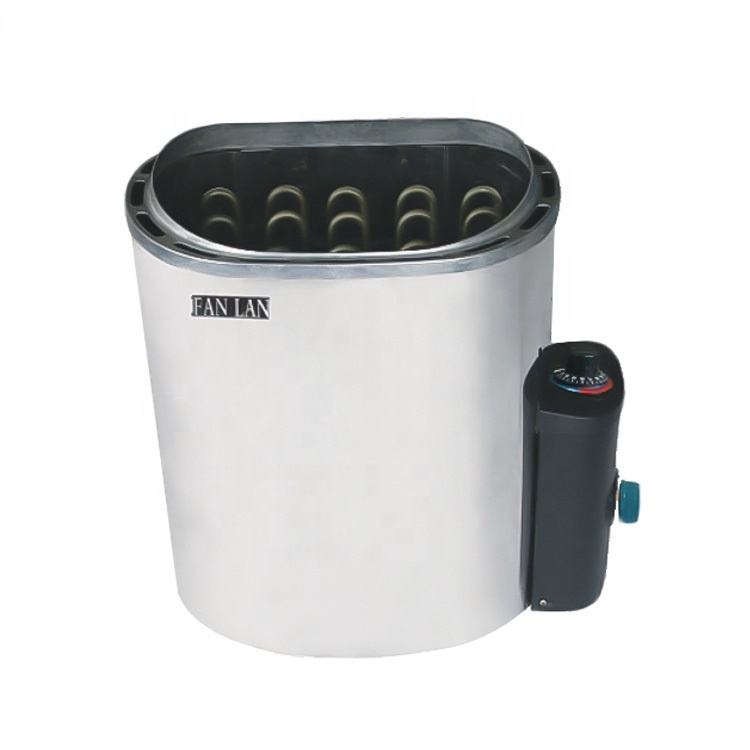
The durability of an SS304 Dry Steam Sauna Stove stems directly from its chemical makeup. SS304 is defined by its 18% chromium and 8% nickel composition. This specific blend alters how the metal reacts to environmental stressors. Instead of forming destructive iron oxide when exposed to moisture and oxygen, the chromium in the alloy reacts first.
Chromium forms a microscopic, self-healing passive layer of chromium oxide across the surface of the steel. This invisible barrier blocks oxygen and moisture from penetrating the underlying iron. If the surface is scratched or exposed to sudden thermal shock, the chromium instantly reacts with ambient oxygen to repair the passive layer. The addition of nickel enhances the metal's overall toughness and resistance to high-temperature scaling, ensuring the heater maintains its structural integrity year after year.
A successful sauna heater must transfer energy efficiently from the electrical elements to the stone cavity. SS304 possesses an excellent thermal conductivity profile for this specific application. It heats up quickly, transferring energy to the stones without acting as a massive heat sink itself. This efficiency ensures the room reaches the desired temperature faster, reducing the overall energy load on the electrical system.
However, thermal conductivity must be balanced with heat retention and structural stability. Metals that heat too quickly often warp under sustained high-temperature operation. SS304 strikes the perfect balance. It transfers heat effectively while maintaining enough rigidity to withstand the constant expansion and contraction cycles inherent in daily sauna use. The metal does not warp, buckle, or deform, even when supporting the heavy weight of the sauna stones.
Not all parts of the heater face the same environmental stress. The SS304 outer casing primarily deals with ambient heat, occasional splashes, and high humidity. Its main job is to protect the internal components and provide a safe, corrosion-resistant exterior. SS304 excels in this role, offering a clean aesthetic and reliable protection.
The internal heating elements, however, face a much harsher reality. They endure direct contact with water and bear the brunt of the thermal shock. While many high-quality heaters use specialized SS304 for these elements, premium models often upgrade to high-performance nickel-chromium alloys, such as Incoloy. These specialized alloys offer even greater resistance to direct element-to-water thermal shock, ensuring the core heating mechanism survives the aggressive löyly process.
The physical design of the heater dictates how safely it handles water. The rock tray and outer casing must be engineered to channel water away from sensitive electrical terminals. A well-designed unit ensures that water poured over the stones vaporizes completely before it can pool at the base of the heater.
Evaluate the structural relationship between the rocks and the elements. Direct rock-to-element contact allows for rapid heat transfer but exposes the elements to greater thermal shock. Separated compartments, where the elements heat a metal tray holding the rocks, protect the elements from direct water contact but may slow down the initial steam generation. Both designs benefit immensely from SS304 construction, which prevents the housing from rusting through and exposing the internal wiring.
Operating high-voltage electric heaters in damp environments requires strict adherence to safety protocols. Industry standards dictate specific Ingress Protection (IP) ratings for sauna equipment. A rating of IPX4 is typically the minimum requirement, indicating that the equipment is protected against splashing water from any direction.
SS304 housings play a critical role in achieving and maintaining these IP ratings. The corrosion-resistant metal ensures that the protective casing does not degrade over time. It prevents moisture ingress and condensation buildup from reaching the isolated electrical components, terminal blocks, and internal wiring. This isolation prevents short circuits and ensures safe operation throughout the lifespan of the unit.
High-moisture environments can sometimes mask the true ambient temperature, leading to dangerous overheating scenarios. Safety controls are non-negotiable. High-limit safety thermostats, often called high-limit switches, act as a fail-safe mechanism. If the room temperature exceeds safe operational limits—typically around 220°F to 250°F—the switch cuts power to the elements.
Temperature sensors must be placed accurately to read the ambient air rather than the direct radiant heat from the unit. The SS304 casing ensures that the mounts for these sensors remain stable and rust-free, providing accurate readings and preventing thermal runaway that could damage the room or harm the users.
The volume of stones a heater can hold directly impacts the quality of the steam. High stone capacity requires a strong structural frame. SS304 provides the necessary tensile strength to support large volumes of dense sauna stones, such as peridotite or vulcanite, without buckling under the extreme heat.
A larger stone mass results in softer, more consistent steam. When water hits a large volume of properly heated stones, it vaporizes instantly and completely. This prevents excess water from dripping down onto the heating elements, thereby reducing thermal shock and extending the life of the internal components. The structural strength of SS304 makes high-capacity stone trays possible.
| Material | Corrosion Resistance | Thermal Shock Tolerance | Best Application |
|---|---|---|---|
| Galvanized Steel | Low (Zinc coating degrades at high temps) | Poor (Prone to warping and rust) | Budget, dry-only environments (Not recommended for steam) |
| SS304 | High (Forms passive oxide layer) | Excellent (Maintains structural integrity) | Standard residential and commercial dry steam saunas |
| SS316 | Very High (Contains molybdenum for chloride resistance) | Excellent | Coastal outdoor saunas, facilities using chlorinated water |
| Cast Iron | Moderate (Requires seasoning, prone to surface rust) | High (Massive heat retention) | Traditional wood-burning applications, slow heat-up times |
Galvanized steel offers upfront cost savings, but it presents severe long-term risks in a sauna environment. The zinc coating used in galvanization degrades rapidly when exposed to the extreme heat of a sauna. Once the coating fails, the underlying steel rusts quickly in the high-humidity conditions. Furthermore, degrading zinc can produce off-gassing at high temperatures, creating an unpleasant and potentially unsafe breathing environment. SS304 eliminates these risks entirely.
While SS304 is the standard, SS316 (Marine Grade) stainless steel includes molybdenum, which provides enhanced resistance to chlorides and harsh chemicals. SS316 is necessary for coastal outdoor saunas exposed to saltwater air or commercial facilities where users frequently enter the sauna directly from a chlorinated pool. However, for standard residential and commercial dry steam applications utilizing fresh water, SS304 is perfectly adequate and serves as the optimal middle ground for performance and durability.
Traditional cast iron and ceramic-coated models offer different heat profiles. Cast iron takes significantly longer to heat up but retains heat for hours. However, it is prone to surface rust if not meticulously maintained and seasoned. Ceramic coatings can chip, exposing the underlying metal to moisture. SS304 provides faster heat-up times, requires virtually no maintenance, and offers superior moisture tolerance compared to these traditional alternatives.
Even the highest quality stainless steel requires proper operational practices. Hard water presents a significant risk to sauna equipment. Calcium and magnesium deposits will build up on SS304 surfaces over time, creating a white, chalky scale. This scale insulates the heating elements, forcing them to work harder and run hotter, which ultimately shortens their lifespan.
Mitigation strategies are straightforward. Always use filtered or distilled water when generating steam. Implement routine descaling protocols using mild, non-abrasive solutions to clean the rock tray and exposed metal surfaces. Most importantly, never pour pool or spa water onto the stones, as the chlorine and bromine will aggressively attack the metal, even SS304.
Airflow dictates the longevity of the entire sauna room, including the heater. Adequate ventilation extends the life of an SS304 unit by allowing the room and the equipment to dry completely after use. Stagnant moisture is the enemy of all sauna components.
Ensure the room features a proper intake vent near the base of the heater and an exhaust vent on the opposite wall. This configuration pulls fresh air across the hot elements, distributing the heat evenly and flushing out excess humidity once the bathing session concludes. Proper drying prevents surface oxidation and protects the electrical terminals from condensation.
Installing the correct kilowatt (kW) capacity is crucial for equipment survival. A standard evaluation framework requires calculating the cubic footage of the room (Length x Width x Height). However, insulation materials heavily influence the final requirement. Uninsulated surfaces like glass, stone, or concrete absorb massive amounts of heat. For every square foot of uninsulated material, you must add an artificial cubic foot to your total volume calculation before selecting a heater.
An undersized heater will run continuously in an attempt to reach the set temperature. This constant operation stresses the SS304 elements, leading to premature burnout. Properly sizing the unit ensures it cycles on and off efficiently, allowing the elements to rest and maximizing the operational lifespan of the equipment.
Calculate your exact kW requirements based on room volume and uninsulated surface areas before purchasing.
Review manufacturer spec sheets to verify the use of SS304 in both the casing and the heating elements.
Implement a strict water quality policy, using only filtered water to prevent scale buildup on the stones and elements.
Consult with a licensed electrician to ensure the high-voltage installation meets all local safety codes for high-humidity environments.
A: Yes, provided the unit is specifically designed as a dry steam sauna stove. It must have proper stone coverage to vaporize the water instantly before it can pool around the electrical elements at the base.
A: A sauna heater warms rocks inside the room to heat the air and create localized bursts of steam when water is applied. A steam generator boils water externally to fill a sealed room with 100% humidity.
A: Rising humidity increases the thermal conductivity of the air. This transfers heat to your skin much faster, making the environment feel significantly hotter even without a physical rise in the ambient room temperature.
A: In a residential setting, an SS304 heater can last 10 to 15 years with proper care. In commercial settings, the lifespan is shorter due to continuous use. The internal elements usually require replacement before the SS304 housing degrades.
A: It is highly corrosion-resistant, but not entirely rust-proof. It can show surface oxidation if exposed to hard water scale, salt air, or harsh chemicals like chlorine from pool water poured on the stones.
A: Standard safe operating ranges are 150°F to 195°F. Humidity briefly spikes to 15-30% during water application. You should avoid outlier temperatures exceeding 220°F to prevent thermal runaway and equipment damage.
A: Yes. The installation requires high-temperature rated wire, typically rated for 90°C (194°F) or higher, to safely operate within the hot, damp environment without the insulation melting or degrading.


