Views: 0 Author: Site Editor Publish Time: 2026-08-06 Origin: Site
The most significant hidden drain on a steam room is not energy consumption, but the premature failure of internal components due to scale buildup and mineral accumulation. Stagnant water left inside a generator tank after a steam session accelerates calcification, degrades heating elements, and necessitates frequent, labor-intensive manual flushing and descaling. When hard water sits in a heated environment, suspended minerals precipitate out and bond to metallic surfaces, creating an insulating layer that forces the system to work harder and eventually fail. To mitigate these risks, manufacturers integrate auto-drain and AutoFlush systems. This guide evaluates the mechanical operation, plumbing requirements, and long-term operational impact of auto-drain functionality to help buyers determine if it is a mandatory specification for their steam installation.
Automated Mineral Purging: Auto-drain systems automatically evacuate excess water and suspended minerals after the unit cools, drastically reducing calcification on heating elements.
Part of a Holistic Maintenance Plan: While auto-drains manage the water tank, owners must still conduct periodic descaling and basic inspections of the steam head, control sensors, and water inlet valves.
Reduced Maintenance Labor: By eliminating the need for daily or weekly manual flushing, these systems lower long-term maintenance expenses, particularly for high-use commercial facilities.
Strict Plumbing Requirements: Proper installation requires specific drainage routing (such as indirect waste lines and proper trap seals) to prevent sewer gas from entering the steam environment.
Extended Component Lifespan: Consistent, automated purging delays the need for deep chemical descaling and protects the generator tank from pitting and corrosion.
Establishing the baseline for why maintenance is required begins with examining what happens inside the tank during and after steam production. Water naturally contains dissolved minerals, primarily calcium and magnesium. When a steam bath generator heats water to the boiling point, it produces pure steam, leaving the Total Dissolved Solids (TDS) behind in the tank. Local water hardness directly dictates how quickly these minerals accumulate. In areas with high mineral content, the water acts almost like a slow-moving concrete mixer, constantly depositing microscopic layers of rock onto every internal surface.
Leaving stagnant water inside the tank after a session is highly detrimental. As the water cools, the concentrated minerals precipitate and bond to the internal metallic surfaces, particularly the heating elements. Over time, this scale creates a hardened, insulating crust. The heating elements must then heat through this rock-like layer to reach the water, resulting in longer heat-up times, reduced steam output, and eventual element burnout due to overheating. You will often see elements split open or warp under the intense thermal stress caused by this insulation effect.
Mineral scaling does not isolate itself to the tank. As the water boils violently during operation, loose scale and mineral deposits can travel through the steam line. This downstream migration clogs the steam head, disrupts digital temperature sensors, and can cause the unit to spit boiling water instead of releasing clean, consistent steam. Addressing the root cause inside the tank is critical to protecting the entire system. If you ignore the tank, you will eventually be replacing steam heads and control boards.
To understand the severity of water hardness, consider the following breakdown of mineral concentration and its impact on steam equipment:
| Water Hardness Level | Grains Per Gallon (GPG) | Impact on Steam Generator Tank |
|---|---|---|
| Soft Water | 0 - 3.5 | Minimal scaling. Auto-drain easily handles residual minerals. Descaling needed rarely. |
| Moderate Hardness | 3.6 - 7.0 | Noticeable buildup over months. Auto-drain prevents crusting. Descaling needed annually. |
| Hard Water | 7.1 - 10.5 | Rapid calcification. Auto-drain is mandatory to prevent element failure within the first year. |
| Very Hard Water | 10.6+ | Severe scaling risk. Requires both an auto-drain and a dedicated pre-filtration water softening system. |
The physical reality of scale is that it acts as a thermal barrier. A heating element designed to transfer heat directly into water is highly efficient. When coated in just a sixteenth of an inch of calcium carbonate, that efficiency drops drastically. The element stays hotter longer, the internal wiring degrades faster, and the electrical draw increases as the unit struggles to reach the set temperature. This is why managing the water after the session is just as important as managing it during the session.
Automated purging systems, frequently marketed as AutoFlush or auto-drain, are engineered to remove mineral-heavy water from the tank before scale can harden. These systems rely on a motorized ball valve or a heavy-duty solenoid drain valve connected directly to the unit's main control board. During the steam cycle, the valve remains securely closed to maintain water levels and pressure. The mechanical seal must be robust enough to withstand the internal pressure of boiling water without leaking.
Once the steam session ends, the system initiates a programmed cooling cycle. The valve does not open immediately; it typically waits between two to eight hours. This delay is a critical safety protocol. It ensures the near-boiling water cools to a safe temperature before discharging, preventing scalding hazards and protecting standard plumbing lines from melting or warping under extreme heat. Discharging 212-degree water directly into a PVC drain will cause immediate joint failure and flooding.
The operational sequence of a standard auto-drain system follows a strict mechanical logic:
The user powers down the control pad, ending the active steam session.
The main control board cuts power to the heating elements while keeping the logic circuit active.
An internal timer begins the mandatory cooling countdown, usually set for several hours.
Once the timer expires, the control board sends a voltage signal to the motorized drain valve.
The valve opens fully, allowing the stagnant, mineral-heavy water to evacuate the tank.
The valve remains open for a set duration to ensure complete drainage, then closes automatically, resetting the system for the next use.
Drainage mechanisms vary based on the installation environment. Gravity-fed drains are passive and require the generator to be mounted physically higher than the drain line, allowing water to flow out naturally when the valve opens. Pump-assisted draining utilizes an active pump to push water out, which is necessary when the generator is installed below the main drain line, such as in certain basement configurations. Gravity systems are generally preferred for their simplicity and lack of moving parts, but pump systems offer flexibility for difficult retrofits.
Modern units often integrate auto-drains with continuous steam and QuickStart systems. These advanced designs keep the water pathway clear and pre-heat the water slightly to ensure instant steam production upon activation. The auto-drain coordinates with these features, ensuring that the tank is purged of old water and refilled with fresh water right before the next heating cycle begins. This synchronization prevents the system from trying to heat an empty tank, which would instantly destroy the elements.
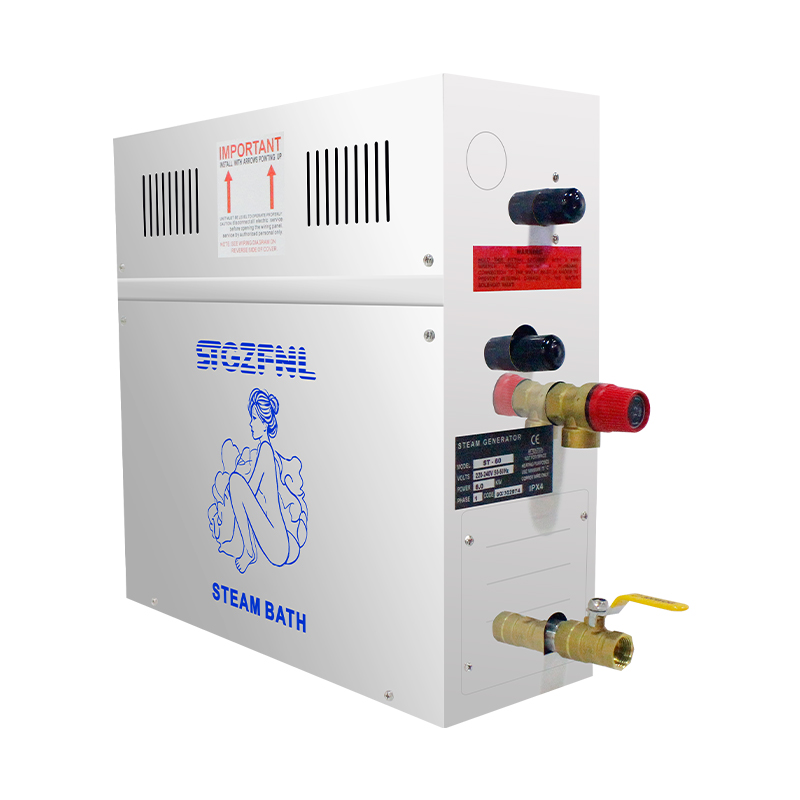
Assessing the operational differences between manual and automated maintenance protocols reveals significant disparities in labor and system longevity. Older or base-model generators require manual flushing. This involves physically opening a manual ball valve at the base of the unit after every few uses to drain the tank. In a commercial setting, this requires dedicated daily staff time, increasing operational labor costs. Maintenance staff must remember to perform this task, physically access the utility room, wait for the water to drain, and close the valve.
The primary advantage of an automated system is the elimination of human error. Manual flushing relies on memory and discipline. If a maintenance worker or homeowner forgets to flush the tank for several weeks, scale buildup accelerates rapidly. An auto-drain ensures complete compliance with post-use purging. This consistency maintains a clean baseline inside the tank and significantly extends the intervals between required chemical descaling treatments. You are replacing a flawed human schedule with a flawless mechanical routine.
However, an automated valve does not eliminate all maintenance. While it keeps the internal tank clear of loose minerals, physical checks are still mandatory. Facility managers must periodically inspect the steam head for surface calcification, check control pad connections for moisture damage, and replace external water filtration cartridges to ensure the incoming water remains as clean as possible. The auto-drain is a heavy lifter, but it is only one part of a comprehensive maintenance strategy.
| Feature / Protocol | Manual Flushing | Automated Purging (Auto-Drain) |
|---|---|---|
| Labor Requirement | High; requires physical access and manual valve operation after sessions. | Zero; operates automatically via control board sequencing. |
| Consistency | Prone to human error and forgotten schedules. | Guaranteed purging after every cooling cycle. |
| Descaling Frequency | Frequent; scale builds up rapidly if flushing is missed. | Extended; removes loose minerals before they harden. |
| Plumbing Complexity | Standard floor drain access is usually sufficient. | Requires specific indirect waste lines and high-temp piping. |
| Component Protection | Variable; depends entirely on the diligence of the operator. | High; consistent purging protects elements from overheating. |
When evaluating the physical wear and tear on the equipment, manual valves also present a point of failure. Repeatedly turning a brass ball valve can eventually lead to packing nut leaks or seized handles, especially in damp utility environments. Motorized valves used in auto-drain systems are sealed and designed for thousands of cycles without human interference. They provide a much more reliable mechanical seal over the lifespan of the generator.
Installing an auto-drain system on a Steam Bath Generator introduces specific physical and code-compliance challenges. The most critical plumbing risk involves tying a steam drain directly into a vent stack or standard municipal drain. Hot purge water can easily evaporate the water inside standard P-traps. If a trap seal evaporates, toxic sewer gas can escape directly into the home or commercial facility. This is a severe health hazard and a major violation of plumbing codes.
To mitigate this risk, plumbing codes mandate an indirect waste connection. The auto-drain discharge line must route to an indirect drain with a proper air gap. This physical separation ensures that even if the main sewer line backs up, contaminated water cannot siphon back into the steam generator tank, and sewer gases remain trapped. The air gap must typically be twice the diameter of the drain pipe to meet standard building codes.
Proper installation also requires integrating pressure reduction valves and quick-release fittings alongside the auto-drain. A pressure reduction valve ensures the municipal water supply does not overwhelm the generator's internal solenoid valves during intake. High water pressure can force water past the inlet valve, flooding the tank and causing the unit to spit water through the steam head. Quick-release fittings allow technicians to easily disconnect the unit from the plumbing for annual inspections or deep chemical descaling without cutting pipes.
Drainage material specifications are equally important. Even after a cooling cycle, the purged water can be exceptionally hot. Installers must use copper or high-temperature rated CPVC for the drain lines. Standard PVC can warp, melt, or fail at the joints when repeatedly exposed to high-temperature discharge, leading to severe water damage within the wall cavity. Using Type L copper is the industry standard for steam generator drain lines, providing the necessary thermal resistance and durability.
When planning the installation, contractors must account for the following physical requirements:
Pitching the drain line at a minimum of 1/4 inch per foot to ensure gravity flow.
Securing the drain pipe with copper-clad hangers to prevent rattling during the purge cycle.
Routing the discharge to a floor sink or receptor that can handle sudden volumes of warm water.
Ensuring the electrical circuit has sufficient capacity to power both the generator and the motorized valve simultaneously.
Determining if the upfront cost of an auto-drain is justified depends entirely on the use case and duty cycle. A Professional Steam Bath Machine installed in a commercial spa or hotel may run for ten to twelve hours continuously every day. In this environment, the volume of water processed is massive. For commercial applications, auto-drains are non-negotiable; in fact, most commercial warranties are voided if an auto-drain is not installed and operational. The sheer amount of mineral deposit left behind after a full day of commercial operation would destroy a heating element in weeks without automated purging.
In contrast, a high-end residential unit might be used three times a week for twenty minutes. While the mineral accumulation is slower, the risk of stagnant water remains. Residential users often install the generator in hard-to-reach places like attics, closets, or crawlspaces. In these scenarios, manual flushing is highly impractical, making the auto-drain a critical convenience feature that protects the investment. Homeowners will simply not crawl into an attic every week to turn a manual valve.
Analyzing the long-term return on investment clarifies the value. The upfront premium of purchasing a generator with a factory-integrated auto-drain is easily offset by the deferred costs of maintenance. Replacing burned-out heating elements, hiring professionals for deep descaling services, and managing system downtime cost significantly more than the initial upgrade to an automated purging system. A single service call to replace a calcified element will often exceed the cost of the auto-drain module.
Furthermore, the presence of an auto-drain maintains the efficiency of the unit over time. A clean heating element transfers heat faster, meaning the generator uses less electricity to reach the desired steam room temperature. Over a five-year period, the energy savings from maintaining a clean element, combined with the avoidance of major repair bills, makes the auto-drain one of the most financially sound upgrades you can specify for a steam installation.
An auto-drain system shifts steam generator maintenance from a reactive, labor-intensive chore to a proactive, automated process. By consistently removing stagnant, mineral-heavy water, these systems protect heating elements, prevent downstream clogs, and fundamentally extend the lifecycle of the equipment. Buyers should mandate auto-drain functionality if they live in areas with hard water, are installing a unit in a commercial setting, or lack easy physical access to the generator for manual flushing. The long-term reliability provided by automated purging far outweighs the initial installation complexities.
Test your local water hardness to determine the necessary frequency for chemical descaling, even with an auto-drain installed.
Consult with a licensed plumber to design an indirect drain routing that complies with local codes and prevents sewer gas leaks.
Select a steam bath generator that features a factory-integrated, motorized auto-drain valve rather than attempting to retrofit an older model.
Install quick-release fittings and a pressure reduction valve during the initial setup to streamline future maintenance access.
A: While auto-drains remove loose suspended minerals, they do not prevent all scale buildup. Chemical descaling is still required. Depending on your local water hardness and usage frequency, you should perform a deep descale every 500 to 1000 hours of operation to maintain peak efficiency.
A: Compatibility varies by manufacturer. Some brands offer retrofit kits for specific models, but adding an auto-drain often requires specific control board outputs to sequence the valve timing correctly. It is generally more reliable to purchase a unit with a factory-installed system.
A: The delay is a strict safety protocol. Water inside the generator reaches boiling temperatures. The system waits two to eight hours to allow the water to cool to a safe level, preventing scalding hazards and protecting standard plumbing pipes from heat damage.
A: No. A water filter treats the incoming water supply by removing particulates and reducing scale formation before water enters the tank. The auto-drain manages the outgoing water. Using both systems together provides the best protection for your equipment.
A: If the valve sticks open, the generator cannot build water pressure or produce steam. If it sticks closed, the unit mimics a manual system, holding stagnant water and leading to rapid scale buildup. Annual inspection of the valve mechanism is highly recommended.
A: Yes. Plumbing codes require an indirect drain connection with an air gap. This prevents sewer gases from backing up into the steam room. Additionally, the drain lines must be made of copper or high-temperature CPVC to handle the hot water discharge safely.
A: No. The auto-drain only purges the internal water tank. External components, including the steam head, control keypad, and temperature sensors, must still be manually inspected and wiped down periodically to prevent surface mineral buildup and ensure accurate readings.


