Views: 0 Author: Site Editor Publish Time: 2026-08-09 Origin: Site
In commercial facilities and high-end residential builds, the failure of a steam system represents a severe liability, risking user scalding, structural water damage, and costly facility downtime. Specifiers often struggle to differentiate between standard residential units and true commercial-grade equipment. Selecting a steam bath generator without redundant, industrial-grade safety controls exposes owners to operational hazards, non-compliance with building codes, and structural damage. Evaluating a Professional Steam Bath Machine requires moving beyond basic output metrics to scrutinize the internal safety architecture. You must verify thermostatic precision, pressure regulation, electrical safeguards, integrated user emergency systems, and automated maintenance protocols to ensure a safe, compliant installation.
Thermostatic Redundancy is Mandatory: A professional steam bath machine must utilize dual-sensor digital temperature controls, physical steam deflectors, and integration with thermostatic shower valves to eliminate localized scalding and thermal shock risks.
Hydro-Mechanical Safeguards Prevent Catastrophe: ASME-certified pressure relief valves, industrial-grade steam solenoids, and low-water cutoff mechanisms are non-negotiable for preventing tank ruptures and heating element fires.
User-Facing Controls and Emergency Stops Limit Liability: Commercial installations require visible emergency stop buttons, clinician-aligned timing controls, and mandatory safety signage to prevent overexposure and health emergencies.
Automated Maintenance Equals Sustained Safety: Integrated auto-flush and auto-drain systems mitigate hard water scaling, which is the primary cause of safety valve failure, bacterial growth (e.g., Legionella), and erratic temperature fluctuations.
Installation Integrity Dictates Efficacy: Even the most advanced control packages fail if the enclosure is not completely vapor-proofed, if materials are improperly tiled, or if sensors are installed in dead-air zones.
Differentiating between standard consumer units and a professional machine requires looking at the duty cycle and the internal fail-safes. Professional units handle continuous, high-frequency, or multi-user duty cycles without degrading. Standard units lack the robust safety architecture required for heavy use, often relying on single-point sensors that fail under continuous thermal stress. You must evaluate the internal components and fail-safes from a mechanical engineering perspective. A true professional system anticipates component failure and safely shuts down before hazards occur, isolating the electrical and water supplies instantly.
Baseline certifications dictate commercial and luxury residential deployment. You must look for UL and CSA listings for electrical safety, ensuring the unit can handle wet-environment power loads. ASME boiler codes dictate the pressure vessel integrity, requiring specific weld qualities and material thicknesses. Local plumbing and building regulations govern the installation methods, including drain sizing and vapor barrier requirements. Skipping these certifications exposes the facility to immediate code violations and forces tear-outs during municipal inspections.
Investing in advanced safety controls directly correlates to reduced insurance premiums, strict code compliance, and mitigated personal injury risks. Commercial spas, athletic clubs, and fitness centers face high liability from slip-and-fall incidents, scalding, and bacterial infections. Proper safety architecture protects both the users and the facility owners by removing the human error element from daily operation.
| Safety Feature Category | Standard Residential Specification | Professional Commercial Specification | Primary Risk Mitigated |
|---|---|---|---|
| Temperature Control | Single analog or basic digital sensor | Dual-sensor digital redundancy with auto-shutoff | Thermal shock and severe scalding |
| Pressure Relief | Basic standard relief valve (unrated) | ASME-certified pressure relief valve sized to kW | Catastrophic tank rupture and explosion |
| Water Maintenance | Manual drain valve requiring operator action | Automated flush, drain, and sanitize cycles | Legionella growth and scale-induced valve failure |
| Emergency Systems | None or basic 60-minute dial timer | Integrated panic alarms, auto-shutoff, and staff alerts | User health emergencies and overexposure |
| Element Protection | Basic thermal fuse | Optical or mechanical low-water cutoff (LWCO) | Dry-firing, electrical fires, and element destruction |
Contractors must verify that the specified equipment matches the facility's actual usage patterns. Installing a residential unit in a commercial gym guarantees premature failure. The internal contactors will weld shut from over-cycling, the heating elements will calcify within weeks, and the lack of an ASME valve will violate commercial boiler codes. Always specify equipment based on peak-hour usage and worst-case scenario fail-safes.
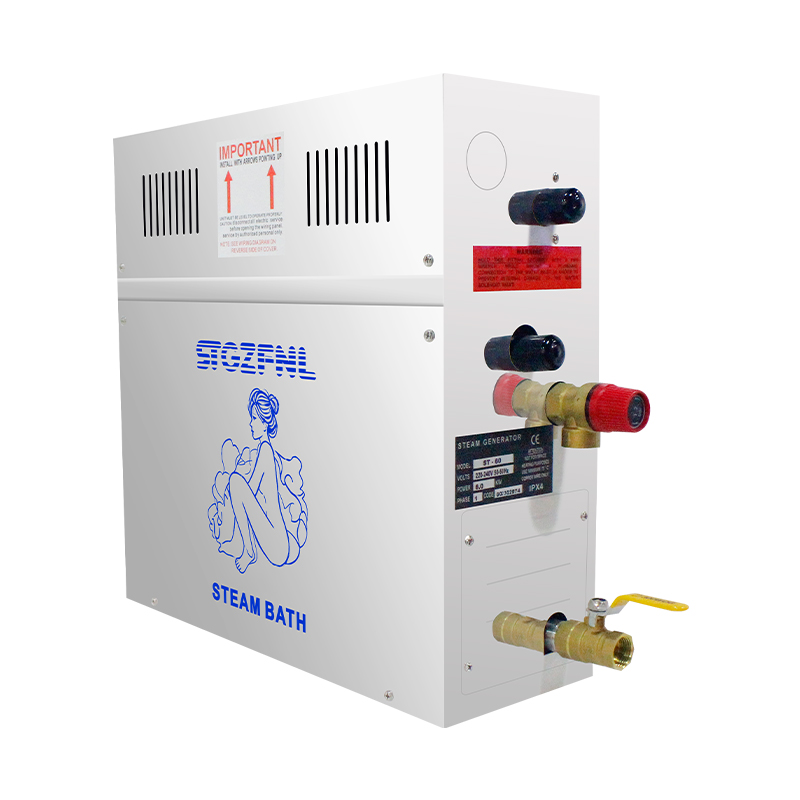
Highly calibrated digital thermostatic controls maintain room temperature within a strict 1-2 degree variance. Fluctuations beyond this range cause extreme discomfort and potential health risks, particularly for users with cardiovascular conditions. Precision is non-negotiable in commercial environments where user expectations and safety standards are rigid. The sensors must react instantly to door openings and changes in ambient heat load.
Redundant sensor arrays within the control package trigger an automatic system halt if primary sensors fail. They also shut down the system if temperatures exceed safe thresholds, typically capped at 115°F to 120°F. This redundancy prevents runaway heating scenarios where a blinded sensor tells the generator to keep producing steam even when the room is dangerously hot. Dual-sensor setups cross-check each other continuously.
Installation of these sensors requires strict adherence to manufacturer guidelines. If a sensor is placed in a dead-air zone or directly above the steam head, it will read artificially high or low. This causes the generator to short-cycle or run continuously. Sensors must be mounted at the breathing zone level, typically 48 to 60 inches off the finished floor, away from direct drafts and steam plumes.
Integrating the control package with multi-port thermostatic shower valves prevents sudden cold or hot thermal shock. Users frequently transition between steam and shower functions within the same enclosure. The system must handle these transitions seamlessly, ensuring that the activation of a cold shower does not cause the steam generator to overcompensate and blast boiling vapor into the room.
Maintaining pressure balance is a critical plumbing safeguard. It prevents sudden water temperature fluctuations when other plumbing fixtures are activated in the facility. A balanced system ensures consistent, safe water delivery. If a toilet flushes in the adjacent locker room, the pressure drop must not cause the steam room shower to suddenly run scalding hot.
Physical safety mechanisms at the point of steam delivery protect users from the most dangerous touchpoint in the room. The steam head delivers boiling vapor directly into the enclosure. Proper hardware selection mitigates this hazard entirely. Without a deflector, the steam plume can shoot several feet into the room, severely burning anyone walking past.
Cool-to-the-touch steam heads are a strict technical requirement for commercial builds. Directional deflectors must disperse steam downward and outward, preventing direct contact with users' skin. It eliminates the risk of severe localized scalding. Some advanced models include an internal reservoir that mixes the steam with cooler air right at the nozzle, further reducing the exit temperature.
Integrating clinician-recommended time limits directly into the control panel ensures compliance with health guidelines. These limits are typically set to 15-20 minutes. Prolonged exposure leads to dehydration, heat exhaustion, and cardiovascular stress. The system must enforce these limits automatically, requiring the user to physically exit the room or reset the panel to continue.
Hardwired automatic shutoff features provide operational safety by engaging immediately when the timer expires. They also activate if the system detects an anomalous continuous run-time, preventing the unit from running indefinitely if a user leaves the door propped open. This saves energy and prevents the generator from boiling dry if the water supply is interrupted.
Preventing catastrophic tank over-pressurization is the primary goal of hydro-mechanical safety. A steam tank operates under intense pressure and heat, essentially functioning as a small boiler. If pressure cannot escape due to a blockage in the steam line, the vessel will rupture. This causes severe structural damage and extreme danger to anyone nearby.
Sizing and rating the PRV to match the kilowatt output ensures the safe venting of excess pressure. An ASME-certified valve guarantees tested reliability under extreme conditions. Never compromise on the quality of the pressure relief valve. The discharge pipe from the PRV must be routed safely to a floor drain, never reduced in size, and never threaded at the end, to ensure unobstructed flow during a blow-off event.
Commercial control packages utilize heavy-duty steam solenoids to precisely meter steam delivery into the room. These components withstand continuous operation in high-heat environments. Precision flow control maintains a stable, safe room temperature without the drastic spikes associated with cheaper, mechanical valves.
Using cheaper, residential-grade valves introduces severe failure modes. These inferior valves can stick in the open position due to scale buildup or thermal warping. This leads to runaway steam generation and dangerous over-pressurization. Industrial-grade solenoids feature stainless steel internals and high-temperature coils designed for millions of cycles without sticking.
Protecting the heating elements from dry-firing is a critical implementation reality. Dry-firing occurs when elements heat without water coverage, causing them to glow red hot, melt, and potentially cause electrical fires. It completely destroys the generator. A low-water cutoff mechanism prevents this disaster by instantly severing power to the contactors if the water level drops.
Systems use either optical or mechanical float sensors. Mechanical floats can jam due to scale buildup in high-mineral water environments, requiring frequent manual cleaning. Optical sensors use light refraction to detect water levels and are generally more reliable in hard water, though they still require regular automated flushing to prevent mineral blinding.
Internal circuit protections sever power to the heating elements immediately if the internal ambient temperature of the generator housing exceeds safe limits. This prevents internal meltdowns and electrical fires if the cooling fan fails or the equipment room lacks proper ventilation. Generators generate significant ambient heat and must be installed in well-ventilated mechanical spaces.
Thermal overload relays act as a final electrical fail-safe. They monitor the current draw of the heating elements. If a short circuit or overload is detected, the relay trips, isolating the generator from the main electrical supply. This protects the building's electrical infrastructure and prevents breaker panel fires.
Ensuring all control panels and internal wiring meet strict waterproofing standards is mandatory. Wet environments require IP67 or equivalent ratings. Moisture intrusion causes short circuits, erratic system behavior, and ghost-activations. Completely sealed components protect the internal electronics from the 100% humidity environment of the steam room.
Proper grounding protocols are essential for electrical safety. Ground Fault Circuit Interrupter (GFCI) integration prevents shock hazards. If stray current is detected leaking to ground, the GFCI cuts power instantly. This protects users operating the wet control panels and ensures compliance with National Electrical Code (NEC) requirements for wet locations.
Integrating a dedicated waterproof emergency shut-off button is a commercial requirement. This panic button must be highly visible inside the enclosure, typically mounted low enough to be reached by someone who has fallen. Users must have immediate access to stop the system in a medical emergency.
Activating the panic button triggers a specific system action. It instantly halts all steam generation, engages the exhaust fan to clear the room of vapor, and triggers an external audible or visual alarm for facility staff. This rapid response capability is critical for limiting liability and ensuring rapid medical intervention.
Calcium and magnesium buildup is the leading cause of sensor blinding and pressure valve failure in any steam unit. Hard water destroys internal safety mechanisms rapidly, coating heating elements in an insulating layer of rock that causes them to overheat and fail. Scale also jams solenoid valves open or closed.
Assessing the efficacy of automated descaling cycles impacts long-term safety device reliability. Regular descaling keeps sensors accurate and valves moving freely. It is a mandatory feature for high-use environments. Facilities should also install pre-treatment water softeners to remove the minerals before they ever reach the generator tank.
Systems that automatically purge standing water after every use cycle prevent the growth of Legionella and other harmful bacteria. Stagnant warm water inside a generator tank is a perfect breeding ground for pathogens. Auto-draining eliminates this biological hazard entirely by ensuring the tank is dry when not in use.
Post-drain cooling cycles ensure operational safety. Discharged water must meet local municipal plumbing temperature codes, typically below 140°F before entering drain lines. Dumping boiling water directly into the plumbing system melts PVC pipes, destroys trap seals, and violates building codes. The generator must mix cold water with the discharge to cool it safely.
Installing a high-output generator in an improperly sealed room causes hidden mold growth and structural rot. Steam will penetrate standard drywall, wood framing, and porous stone. The room must be built specifically for vapor containment, acting essentially as an inverted swimming pool.
Mandating completely enclosed spaces with vapor-tight doors prevents steam from escaping into adjacent areas. Requirements include fully tiled walls and ceilings, and appropriate vapor-barrier membranes (like sheet-applied waterproofing) installed behind the tile. Liquid-applied membranes often fail in steam environments; sheet membranes are the industry standard.
Sloped ceilings are a critical structural safety requirement. They prevent the dripping of scalding condensation onto users. A slope of two inches per foot directs condensation to run safely down the walls to the floor drain. Flat ceilings will rain hot water on occupants, creating a severe burn hazard.
Placing temperature sensors too close to the steam head results in false high readings, causing the unit to shut off prematurely. Placing them too close to the door results in false low readings, causing the unit to overwork and overheat the room. Both scenarios create an uncomfortable and potentially unsafe environment.
Industry-standard height and location guidelines must be followed. Sensors are typically installed 4 to 5 feet from the floor, centered on a wall away from direct steam plumes and drafts. This ensures accurate ambient thermostatic regulation. Control panels should be mounted outside the room for commercial facilities to prevent user tampering.
User error presents a significant operational risk. Pre-existing health conditions like cardiovascular issues or pregnancy amplify these risks. Dehydration is a common danger in high-heat environments. Users must be informed of the risks before entering the room.
Integrating mandatory safety signage is a necessary mitigation strategy. Hydration recommendations and time-limit warnings must be posted adjacent to the control panel and on the door. These signs must align with commercial hospitality and wellness guidelines. Clear communication prevents medical emergencies and protects the facility legally.
Selecting a generator with modular safety components ensures the system adapts to changing facility needs. Modular systems can be easily serviced by maintenance staff. Individual parts, such as a failed solenoid or a scaled-up sensor, can be swapped out without replacing the entire unit. This approach guarantees stable, safe daily operation and minimizes facility downtime.
Scalable architecture allows for the addition of secondary generators. As facility usage grows or if the room is expanded, steam demand increases. Linking multiple units safely requires advanced, synchronized control panels that manage the load across all generators. Modular safety features make this expansion seamless, ensuring that if one unit fails, the others can safely compensate or shut down the entire array to prevent hazards.
A professional steam bath generator is defined by the robustness of its safety architecture. Relying on basic, non-redundant controls is an unacceptable risk in commercial or high-end residential applications. True safety requires precision engineering, redundant fail-safes, and proactive maintenance protocols to protect users and facility infrastructure.
Prioritize units that explicitly feature ASME-certified pressure relief and redundant digital thermostatic controls. Ensure they include low-water cutoffs, integrated emergency shutoffs, and automated flush systems. These features separate professional equipment from standard consumer models and guarantee long-term operational safety.
Consult with an MEP engineer to review your facility's water quality, electrical capacity, and drainage capabilities.
Verify that your room enclosure meets strict vapor-proofing, insulation, and sloped-ceiling standards before ordering equipment.
Select a generator model that includes dual-sensor redundancy, an ASME-certified pressure relief valve, and an automated flush system.
Install visible emergency panic alarms and mandatory user safety signage both inside and outside the enclosure.
A: The most critical feature is the low-water cutoff combined with an ASME-certified pressure relief valve. These mechanisms prevent dry-firing fires and catastrophic tank ruptures, ensuring the physical integrity of the unit.
A: Auto-flush systems automatically drain the tank after use. This prevents bacterial growth in stagnant water and reduces mineral scale buildup that can cause safety valves and temperature sensors to fail.
A: Sensors should be installed inside the steam room at a specific height, usually 4 to 5 feet from the floor. Keep them away from direct steam flow and the entry door to ensure accurate ambient temperature readings.
A: A steam deflector physically redirects the flow of boiling steam downward or diffuses it. This prevents direct contact with users and eliminates the risk of severe localized scalding near the steam head.
A: The maximum safe temperature for a commercial steam room is typically capped between 115°F and 120°F. Redundant digital sensors must be in place to automatically shut down the system if temperatures exceed this threshold.
A: Yes, a floor drain is mandatory for safety and hygiene. It allows condensation and cleaning water to exit the room safely, preventing slip hazards and dangerous standing water accumulation.


