Views: 0 Author: Site Editor Publish Time: 2026-08-09 Origin: Site
A steam room that fails to reach optimal temperature or produces sputtering steam instantly compromises the user experience. You expect a thick, consistent cloud of heat. Instead, you face sudden pressure drops and lukewarm output mid-cycle. This operational frustration is rarely a temporary glitch. Weak or intermittent steam serves as a direct symptom of underlying mechanical degradation. Improper installation and environmental factors, particularly hard water, accelerate equipment failure and disrupt normal operation.
Addressing these symptoms requires a systematic diagnostic framework. You must isolate the root cause accurately. The issue could stem from severe mineral scaling, a failing sensor, or compromised steam lines. Understanding these mechanical failures helps establish clear criteria for your next steps. You will learn how to decide between executing a component repair and upgrading to a Professional Steam Bath Machine. This guide breaks down the technical faults causing weak steam and provides actionable solutions to restore peak performance.
Mineral Buildup is the Primary Culprit: Unmanaged calcium and magnesium deposits insulate heating elements and coat liquid level probes, directly causing weak output, overheating, and premature element failure.
Pressure Loss Indicates System Breaches: Intermittent steam is frequently traced to compromised seals, leaking steam outlet valves, or inadequate incoming water pressure.
Ventilation and Pressure Dynamics Matter: Active exhaust fans or improper pressure differentials can rapidly evacuate steam, mimicking the symptoms of an underperforming generator.
Sizing Dictates Performance: A generator that produces weak steam may simply be underpowered for the enclosure's adjusted cubic footage and material thermal mass.
Repair vs. Replace Threshold: Frequent heating element replacements or recurring sensor failures often justify the transition to a commercial-grade or professional steam bath machine with automated maintenance features.
You must understand the standard operating cycle to identify where a failure occurs. A healthy unit follows a strict mechanical sequence. If any step fails, steam production stops or becomes erratic. Pinpointing the exact point of failure streamlines the repair process and prevents unnecessary parts replacement.
Water inlet valve activation opens the line to municipal supply.
Water fills the stainless steel tank until it reaches the designated liquid level probe.
The control board verifies the water level and engages the heating elements.
The water enters a boiling phase, converting liquid to vapor.
The unit releases continuous, pressurized steam through the steam head into the enclosure.
If the cycle breaks at the inlet valve, the tank runs dry. If the heating element fails, the water never boils. If the liquid level probe is fouled, the system constantly drains and fills, never allowing the water to reach boiling temperature.
Industry standards define acceptable timeframes for steam production. A properly functioning steam bath generator begins producing visible steam within 3 to 5 minutes of activation. The enclosure should reach its peak target temperature within 15 to 20 minutes, depending on the room's thermal mass. If your unit takes 10 minutes to produce a weak wisp of steam, the heating elements are likely compromised. Extended heat-up times indicate that the generator is working harder to achieve baseline results, often fighting against heavy mineral scale.
Optimal steam rooms rely on a continuous, rolling boil effect. The steam density should remain thick and uniform from the floor to the ceiling. You should not experience harsh temperature fluctuations during a standard 30-minute session. Localized cold spots indicate that the generator is short-cycling. Short-cycling happens when the unit prematurely shuts off the heating elements. This creates bursts of scalding steam followed by periods of no output. Consistent density proves that the water level controls and heating elements are functioning in harmony.
Listen to your equipment. A properly functioning unit operates with specific acoustic baselines. You should hear a smooth water intake hiss and a quiet, muffled boiling sound from the tank. Warning sounds indicate immediate mechanical trouble. Hissing outside the tank points to steam leaks at union connections or the pressure relief valve. Loud popping, banging, or crackling sounds from the tank reveal severe scale buildup. The heating elements are literally boiling water trapped under layers of calcium, causing micro-explosions. Recognizing these sounds early prevents catastrophic tank failure.
Hard water is the primary enemy of any steam equipment. As water boils, it leaves behind calcium and magnesium deposits. This calcification coats the heating elements rapidly if left untreated. The scale acts as a dense thermal insulator. The elements must heat the mineral shell before they can heat the water. This forces the generator to work harder for significantly less output. Over time, the trapped heat causes the elements to split, warp, or rupture entirely.
You can identify a partially failed element by observing the steam output. Intermittent steam or lukewarm output usually means one element has failed while others struggle to compensate. Complete failure results in zero steam and often trips the electrical breaker. To diagnose this, perform a visual inspection of the tank interior. Use a multimeter to test each heating element for continuity. Verify that the resistance matches the manufacturer specifications. If an element reads open or shorts to ground, it requires immediate replacement.
Mineral scale also targets the liquid level sensors. Scale bridging occurs when minerals connect two separate probes. This tricks the control board into reading incorrect water levels. The generator thinks the tank is full when it is actually empty, or vice versa. This triggers constant, premature draining and refilling. The influx of cold water cools the tank and interrupts steam production. The result is a highly intermittent steam cycle that never reaches full temperature.
Poorly positioned temperature sensors also cause major disruptions. If you place the temperature probe too close to the steam head, it reads artificially high temperatures. The control board shuts down the generator prematurely. To fix this, clean the water level probes manually with a descaling solution or fine emery cloth. Test the sensor calibration using a digital thermometer. Verify that the temperature probe sits at the correct height, typically 4 to 5 feet off the floor, away from direct steam flow and the ceiling.
Steam must travel from the generator to the enclosure under pressure. Leaks in the steam delivery pipe reduce the volume of steam reaching the room. Breaches often occur at union connections, elbows, or right behind the steam head. A compromised steam line vents your heat into the wall cavity instead of the shower. This creates weak pressure inside the enclosure and can cause severe moisture damage to the building structure.
Valve failures also disrupt the boiling cycle. A compromised water inlet valve restricts flow, starving the tank. A weeping drain valve allows hot water to escape continuously. The tank can never maintain the necessary water level for a rolling boil. Guide your maintenance team through a standard pressure test. Visually inspect all union connections, high-temperature gaskets, and the pressure relief valve for signs of moisture, rust, or white scale trails.
You cannot produce steam without adequate water. Restricted incoming water flow starves the generator. This happens due to clogged inline filters, partially closed supply valves, or municipal pressure drops. When the water level drops too fast, the generator cycles off intermittently. It does this to protect the heating elements from dry-firing. Check the inline water filter screen for debris, sand, or pipe scale. Verify that the incoming water pressure meets the minimum PSI requirements listed on the unit, typically between 15 and 60 PSI.
Sometimes the generator works perfectly, but the room dynamics fail. Running an active bathroom exhaust fan near the steam shower creates negative pressure. The fan rapidly pulls dense steam out of the room. This prevents the steam from condensing into a visible cloud. It mimics the exact symptoms of an underperforming generator, leading to unnecessary service calls.
Unsealed doors and improper pressure balances also ruin the experience. Dense steam escapes through gaps before it can heat the room. Perform a simple pressure test. Run the steam cycle with the bathroom doors open, then closed. Ensure all exhaust fans remain switched off during operation. Proper vapor-proofing is non-negotiable for a dense steam cloud. Check the sweeps at the bottom of glass doors and ensure transoms are fully closed.
| Component Fault | Primary Symptom | Diagnostic Action |
|---|---|---|
| Calcified Heating Element | Lukewarm steam, slow heat-up time | Multimeter continuity test |
| Scaled Water Probe | Constant draining and refilling | Visual inspection, manual descaling |
| Weeping Drain Valve | Intermittent steam, hissing sounds | Inspect valve for moisture trails |
| Poor Sensor Placement | Short-cycling, rapid shut-offs | Relocate probe away from steam head |
| Active Exhaust Fan | No visible steam cloud, drafty room | Turn off fan, check door seals |
| Clogged Inline Filter | Unit shuts down mid-cycle | Remove and clean mesh screen |
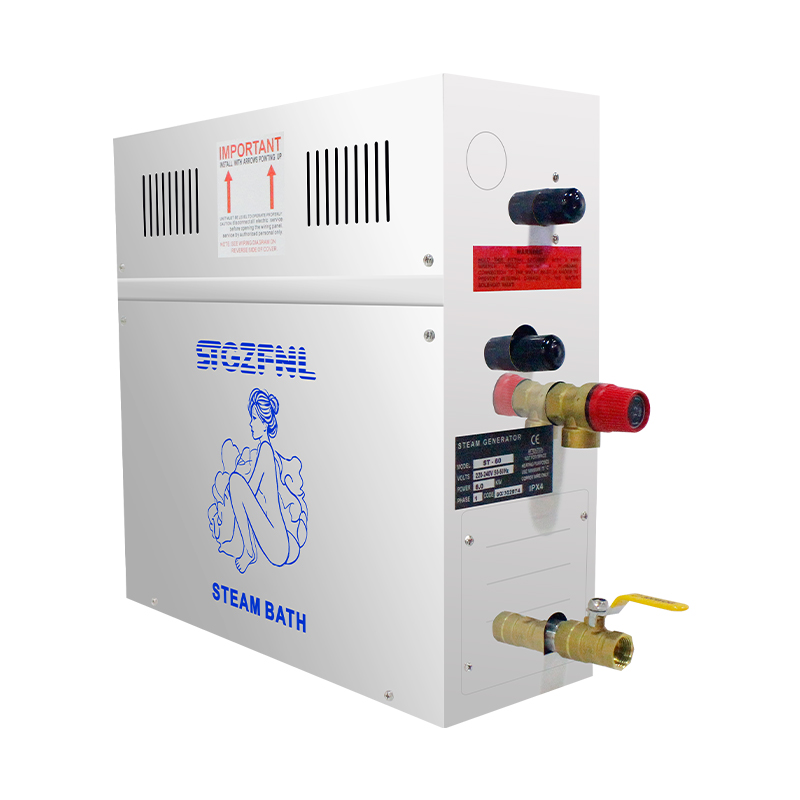
A generator sized only for raw cubic footage will fail. You must account for heat-absorbing materials. An underpowered unit runs continuously but never achieves the desired foggy effect. The materials absorb the heat faster than the generator can produce it. The room remains lukewarm, and the generator burns out prematurely from running at 100% duty cycle. Conversely, an overpowered unit creates massive problems. Oversized units short-cycle rapidly. They blast scalding steam and then shut off completely. This results in an uncomfortable, highly intermittent steam experience that frustrates users.
Thermal mass dictates your actual power requirements. Porous materials like natural stone, concrete, and glass block absorb massive amounts of heat. They require significantly more steam output compared to non-porous materials like acrylic or ceramic tile. You must calculate the adjusted cubic footage. Measure the room's length, width, and height. Then, apply the specific multiplier for your wall materials. This industry-standard calculation verifies if your current steam bath generator is fundamentally capable of servicing the room.
| Wall Material | Multiplier Factor | Impact on Steam Requirement |
|---|---|---|
| Acrylic / Fiberglass | x 0.5 | Low thermal mass, requires less steam |
| Ceramic / Porcelain Tile | x 1.0 | Baseline standard for calculations |
| Natural Stone (Marble, Granite) | x 2.0 | High thermal mass, doubles requirement |
| Glass Block / Exterior Walls | x 1.5 | Moderate heat loss, increases requirement |
Certain scenarios make component repair the most logical route. If you have a newer unit, replacing a single clogged valve makes sense. Performing a heavy manual descaling can restore a unit that simply suffered from neglected maintenance. Swapping a single heating element is viable if the rest of the tank remains structurally sound. Evaluate the cost-to-benefit ratio. Compare the repair costs against the age and overall structural condition of the unit. If the tank shows no signs of external rust and the control board functions perfectly, repair is often justified.
Preventative habits extend unit life drastically. Implement routine manual flushes. Inspect the pressure relief valve quarterly. Descale the water level probes twice a year. These hidden maintenance habits prevent the cascade of failures that lead to weak steam output. A well-maintained unit will outlast a neglected premium unit every time.
Systemic failures require a complete replacement. Look for clear indicators. Rusted tank interiors, obsolete control boards, and multiple concurrent component failures mean the unit is dead. If you replace an element and the board fails a week later, you are wasting capital. Frequent heating element replacements justify a complete upgrade. Patching a failing system only guarantees future downtime.
A Professional Steam Bath Machine offers distinct advantages. These units utilize heavy-duty stainless steel reservoirs. They feature incoloy heating elements designed to resist scale buildup. Proportional steam output technology ensures a consistent, rolling boil without harsh short-cycling. Automated maintenance features, like auto-flush valves, expel minerals after every use. This prevents the exact scaling issues that destroy standard units.
Installing a new unit without addressing water quality guarantees future failure. Hard water killed your previous generator. It will kill the new one just as fast. You must mitigate this risk immediately. Mandate the integration of pre-filtration systems. Install water softeners on the dedicated supply line. Select generators equipped with automated auto-flush and auto-drain capabilities. These systems expel mineral-heavy water after every single session, protecting the new elements from rapid calcification.
Upgrading the generator solves nothing if the room leaks. Losing steam through an unsealed enclosure mimics the symptoms of a weak generator. You must verify the room's structural integrity. Outline strict requirements for vapor-proofing. Install continuous vapor barriers behind the tile. Ensure the ceiling is sloped to prevent cold water drips. Apply heavy weather-stripping to the glass doors. Maximizing the efficiency of your new equipment requires a perfectly sealed environment. Without it, even the most powerful generator will underperform.
Schedule a comprehensive diagnostic inspection with a qualified technician to test heating element continuity and water pressure.
Test your facility's water hardness levels to determine if a pre-filtration or water softening system is mandatory.
Calculate the adjusted cubic footage of your enclosure, factoring in natural stone or glass block, to verify sizing.
Inspect all steam room door seals and ventilation systems to ensure negative pressure is not extracting your steam.
Review specifications for a professional-grade replacement if your current unit shows severe internal tank rust or frequent sensor failures.
A: You should descale your unit every 3 to 6 months, depending on local water hardness and usage frequency. Commercial environments may require monthly descaling. Using an auto-flush system extends the time between manual descaling sessions.
A: Extended heat-up times usually indicate mineral scale buildup on the heating elements. The scale acts as an insulator, forcing the unit to work harder. It can also mean your generator is underpowered for the room's thermal mass.
A: A leaking steam outlet valve generally requires complete replacement. The high temperatures and pressurized steam degrade the internal seals permanently. Attempting to patch or rebuild these specific valves often leads to secondary leaks.
A: A properly maintained professional unit can last 10 to 15 years. Lifespan depends heavily on water quality management, routine descaling, and the use of automated flush valves to prevent internal tank corrosion.
A: Yes. If incoming water pressure drops below the manufacturer's minimum PSI, the tank cannot fill fast enough. The control board will shut off the heating elements to prevent dry-firing, resulting in intermittent steam output.
A: An undersized generator runs continuously but fails to produce a thick steam cloud or reach the target temperature. If your room features porous materials like marble, you likely need a higher kilowatt rating than standard sizing charts suggest.


