Views: 0 Author: Site Editor Publish Time: 2026-08-07 Origin: Site
Installing a high-end steam shower requires precise planning beyond the enclosure itself. The placement of the steam bath generator dictates system longevity, safety, and overall performance. While a Professional Steam Bath Machine once cost thousands in custom commercial setups, modern residential units are highly accessible—yet they still require strict, professional-grade installation to protect your investment. Incorrect generator placement leads to thermal loss, voided warranties, inaccessible maintenance scenarios (such as catastrophic wall demolition to access a failed part), and potential plumbing or electrical code violations. This guide provides a technical evaluation framework for selecting the optimal installation location for a steam bath generator outside the steam room, balancing spatial constraints with plumbing, electrical, and maintenance requirements.
Distance Dictates Performance: Generators must typically be installed within 25 to 60 feet of the steam shower (depending on manufacturer specifications) to minimize thermal loss and condensation buildup in the steam line.
Mandatory Accessibility: Code compliance and practical maintenance require a dedicated access panel or open space; burying a unit behind drywall or tile without access guarantees expensive future remediation.
Environmental Controls: The installation environment must be dry, ventilated, and climate-controlled (above freezing) to protect the sensitive electronics of a professional steam bath machine.
Gravity and Drainage: Steam lines must be pitched correctly to prevent water pooling, and the generator requires proximity to an approved gravity drain for auto-flush features.
Structural Stability: The unit must be mounted on a solid, level surface to prevent operational vibrations, line strain, and premature component wear.
Establishing the baseline physical, structural, and mechanical requirements for your chosen location is non-negotiable. Any space you select must meet strict criteria to ensure the system operates at peak efficiency without risking property damage or premature equipment failure. We look at distance, structural integrity, climate control, and maintenance access as the four pillars of a successful installation.
Distance involves clear trade-offs. Shorter runs under 25 feet yield faster steam delivery and reduce energy waste. When you push the distance toward the 60-foot maximum, you increase the risk of condensation inside the pipe before the steam ever reaches the shower head. Longer runs demand heavy fiberglass insulation to maintain vapor temperature.
You must maintain a continuous pitch in the steam line. Industry standard requires a 1/4 inch slope per foot. You can pitch the line toward the steam head or back toward the generator. This prevents water traps. Trapped water causes steam heads to spit boiling water into the shower, creating a severe burn hazard for users. When routing pipes through joists, ensure the drilled holes account for this continuous slope without compromising structural integrity.
You must mount the unit on a stable, level, and solid surface. Concrete floors, reinforced platforms, or heavy-duty wall brackets work best. A standard drywall surface will not hold the operational weight of a unit filled with water. Unlevel surfaces cause immediate mechanical problems. They strain plumbing connections, leading to micro-leaks over time.
More importantly, an unlevel base disrupts the water-level sensors inside the tank. If the sensor reads the water level incorrectly, the heating element may fire while dry, burning out instantly. An uneven base also amplifies operational vibrations, leading to premature component wear and excessive noise transferring through the wall studs.
A climate-controlled space is mandatory. Generators cannot withstand freezing temperatures. If the water inside the internal tank freezes, it will expand and crack the stainless steel reservoir, destroying the unit. They also fail in excessive ambient heat. The surrounding air must remain between 50°F and 104°F to protect the sensitive printed circuit boards (PCBs).
Installing a unit in an unconditioned space carries high risks. Raw attics or exterior sheds lack proper insulation. Without thermal protection, the internal electronics and water tanks will fail. Humidity is another factor; the installation area must remain dry to prevent corrosion on the electrical terminals and grounding lugs.
Minimum clearance requirements dictate your space planning. You need room to service heating elements, auto-flush valves, and PC boards. Standard clearances demand 12 inches on the top and sides. You need at least 21 inches at the front for tool access and component removal. Heating elements are long and require straight pull-out clearance.
Installing a non-destructive access panel upfront saves thousands of dollars. Contrast this with the devastating cost of demoing custom tile or drywall just to replace a standard heating element or clean a water probe. Always plan for the inevitable service call. If a technician cannot reach the unit with standard wrenches, the location is wrong.
Analyzing the most common residential and commercial placement strategies helps narrow down the best spot for your specific floor plan. Each location carries specific pros and cons regarding plumbing routing, electrical access, and long-term maintenance viability.
Utility closets offer excellent advantages. They provide easy access and are usually climate-controlled. They sit in close proximity to the bathroom, keeping the steam line run short and efficient. You can easily mount the unit on a sturdy shelf or directly on the floor.
However, you sacrifice valuable storage space. This location also requires careful routing of ventilation and drainage lines to meet code. You must ensure the closet door has enough undercut or louvered venting to prevent the space from overheating during extended steam sessions.
Basements and heated attics keep operational noise away from the primary living space. You won't hear the contactors clicking or the auto-flush valve draining. They offer abundant room for plumbing and electrical routing. You also gain space for secondary water treatment systems, like bulky descalers.
But attics must be strictly heated and conditioned to prevent freezing. Basements require careful calculation. You must ensure the upward steam line pitch works within vertical distance limitations. Pushing steam straight up two stories requires a properly sized unit to overcome the vertical head pressure and thermal loss.
Vanities provide an extremely short steam line run. They utilize existing dead space effectively, keeping the installation footprint tight. This is a popular choice for retrofits where opening walls outside the bathroom isn't feasible.
The major drawback is moisture risk. A minor leak from a loose compression fitting causes severe damage to expensive wood cabinetry. Tight clearances also make component replacement difficult. Servicing inline water filters or replacing a burnt-out element becomes a frustrating chore when working around sink traps and drawer slides.
Placing the unit under a bench keeps the footprint inside the bathroom but outside the wet zone. This suits space-constrained layouts perfectly. You utilize the void space beneath the seating area.
However, the risk of catastrophic failure is high if sealed behind tile. You must install a removable, gasketed, and waterproof exterior access panel. Access this from an adjacent bedroom wall or hallway closet. Never permanently enclose the unit inside the bench structure. If a part fails, you will have to destroy the bench to fix it.
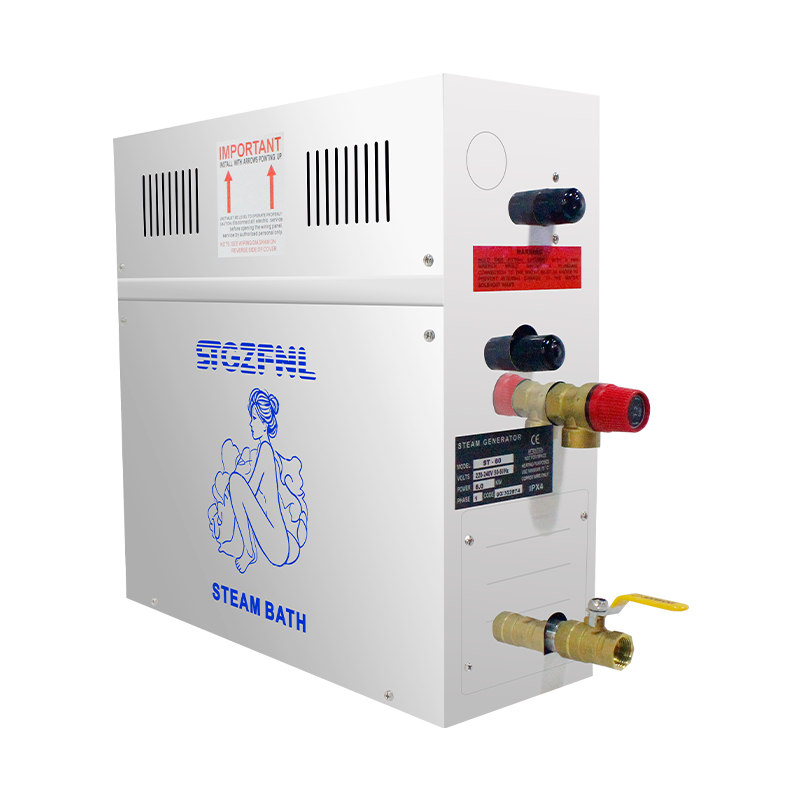
Mapping your location features to the necessary plumbing and electrical inputs ensures a compliant installation. A Professional Steam Bath Machine requires precise utility connections that meet strict local building codes.
| Utility Requirement | Technical Specification | Common Pitfall to Avoid |
|---|---|---|
| Water Supply | Dedicated cold feed, inline filter, hammer arrestor | Skipping the water filter, leading to rapid scale buildup |
| Drainage | Indirect gravity drain with air gap | Plumbing directly into shower drain (code violation) |
| Electrical | Dedicated 240V circuit (40A-90A) | Sharing the circuit with other bathroom appliances |
| Piping Material | Copper or brass only | Using PEX or PVC on the steam line (melts instantly) |
You need a dedicated cold water feed. Install a water hammer arrestor to prevent pipe banging when the solenoid valve snaps shut. An inline water filter is critical to catch sediment before it enters the tank. Gravity drainage is equally critical for system longevity.
You must provide an indirect gravity drain for the auto-flush system. You cannot plumb this directly into the shower drain without a proper code-approved air gap. The auto-flush system purges boiling water to prevent scale buildup. If plumbed directly into a PVC sewer line without cooling or an air gap, it will melt the PVC and cause sewer gases to back up into the home.
Steam generators draw significant power. You need a dedicated 240V circuit. The breaker size ranges from 40A to 90A, depending on the kW rating of the Steam Bath Generator. Undersized wiring will overheat and cause a fire hazard.
Local codes require a local electrical disconnect switch. This switch must be within sight of the generator for safe servicing. When a technician opens the panel to test the heating element, they must be able to cut the power immediately without walking to the main breaker box.
Material selection is non-negotiable. Use copper or brass piping only. PEX, PVC, and galvanized piping are strictly prohibited for the steam line due to extreme heat. Steam exits the generator at 212°F. Plastic pipes will melt, and galvanized pipes will rust rapidly, blowing iron flakes into the shower.
Invest in high-grade fiberglass pipe insulation. This mitigates thermal loss on longer runs and protects surrounding framing from heat damage. Foam insulation will melt; only use fiberglass rated for high-temperature steam applications.
Installers must cross-reference brand-specific rough-in guides before framing. Brands dictate unique plumbing drops and electrical entries. Control cable pathways vary widely by model. Some require proprietary shielded cables to prevent interference.
Failing to follow the exact schematic leads to incompatible connections and rework. Always have the physical unit or the exact specification sheet on-site before the plumber and electrician begin their rough-in work.
Addressing common pitfalls prevents system failure and protects the user experience. Proper planning mitigates physical damage and ensures the equipment runs quietly and efficiently for years.
Generators produce mechanical noise. Water solenoids click sharply, water boils loudly, and auto-flush valves drain with force. To mitigate this, install vibration-dampening mounting pads under the unit's feet. Avoid sharing a stud wall with a bedroom headboard, as the low-frequency hum will transfer through the drywall.
Always install a water hammer arrestor on the supply line. When the internal water valve closes rapidly, it sends a shockwave through the pipes. The arrestor absorbs this shock, stopping the pipes from banging against the wall studs.
Improper placement immediately voids manufacturer warranties. Never install the unit inside the wet steam room itself. Outdoors or unventilated areas are also prohibited. The moisture and temperature extremes will destroy the electronics in days.
Cross-reference local municipal plumbing codes. Pay special attention to indirect waste drains and pressure relief valve (PRV) discharge routing. The PRV must discharge to a safe location, typically 6 inches above a floor drain, to prevent scalding if the tank over-pressurizes.
Hard water scale destroys heating elements rapidly. Calcium and magnesium bake onto the elements, causing them to overheat and split. This leads to frequent service calls and expensive part failures.
Ensure the chosen installation location has ample space for water treatment. You need vertical and lateral room to install an inline water descaler, water softener, or filtration system alongside the generator. Easy access encourages regular filter changes, which is the single most important maintenance task for a steam system.
Consult a licensed plumber and electrician to verify load capacities and drain routing before purchasing equipment.
Select a climate-controlled location within 25 feet of the shower that allows full frontal access for maintenance.
Install a dedicated access panel if placing the unit in adjacent framing or under a bench.
Verify all piping materials are strictly copper or brass before closing any walls.
Install an inline water filter and hammer arrestor on the cold water supply line during the rough-in phase.
A: The standard recommendation is within 25 feet for optimal performance. However, you can install it up to 60 feet away depending on manufacturer approval. Longer distances require heavy fiberglass pipe insulation to prevent thermal loss and condensation.
A: Yes, but only if the attic is fully heated, insulated, and structurally sound. The space must be protected from freezing temperatures, as cold environments will destroy the internal water tank and void the warranty.
A: It must be mounted on a solid, level surface like concrete or reinforced framing. An unlevel surface causes operational vibrations, strains plumbing connections, and triggers errors in the internal water-level sensors.
A: Yes. It requires an indirect gravity drain for the auto-flush system and pressure relief valve. This safely discharges boiling water and cannot be plumbed directly into the shower drain without a code-approved air gap.
A: No. Generators must strictly be installed outside the wet environment. Placing them inside causes catastrophic electrical hazards, rapid corrosion, and immediate component failure.
A: Only if there is a non-destructive access hatch from an adjacent dry room or closet. Never seal the unit behind tile or drywall, which forces wall demolition for basic repairs.
A: Standard dimensions require 12 inches on the top and sides, and 21 inches in the front. This provides safe clearance for tools and allows technicians to pull out long heating elements during replacement.
A: Absolutely not. Only copper or brass piping can withstand the 212°F+ steam temperatures and local system pressures. PEX or PVC will melt and fail instantly.


