Views: 0 Author: Site Editor Publish Time: 2026-08-07 Origin: Site
Many clients assume that adding a steam shower means introducing a massive drain on their household water supply. The dense, rolling vapor clouds suggest a high-volume process, leading to concerns about utility usage and environmental impact. Homeowners and facility managers finalizing bathroom renovations need precise operational data to validate the long-term viability of these systems. You must understand the exact water and energy consumption metrics before roughing in the plumbing for a new installation.
We need to shift the focus from aesthetic appeal to technical realities. Evaluating water efficiency requires looking closely at plumbing requirements, flow rates, and the operational mechanics of modern boiler units. Understanding these factors helps you make informed decisions about bathroom upgrades and utility planning. You will learn exactly how much water these systems consume, how the internal mechanics process that water, and how the overall footprint compares to traditional high-flow shower fixtures.
High Water Efficiency: A standard residential steam bath generator consumes less than 2 gallons of water during a typical 20- to 30-minute session (and as little as 1 gallon for 20 minutes).
Drastic Reductions Compared to Alternatives: Steam sessions use exponentially less water than standard showers (which consume roughly 50 gallons in 20 minutes) or whirlpool tubs (which require 80+ gallons).
Multi-Fixture Footprint: Integrating a professional steam bath machine with high-end fixtures like rain panels or multi-jet systems increases overall master bath water consumption if used concurrently.
Hidden Water Usage Exists: While vapor production is highly efficient, buyers must account for the water used by automated flushing and descaling systems designed to protect the generator's lifespan.
Electricity is the Primary Variable: When evaluating operational costs, water consumption is negligible; the electrical draw required to boil the water dictates the true cost per session.
Empirical data from field installations shows that a standard 20- to 30-minute steam session requires roughly 1 to 2 gallons of water. The system uses this minimal amount to maintain continuous vapor production once the room reaches the target temperature. The generator boils water efficiently, converting small liquid volumes into expansive steam clouds based on the physical expansion ratio of water to gas. This makes the 2-gallon rule a highly reliable baseline for residential plumbing calculations.
Shorter sessions maximize this efficiency even further. A 20-minute cycle on a mid-sized residential unit often lowers consumption to under 1 gallon. This specific use case highlights the extreme conservation potential of steam bathing. Users get a full wellness experience without draining the local water supply or taxing the municipal sewer system. The water is introduced into the boiling tank in small, metered increments via an electronic solenoid valve, ensuring no excess liquid is wasted during the heating phase.
Several variables impact the exact water usage of your specific system. Understanding these factors helps in planning the overall utility load for the bathroom.
Session Duration: Water use scales linearly based on time. A 45-minute session will naturally draw more water than a 20-minute session as the boiler continues to replace the evaporated liquid.
Generator Kilowatt (kW) Rating: Larger capacity units process water slightly faster to fill larger volumetric spaces. A 15kW unit has a larger internal tank and boils water at a higher rate than a 7kW unit.
User Preferences: Setting higher temperature thresholds forces the boiler into continuous operation. If you set the control to 115°F instead of 105°F, the unit draws marginally more water to sustain that peak heat.
Standby Modes: Commercial units kept in a pre-heated standby state will occasionally draw small amounts of water to maintain the baseline tank temperature throughout the day.
Comparing steam usage against standard fixtures reveals massive efficiency gaps in modern bathroom design. A standard showerhead flows at 2.5 Gallons Per Minute (GPM) under normal municipal water pressure. A 20-minute shower requires 50 gallons of water. The steam equivalent uses just 1 to 2 gallons for the exact same duration. Deep soaking tubs and whirlpools demand even more volume, typically requiring 70 to 100 gallons per use just to fill the basin. Steam bathing offers a stark conservation advantage over these traditional soaking methods.
Luxury custom showers often combine a steam bath generator with heavy-flow rain panels and multiple body sprays. These multi-fixture setups can draw 5 to 10 GPM during wash-down cycles. If you run three 2.0 GPM body sprays and a 2.5 GPM showerhead simultaneously, you are dumping 8.5 gallons down the drain every minute. Zoning the bathing experience preserves water. You can run the hyper-efficient steam-only cycle first, followed by a brief two-minute rinse, rather than running high-consumption jets continuously for twenty minutes.
| Bathing Fixture | Flow Rate / Capacity | Duration | Estimated Water Consumption |
|---|---|---|---|
| Standard Shower | 2.5 GPM | 20 Minutes | 50 Gallons |
| Whirlpool / Soaking Tub | Basin Volume | Per Fill | 70 - 100+ Gallons |
| High-Flow Rain Panel | 5.0 GPM | 20 Minutes | 100 Gallons |
| Custom Multi-Jet Shower | 8.5 GPM | 20 Minutes | 170 Gallons |
| Steam Generator | Metered Intake | 20 - 30 Minutes | 1 - 2 Gallons |
This extreme reduction in water usage positions steam generators as a viable option for environmentally conscious builds. Net-Zero homes and projects seeking green building certifications benefit greatly from this technology. Earning points for LEED (Leadership in Energy and Environmental Design) or the National Green Building Standard becomes easier when you drastically cut master bathroom water waste. Inspectors and green raters look favorably on fixtures that provide high-end amenities without the associated utility burden.
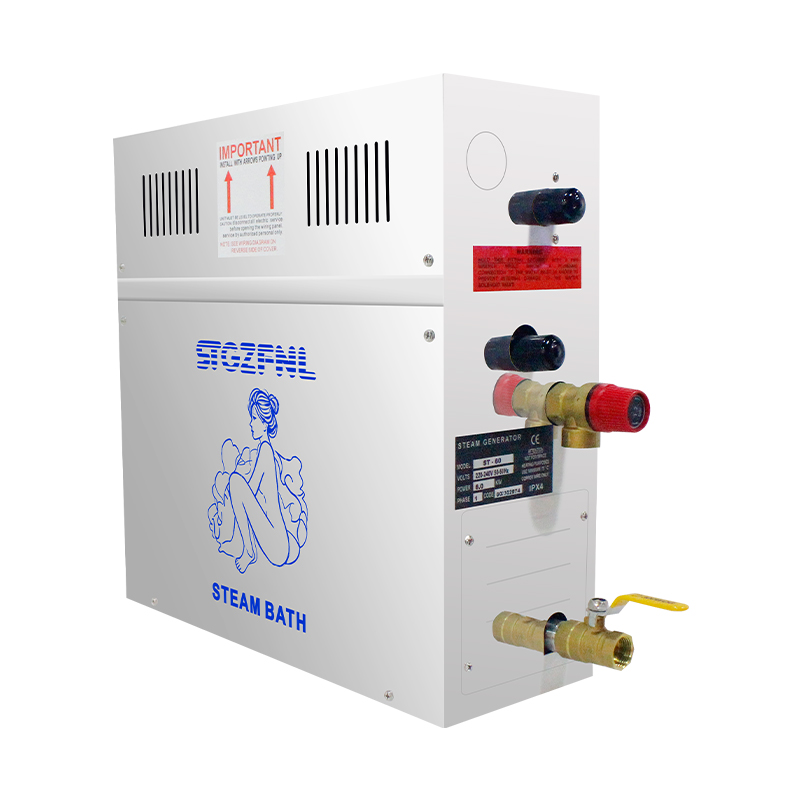
The internal process begins with cold water intake. The system opens a solenoid valve, allowing municipal water to flow through a fine mesh filter and into the stainless steel boiling tank. Once the water level probe detects the correct volume, the valve closes. The electric heating element activates, initiating the boiling phase. The system then delivers pressurized vapor through the steam line and out the steam head into the enclosure. This boiling and pressurization cycle is highly calibrated to waste zero liquid during the phase conversion.
During the startup phase, the unit draws a small baseline amount of water to cover the heating elements. Pre-heating does not consume excessive additional water. The generator simply brings the initial tank volume to a boil. Once operational, the thermostatic control dictates further water draw. The system utilizes intermittent boiling, only pulling fresh water when the ambient room temperature drops below the target setting. A temperature probe mounted inside the shower enclosure communicates constantly with the generator's logic board to regulate this cycle.
High-quality generators utilize auto-flush systems to purge water after every use. This prevents scale buildup inside the tank. When the session ends, the unit waits for the water to cool slightly, then opens a motorized drain valve. This process adds a small, predictable volume of residual water waste per session, usually equal to the capacity of the internal tank (often around 1 to 1.5 gallons). This feature is non-negotiable for hard water areas. It extends the hardware's lifespan and prevents catastrophic heating element failure caused by calcium encasement.
The physics of steam expansion also play a role in this efficiency. Water expands roughly 1,600 times its liquid volume when converted to steam at atmospheric pressure. This means a single cup of water produces an enormous volume of vapor. The generator leverages this natural expansion ratio, which is why the actual liquid intake remains so low while the visual output inside the shower enclosure appears so massive.
Determining the correct generator size starts with calculating the enclosure volume. You multiply the length, width, and height of the shower space to find the baseline cubic footage. For example, a shower that is 5 feet wide, 5 feet deep, and 8 feet tall has a baseline volume of 200 cubic feet. This number dictates the minimum kW rating required to heat the room effectively. You must measure the exact interior dimensions, not the rough framing dimensions, to get an accurate calculation.
Material adjustments heavily influence heat loss and subsequent water draw. Porous or cold materials like natural stone, glass block, or concrete absorb significant heat from the vapor. If you have a marble shower, you typically need to multiply the baseline cubic footage by 1.5 or even 2.0 to find the adjusted volume. These surfaces require a higher kW Professional Steam Bath Machine to compensate for the thermal absorption. A larger machine indirectly affects the frequency of the boiling cycle and the total water draw during the initial heat-up phase.
Undersizing and oversizing both carry operational risks. An undersized machine runs continuously. It struggles to heat the room, leading to inefficient water and energy use as the elements never cycle off. An oversized machine hits the target temperature too quickly. This results in short-cycling, inconsistent steam production, and uncomfortable temperature fluctuations for the user. The solenoid valve will open and close erratically, causing unnecessary wear on the internal plumbing components.
Exterior walls and ceiling height also factor into the sizing equation. If the shower enclosure sits against an uninsulated exterior wall, or if the ceiling exceeds 8 feet, the heat loss increases dramatically. You must account for these architectural variables to ensure the generator operates within its intended design parameters. Proper sizing guarantees that the water consumption remains within the 1 to 2-gallon baseline.
Steam units require a dedicated water feed. Plumbers typically install a 3/8-inch or 1/2-inch copper or braided stainless steel line. Cold water supply is the standard requirement for almost all residential and commercial units. The machine handles the heating internally, so tying into the hot water line is unnecessary and often discouraged by manufacturers. Supplying hot water can actually damage the internal solenoid valves and confuse the water level sensors.
Water pressure must fall within a specific range, usually between 15 and 60 PSI. If your municipal water pressure exceeds 60 PSI, the plumber must install a pressure-reducing valve (PRV) on the supply line leading to the generator. High pressure can blow out the internal seals or cause the solenoid valve to fail in the open position, leading to continuous water flow and potential flooding. Installing a water hammer arrestor is also standard practice to prevent banging in the pipes when the quick-closing solenoid shuts off the water intake.
Hard water severely impacts heating elements. Calcium and magnesium build up rapidly inside the boiling tank as the water evaporates and leaves minerals behind. You must evaluate the necessity of inline water softeners or filtration systems. If your water tests higher than 5 grains per gallon (GPG) of hardness, treatment is mandatory. Mitigating this risk prevents premature hardware failure and keeps the boiling cycle running at peak efficiency. Scale buildup acts as an insulator on the heating elements, forcing them to work harder and longer to boil the same amount of water.
Plumbing codes require specific drainage setups for the auto-flush and safety relief systems. You must route the auto-flush drain and the safety Pressure Relief Valve to an approved indirect waste line. This ensures the safe disposal of high-temperature water. You cannot pipe the drain directly into the shower's P-trap without an air gap, as this violates the Uniform Plumbing Code (UPC). Proper drainage compliance protects your home's plumbing infrastructure from thermal damage and prevents sewer gases from backing up into the generator.
Municipal water volume is statistically negligible when evaluating the daily operation of steam systems. Using 1 to 2 gallons per session equates to a tiny fraction of standard household usage. The water consumption itself will not noticeably impact your monthly utility tracking, even with daily use. The focus must remain on the electrical infrastructure required to support the boiling process.
Electricity consumption represents the primary operational metric. You evaluate this in kilowatt-hours (kWh). Running a 9kW to 15kW generator for 30 minutes draws a specific amount of power based on the element's continuous run time. The electrical draw required to boil the water dictates the true operational load per session. You must ensure your electrical panel has the capacity to support a dedicated 240V circuit, often requiring a 40-amp to 60-amp breaker depending on the generator's size.
Maintenance frequencies also factor into long-term operational viability. You must account for routine descaling procedures, inspecting the water level probes, and checking the inline water filters. Maintaining peak water and energy efficiency over a 10-year lifespan requires adhering to the manufacturer's recommended service intervals. Neglecting the water quality or failing to clean the tank will result in longer boiling times, increased electrical draw, and eventual component failure.
Calculate your exact shower enclosure volume using the length, width, and height formula, and adjust for porous materials like natural stone.
Test your home's water hardness to determine if an inline filtration system or water softener is necessary before installation.
Consult a licensed plumber to verify your current drainage routing, water pressure, and electrical panel capacity.
Install a dedicated cold water supply line with an accessible shut-off valve and a water hammer arrestor.
A: Steam generators require a cold water supply line. The internal heating elements boil the cold water to create vapor. Connecting a hot water line is unnecessary and can interfere with the unit's internal temperature sensors, damage the solenoid valves, and reduce overall operational efficiency.
A: Yes, a dedicated water feed is required. Plumbers typically use a 3/8-inch or 1/2-inch copper or braided line connected directly to the home's cold water supply. This ensures consistent pressure and flow to the generator without pressure drops when other fixtures are used.
A: Auto-flush systems discharge a small amount of water (usually 1 to 1.5 gallons) after each session. This is not considered waste. Purging the tank is a critical maintenance function that prevents scale buildup and significantly extends the lifespan of the heating elements.
A: You can, but it is highly discouraged without treatment. Hard water causes rapid calcium buildup on the heating elements, leading to inefficiency and premature failure. Installing an inline water softener or filtration system is strongly recommended if hardness exceeds 5 grains per gallon.
A: Larger kW generators boil water faster and process slightly more volume to fill larger enclosures. However, the overall water consumption remains extremely low. A 15kW unit might use marginally more water than a 7kW unit, but both stay near the 2-gallon baseline per session.
A: Yes. Because steam systems use exponentially less water than high-flow showers or soaking tubs, they heavily reduce the master bathroom's overall water footprint. This extreme efficiency helps meet strict conservation criteria for various green building certifications.


