


Evaluating "how hot is a sauna room" is not just a comfort preference. It serves as the fundamental baseline for choosing the correct heating technology, building materials, and electrical infrastructure. Many buyers mistakenly assume extreme heat always equals better results. In reality, maximizing temperature without matching it to your physical tolerance or home capabilities often leads to unused equipment. Different heating mechanisms produce distinctly different types of heat. These variations directly impact installation requirements, daily maintenance, and safety compliance. This article provides an evidence-based framework to help you align your thermal tolerance, wellness goals, and home infrastructure with the ideal system. We will break down standard temperature profiles, physiological responses, and strict hardware limitations. You will learn how to evaluate radiant versus convective heat. You will also discover exactly how safety regulations govern maximum temperatures.
Traditional saunas operate between 150°F and 195°F (65°C–90°C), relying on ambient heat and controlled humidity (Löyly).
A Far Infrared Sauna Room operates at a cooler 110°F to 140°F (43°C–60°C), using light to heat the body directly rather than the surrounding air.
Achieving and maintaining target temperatures requires evaluating ambient environment factors—an Outdoor Sauna Room demands significantly thicker insulation and higher kW heater capacity than indoor models.
Safety regulations in North America (UL/ETL standards) mandate that residential sauna heaters max out at 194°F (90°C) with mandatory automatic shut-off timers.
The initial purchasing decision hinges entirely on understanding convective heating versus radiant heating. Buyers must know how these distinct mechanisms function. They produce entirely different physical experiences.
Traditional setups utilize convective heat to warm the environment. An electric or wood-burning stove heats a large pile of dense rocks. These heated rocks then radiate warmth into the surrounding air. This process creates a deeply enveloping heat inside your sauna room. The standard temperature range for these units falls between 150°F and 195°F (65°C to 90°C).
Users can also manipulate the humidity factor, known as Löyly. Pouring water directly over the hot rocks creates a sudden burst of steam. This action causes a temporary spike in perceived heat. It makes you sweat faster and feel hotter without actually raising the ambient room temperature. This steam element defines the classic bathing experience.
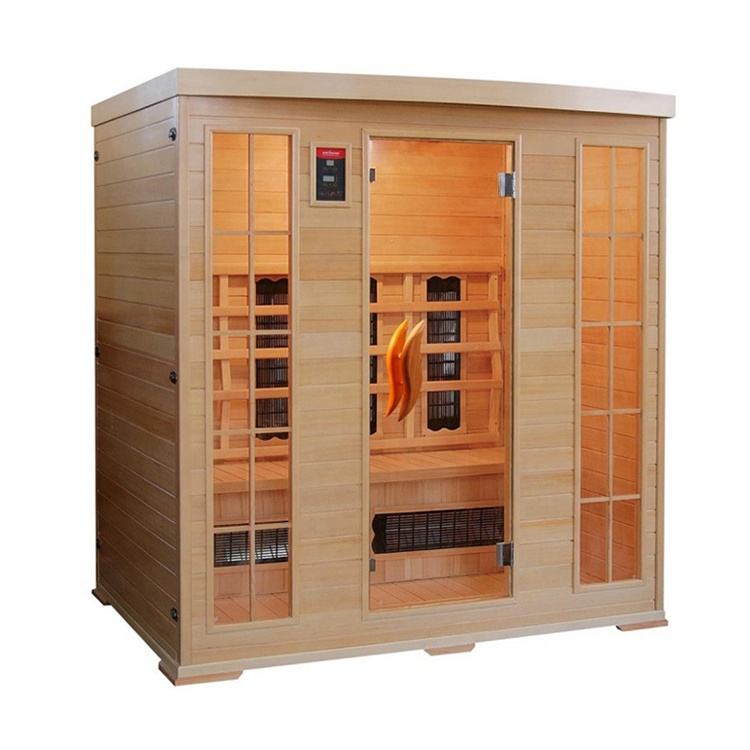
Alternatively, a Far Infrared Sauna Room relies on targeted radiant heat. Advanced carbon or ceramic panels emit specific infrared wavelengths. These waves penetrate human tissue directly to raise your core body temperature. The surrounding air remains surprisingly cool.
The ambient temperature in these units typically stays between 110°F and 140°F (43°C to 60°C). This cooler environment heavily benefits users who struggle to breathe in intensely hot, stuffy air. It also helps homeowners bypass strict structural limitations. Many infrared units operate seamlessly on standard 110V or 120V household outlets.
Feature | Traditional Sauna | Far Infrared Sauna |
|---|---|---|
Temperature Range | 150°F - 195°F (65°C - 90°C) | 110°F - 140°F (43°C - 60°C) |
Heating Mechanism | Convective (Heats the air) | Radiant (Heats the body directly) |
Humidity Options | Yes (Water over hot rocks) | No (Dry heat only) |
Electrical Needs | Typically 220V/240V Hardwired | Often 110V/120V Plug-in |
We must rely on an evidence-oriented reality check when evaluating health claims. You should consistently avoid exaggerated medical promises. Instead, focus entirely on verifiable physiological responses to sustained heat exposure. Understanding these responses helps you select the perfect climate.
At temperatures above 160°F, your body activates its primary cooling mechanisms. Blood vessels dilate rapidly to push internal heat outward toward the skin. Your heart rate increases significantly to support this blood flow. This specific cardiovascular response strongly mimics the physical effects of moderate exercise. It triggers massive sweat production quickly. Users seeking an intense, heart-pumping detox experience usually prefer this higher convective heat.
Lower temperatures offer distinctly different therapeutic advantages. A Far Infrared Sauna Room operating around 120°F allows for much longer sessions. You can comfortably relax inside for 30 to 45 minutes. Sustained clinical studies link these extended, deeply penetrating heat sessions to enhanced muscle recovery. They consistently show reduced Delayed Onset Muscle Soreness (DOMS) after strenuous workouts. Users also report notably improved joint mobility over time.
You must acknowledge basic physical tolerance realities before purchasing. Maximum temperatures exceeding 190°F severely limit your safe session duration. You can generally only stay inside for 10 to 15 minutes at this peak heat level. Buyers must carefully weigh maximum heat capability against their desired session length.
Common Mistake: Pushing the dial to maximum heat immediately on your first day.
Best Practice: Start sessions at 150°F (Traditional) or 110°F (Infrared). Gradually increase the climate over several weeks as your body adapts.
Sustaining temperatures up to 195°F creates a serious infrastructure challenge. It places massive thermal stress on all cabin materials. It also demands exceptionally heavy loads from your home electrical system. You must plan for these structural demands properly.
You cannot build a high-heat cabin using standard construction lumber. Extreme temperature fluctuations will destroy basic wood quickly. Thermal modification becomes non-negotiable at these high temperatures. Builders highly recommend thermally modified Ash or clear Western Red Cedar. These premium woods offer immense stability. They prevent severe structural warping over time. They stop sap bleeding completely. They also resist moisture degradation beautifully during intense Löyly sessions.
Insulation acts as your primary climate defense mechanism. External ambient temperatures dictate your heater's performance heavily. When you evaluate an Outdoor Sauna Room, you must factor in local weather patterns immediately. An outdoor unit placed in a harsh, cold climate requires a much higher kW heater to compensate for the freezing exterior.
You will also need double-pane insulated glass doors. The walls require R-13+ fiberglass or mineral wool insulation. These mandatory upgrades ensure the cabin actually reaches target temperatures efficiently. Conversely, indoor units benefit from the home's existing climate control. They require far less aggressive insulation strategies.
Electrical capacity represents a major installation hurdle. Traditional high-heat units universally require dedicated hardwired electrical lines. You must hire an electrician to install a 220V or 240V circuit. You also need appropriately sized breakers, typically running between 30 and 40 amps. Attempting to under-power a traditional heater results in lukewarm stones and deeply disappointing sessions.
We must clearly define the physiological danger zones of extreme heat. Pushing past the "too hot" threshold risks serious heat exhaustion. Early warning symptoms include sudden dizziness, severe nausea, and unexpected chills. You must exit the cabin immediately if you experience any of these signs.
Strict hardware regulations exist to protect users from these precise dangers. In the United States and Canada, safety institutions enforce rigid manufacturing rules. UL and ETL safety certifications strictly govern all residential electric heaters. These standards legally cap electric residential sauna room heaters at exactly 194°F (90°C).
Furthermore, these certifications enforce mandatory 60-minute automatic shut-off timers. You cannot override these timers safely. This critical feature prevents catastrophic fire accidents caused by unattended operation. If you fall asleep, the heater simply turns itself off.
Your actual perceived temperature varies heavily based on your seating position. Heat always rises naturally. The top bench will always feel significantly hotter than the lower bench or the floor.
Thermostat sensor placement directly dictates your overall heating experience. You must install the temperature sensor according to strict manufacturer specifications. If you mount the sensor too high on the wall, it reads extreme heat prematurely. This installation error triggers an early, frustrating heater shut-off. Proper positioning guarantees accurate climate control and a consistent bathing environment.
Follow this structured decision framework to shortlist your ideal system efficiently. It simplifies the technical evaluation process significantly.
Step 1: Assess Electrical Readiness. Evaluate your current residential electrical panel first. Can your home currently support a new 240V hardwire installation? If your panel lacks capacity, you might need a simpler 120V plug-and-play infrared solution.
Step 2: Define the Primary Use Case. Determine your exact physical preferences. Do you crave quick, intense heat bursts mixed with heavy steam? A traditional convective unit fits your needs best. Do you prefer longer, lower-temperature sessions geared toward deep tissue therapy? An infrared system makes far more sense.
Step 3: Indoor vs. Outdoor Deployment. Assess your overall infrastructure readiness carefully. Planning an Outdoor Sauna Room involves extensive site preparation. You must pour a level concrete pad. You must apply intense weatherproofing to the roof. You also need to account for upgraded heater capacity to fight cold winds.
Schedule a professional contractor evaluation immediately. Have a licensed electrician inspect your routing capabilities before you order any equipment. Finally, request physical material samples from your shortlisted manufacturers. Touching the wood helps you verify its quality and thermal modification level.
Your ideal temperature depends completely on the specific heating technology you choose and your personal physical tolerance.
Prioritize safety-certified hardware to guarantee reliable daily operation and prevent severe electrical hazards.
Select premium, thermally modified woods to protect your cabin against extreme heat stress and moisture degradation.
Assess your home electrical panel early to avoid unexpected installation roadblocks later in the project.
Consult a licensed electrician today to confirm your circuit capacity before purchasing any high-heat residential unit.
A: It typically takes 30 to 45 minutes for traditional units to reach their peak heat. Infrared models usually heat up faster, taking about 15 to 20 minutes. These warmup times vary heavily depending on your ambient starting temperature, the heater's kilowatt rating, and the cabin's insulation quality.
A: No. Manufacturers engineer infrared technology to cap safely around 140°F (60°C). Attempting to modify these radiant panels to run hotter instantly voids your warranties. It also creates severe fire hazards and compromises the structural integrity of the equipment entirely.
A: This frustrating issue usually results from improper heat sensor placement. If you mount the thermostat sensor too close to the ceiling or directly over the heater, it triggers early shut-offs. Inadequate ventilation or an undersized heater for the room's cubic footage will also limit peak temperatures.
