Views: 0 Author: Site Editor Publish Time: 2026-06-26 Origin: Site
Investing in a personal wellness space marks a major life transition. You move away from casual health interests. You step into making a serious physical and spatial commitment. Buyers often face a tough challenge during this process. They struggle to separate verified health outcomes from exaggerated marketing claims. This confusion makes it incredibly difficult to justify the purchase. It also complicates choosing the right model for your home.
We designed this guide to solve this exact problem. We will provide a skeptical-friendly, evidence-based breakdown of actual health benefits. We avoid wild promises. Instead, we focus on what science actually supports. You will also learn a highly practical evaluation framework. We show you how to select, install, and maintain the perfect setup. You will leave with clear action steps to ensure your investment delivers real, lasting value.
Verifiable Outcomes: Consistent sauna use supports cardiovascular health and muscular recovery, but is not a substitute for medical treatment.
Technology Choice Dictates Experience: The choice between traditional heating and a Far Infrared Sauna Room drastically changes installation requirements and user experience.
Placement Strategy: An Outdoor Sauna Room requires specific weatherproofing and foundation work, whereas indoor models demand strict ventilation and spatial planning.
Total Cost of Ownership: Beyond the base price, buyers must evaluate electrical upgrades, spatial compliance, and ongoing maintenance.
You need to ground your expectations in solid science before buying any wellness equipment. The wellness industry often overpromises results. We prefer to look at established medical baselines. This approach protects your evaluation criteria. It helps you focus on genuine physical improvements.
Heat stress creates fascinating changes in your body. It closely mimics moderate cardiovascular exercise. Your core temperature rises. Your heart rate increases safely and steadily. Blood vessels dilate to improve overall circulation. Established institutional research parameters support these observations. For example, baseline data from Harvard Medical School studies indicates positive trends. Regular heat exposure correlates with better long-term cardiovascular health. The heat forces your heart to pump harder. This conditions your cardiovascular system over time. We must remain clear on one point. Heat therapy supports health. It does not act as an absolute disease-cure. You should view it as a supplement to a healthy lifestyle.
Athletes heavily rely on heat therapy for a specific reason. It works remarkably well for muscular recovery. Physical exertion depletes your muscles. Micro-tears occur during heavy exercise. Heat application expands your blood vessels. Expanded vessels allow increased blood flow. This enhanced circulation delivers fresh oxygen directly to depleted muscles. It also helps flush out metabolic waste products like lactic acid. You experience less stiffness the next day. Pain management becomes much easier. Many users report significant relief from delayed onset muscle soreness. Regular sessions keep your body flexible and ready for the next workout.
Modern life keeps us in a constant state of high alert. Your autonomic nervous system controls this response. The sympathetic nervous system handles the "fight-or-flight" reaction. Constant stress overworks this system. Heat therapy forces a biological shift. When you relax in a heated environment, your body transitions naturally. It moves into the parasympathetic state. We call this the "rest-and-digest" phase. Cortisol levels begin to drop. Your breathing slows down and deepens. This neurological shift provides profound mental relaxation. Users consistently cite stress reduction as their favorite daily benefit.
We must explicitly debunk common myths to establish trustworthiness. Exaggerated claims ruin realistic expectations. You need the truth to make an informed decision.
Myth 1: "Sweating out heavy toxins." Your liver and kidneys handle biological detoxification. Sweat consists almost entirely of water and trace minerals. Heat therapy supports wellness, but it does not replace internal organ function.
Myth 2: "Extreme weight loss." You will lose water weight during a session. You will regain this weight after drinking water. Heat exposure burns some calories through elevated heart rates. However, it does not melt away body fat.
Myth 3: "Curing acute illness." You cannot sweat out a cold or flu virus. Heat exposure might relieve some congestion symptoms. It will not destroy viral infections.
Selecting the right technology dictates your entire experience. You have two primary heating methods to choose from. Each option serves different preferences. Each also requires distinct installation environments.
Traditional units rely on convection heating. The mechanism heats the air inside the cabin. High-quality models use electric or wood-burning stoves. These stoves heat a bed of specialized rocks. The ambient air temperature typically reaches between 150°F and 195°F. You experience high ambient heat. You also get to experience traditional steam, known as loyly. You create loyly by pouring ladles of water over the hot rocks. This instantly raises the humidity.
This technology works best for users seeking an authentic, rugged experience. You must enjoy intense, enveloping heat. The ritual of tending the rocks appeals to many traditionalists. However, the high heat demands more energy. It also requires longer preheating times. You usually need to wait 30 to 45 minutes before stepping inside.
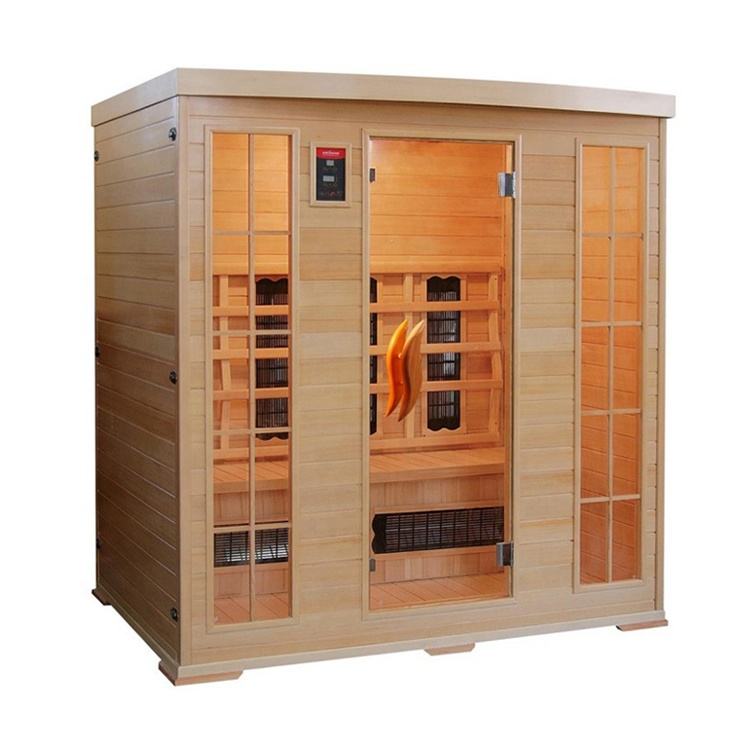
Infrared technology operates on a completely different principle. A Far Infrared Sauna Room uses advanced light panels. These panels emit specific wavelengths of light. The light penetrates your skin to heat your body directly. It does not rely on heating the surrounding air first. Because of this, the ambient temperature stays much lower. These units typically operate between 110°F and 140°F.
This option proves best for users sensitive to extreme heat. It fits perfectly into indoor residential setups. You enjoy much faster heat-up times. These models also consume significantly less energy. You must check the EMF (Electromagnetic Field) ratings during your evaluation. High-quality manufacturers shield their panels to keep EMF levels extremely low. Always request EMF testing reports before finalizing your purchase.
Below is a summary chart comparing the two core technologies:
Technology Type | Heating Mechanism | Operating Temperature | Preheat Time | Best Suited For |
|---|---|---|---|---|
Traditional Dry | Heats the air via rocks/stove | 150°F – 195°F | 30 – 45 minutes | High heat tolerance, traditional rituals |
Far Infrared | Heats the body via light panels | 110°F – 140°F | 10 – 15 minutes | Heat sensitivity, faster sessions, indoor use |
Where you place your unit is a critical decision. It affects your daily usage habits. It also determines your installation hurdles. You must evaluate your available space carefully.
An Outdoor Sauna Room offers incredible lifestyle benefits. You preserve your interior square footage entirely. These structures provide a beautiful, natural aesthetic to your backyard. You can easily incorporate larger traditional designs. Barrel and cabin styles look fantastic in garden settings. You get to step out into nature immediately after your heat session.
However, outdoor deployments carry specific implementation risks. You cannot place a wooden structure directly on grass. It requires a level concrete pad or a solid paver foundation. The unit needs weather-resistant roofing to survive rain and snow. Electrical routing presents the biggest challenge. You must run power from your main house panel out to the yard. This requires digging a trench. Trenching operations require a licensed electrician and specific permits. You must factor these physical realities into your planning phase.
Installing a sauna room indoors provides maximum convenience. You gain climate-controlled access year-round. You never have to walk through freezing rain to start your session. Indoor units integrate beautifully into existing bathrooms. They also make excellent additions to home gyms. Electrical routing is generally much easier. Your electrician simply runs a wire through existing interior walls.
Indoor installations do have strict requirements. Passive or active ventilation is absolutely necessary. Traditional models create moisture. If trapped, this moisture damages your drywall and ceiling. You must plan for proper airflow. Spatial limitations also dictate your choices. You need enough ceiling clearance to assemble the panels. Measure your hallways and doorways carefully. Ensure the boxed panels can navigate tight corners during delivery.
You must evaluate specific build characteristics before making a purchase. Quality varies wildly across the market. Paying attention to these dimensions ensures longevity and safety.
The type of wood matters immensely. You want materials that handle extreme temperature fluctuations without warping. Canadian Hemlock and Western Red Cedar are the industry standards. Cedar naturally resists rot and pests. Hemlock provides a clean, hypoallergenic environment. You must vigorously warn against chemically treated woods. Some cheap models use toxic glues to bind panels together. These adhesives will off-gas under high heat. Inhaling toxic fumes negates every health benefit you seek. Demand solid wood construction. Verify the manufacturer uses non-toxic, water-based adhesives if any glue is required.
Electrical safety is completely non-negotiable. Your unit draws a significant amount of continuous power. You must look for UL-listed or ETL-certified electrical components. These certifications prove an independent laboratory tested the equipment. They verify it meets strict safety standards. Installing uncertified electrical gear creates severe fire hazards. It also creates massive home insurance compliance issues. If an uncertified unit causes a fire, your insurance might deny the claim. Never compromise on certified components.
Modern units offer many secondary features. You need to assess which features actually improve your routine. Control panels range from simple manual dials to advanced Wi-Fi scheduling systems. Wi-Fi allows you to preheat the cabin from your phone on your drive home. Bench ergonomics determine your physical comfort during a 30-minute session. Flat, narrow benches cause discomfort quickly. Look for contoured seating. Finally, evaluate the warranty structures closely. A strong brand differentiates between the wood warranty and the electrical warranty. They might offer a lifetime guarantee on the wooden cabin. They usually offer a three-to-five-year warranty on the heating elements. Read the fine print to understand your coverage.
We need to discuss the physical realities of bringing this equipment into your home. Preparation prevents frustrating delays. You must manage several logistical steps successfully.
Most high-quality units are not simple plug-and-play devices. You cannot plug them into a standard wall outlet. They require a dedicated 220v/240v circuit. This is the same type of power required by an electric oven or clothes dryer. You cannot share this circuit with other appliances. You must hire a licensed electrician to install a new breaker. They will run appropriate gauge wiring to your desired location. You must secure this professional service before the delivery truck arrives.
You need to understand the delivery process. Most freight companies offer curbside delivery only. They will drop a massive pallet at the end of your driveway. They will not carry it inside. You must break down the pallet outside. You then carry individual heavy panels through your residential doorways. White-glove delivery exists, but requires prior arrangement. Measure every staircase and hallway. Ensure the largest panel can make the turn into your basement or bathroom.
Operational realities require consistent attention. You must maintain the space to prevent bacterial growth. Sweat and dead skin cells accumulate on wooden benches. Establish strict cleaning protocols. Use mild, non-toxic wood cleaners. Sand the benches lightly once a year to restore the wood's natural finish. If you use a traditional stove, you must inspect the rocks. Heating and cooling cycles cause stones to crack over time. You need to replace cracked stones to ensure proper air circulation through the heater.
You now possess a clear, evidence-based framework for this decision. You know how to bypass marketing hype and focus on verifiable results. The path forward requires a structured approach. Use this shortlisting logic to finalize your plans:
Determine your primary health goal. Decide if you want intense heat conditioning or gentle muscle relaxation.
Choose your heating technology. Match your health goals to either traditional convection or targeted infrared panels.
Finalize your placement. Weigh the aesthetic benefits of the yard against the convenience of an indoor space.
Verify your electrical capacity. Check your main breaker panel to ensure you can support a new 240v dedicated circuit.
Your next step is purely practical. Grab a tape measure and audit your available space. Call a licensed electrician to get a quote for the dedicated circuit. Completing these two physical steps gives you the confidence to place your order. You are well on your way to building a phenomenal personal wellness sanctuary.
A: Energy consumption depends on your heater’s kilowatt rating and local electricity rates. Most traditional models use a 6kW to 8kW heater. Using it three times a week for an hour typically adds minor charges to your utility bill. Infrared models use even less energy. They operate at lower temperatures and require shorter preheating times. Multiply your local cost per kilowatt-hour by the heater wattage to estimate exact monthly charges.
A: We strongly advise against installing any unit on carpet. Carpets trap heat and absorb sweat. This creates a breeding ground for bacteria and mold. Fire safety presents another major concern. Always place your unit on a hard, flat surface. Concrete, tile, or luxury vinyl plank flooring works best. These materials ensure proper stability and maintain safe hygiene standards.
A: Two capable adults can usually assemble a pre-fabricated modular unit in two to four hours. The process involves latching or screwing pre-built wall panels together. You do not need specialized carpentry skills. The roof and bench installation take the most time. However, electrical wiring requires a licensed professional. Schedule the electrician after you complete the physical assembly.
A: Yes, certain health conditions require strict medical clearance. You should consult a physician if you have low blood pressure, severe heart conditions, or kidney disease. Pregnant individuals should also avoid high-heat environments. Extreme heat can cause dizziness or dehydration. Always listen to your body. Step out immediately if you feel lightheaded. Heat therapy must remain safe for your specific profile.