Views: 0 Author: Site Editor Publish Time: 2026-07-13 Origin: Site
Building a traditional dry steam room requires a fundamental choice. The terminology often confuses people initially. A true "dry steam room" is actually a traditional dry sauna. Here, you ladle water over hot rocks to create sudden bursts of steam. The Finnish call this steam löyly. Your heating mechanism serves as the core engine. It dictates the physical sweat experience. It also determines required architectural infrastructure. It impacts local compliance hurdles and everyday usability.
We offer an objective, hardware-focused breakdown here. You will compare electric units against traditional wood-burning alternatives. You will learn exactly how to match the hardware to your lifestyle. This guide will help you finalize your build requirements confidently.
Electric sauna heaters offer precise temperature control, faster daily integration, and are the only viable option for most indoor residential builds.
Wood-burning sauna stoves provide a higher maximum heat capacity and authentic ambiance, but require strict adherence to fire codes, chimney ventilation, and manual maintenance.
Installation dictates choice: Electrical panel capacity (often requiring a dedicated 240V circuit) versus structural ventilation and safety clearances will immediately narrow your options.
Operational costs vary: Electric models have predictable utility costs based on kW ratings, while wood stoves depend on local firewood pricing and annual chimney maintenance.
You cannot evaluate heating options without establishing strict performance baselines. The core engine of your room must perform reliably under extreme thermal stress. We judge any sauna heater by its ability to balance air temperature, thermal mass, and safe vaporization.
Several success criteria define a high-performing unit. A reliable heater must reach sustained temperatures of 160°F–195°F (71°C–90°C). It must also hold sufficient stone mass for heat retention. The stones play a crucial role. They absorb the raw energy. They then radiate it evenly throughout the space. Furthermore, the unit must safely vaporize water without damaging internal components. Pouring water directly onto bare metal destroys equipment quickly. High-quality designs protect their heating elements or fireboxes using proper stone placement.
Many buyers fall for the "Dry vs. Wet" myth. They assume certain heaters only produce dry heat while others produce steam. This assumption is false. Both electric and wood-burning stoves handle water for steam. The evaluation rests entirely on how they generate the base heat. It does not rest on whether they can produce steam. You will pour water on both types. The resulting humidity spike feels identical if you engineer the room correctly.
Modern residential builds rely heavily on electric options. These units bring advanced technology into an ancient practice. They solve many logistical problems for urban homeowners.
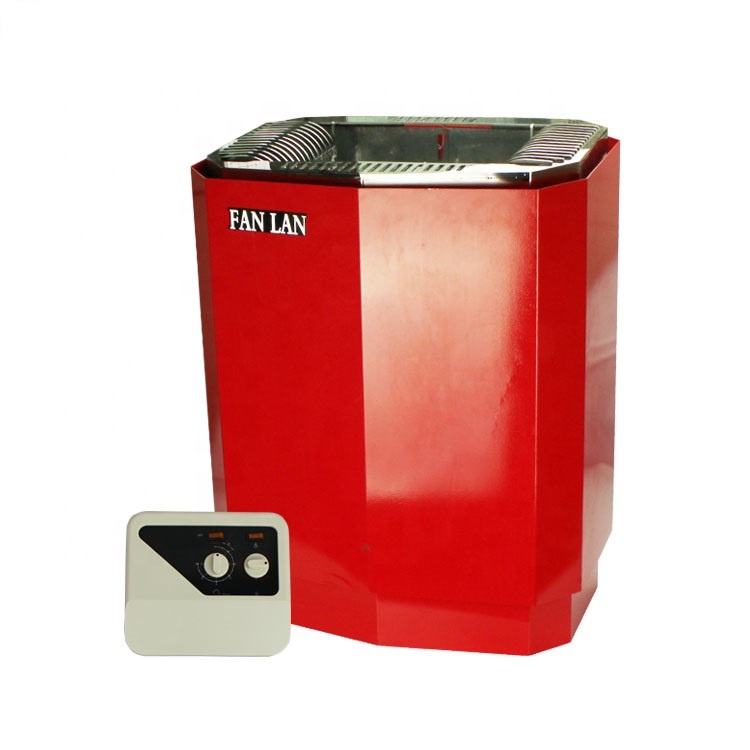
The core mechanism operates through electrical resistance. It uses heavy-duty Incoloy or stainless steel electrical elements. These elements heat a surrounding rock basket. The rocks absorb the energy over 45 to 60 minutes. They eventually reach temperatures hot enough to instantly vaporize water. You can trust an electric sauna heater to deliver consistent performance daily.
Implementation realities require professional intervention. You cannot plug these units into a standard wall outlet. They require hardwired 220V/240V connections. A licensed electrician must handle this installation. Furthermore, the system needs dedicated breakers. You will typically install a 30 to 50-amp breaker depending on the specific kW rating.
The user experience focuses purely on convenience. Wi-Fi or digital wall-mounted controllers allow for remote pre-heating. You can activate the unit from your phone. Precise temperature capping keeps the environment safe. US models strictly adhere to UL standards. These standards typically limit the maximum temperature to 194°F. This cap ensures safe operation in unattended residential spaces.
We see specific ideal use cases for these units. Indoor saunas almost exclusively require electric models. Gym commercial spaces benefit from the automated shut-off features. Users who prioritize daily convenience over traditional rituals usually prefer electric options. You get a reliable sweat session without the labor of building a fire.
Purists often reject digital controllers. They prefer the primal experience of a wood fire. Wood heaters deliver an entirely different atmospheric experience. They also demand a different level of commitment from the owner.
The core mechanism relies on raw combustion. You load seasoned wood into a firebox. A rock tray sits directly on top of this firebox. The flames heat the steel plate. The steel plate then heats the rocks. This setup generates intense, less restricted heat. A high-quality sauna stove can easily push room temperatures past 200°F.
Implementation realities make these units challenging for indoor use. However, they boast zero electrical requirements. This independence makes them ideal for remote cabins. They perfectly suit backyard barrel saunas. You must prepare for extensive structural modifications, though. You need professional flue and chimney installation. You must lay down non-combustible floor pads. Inspectors strictly enforce clearance-to-combustible safety zones. You cannot place a wood heater too close to wooden benches or walls.
The user experience demands manual tending. You must light the fire manually. You must feed the fire continuously. You also handle messy ash removal. In return, the unit produces a softer, heavily radiant heat. Many purists prefer this exact sensation. The crackle of the wood adds unmatched acoustic ambiance.
Ideal use cases lean heavily toward rural settings. Outdoor standalone structures handle these stoves beautifully. Off-grid properties depend on them exclusively. Users willing to trade modern convenience for a ritualistic, high-heat experience will love them.
You must weigh these options against your actual living situation. We designed the following evaluation to highlight practical differences. Review the chart below before diving into the specific criteria.
Heater Type Comparison Matrix
| Evaluation Criteria | Electric Heater | Wood-Burning Stove |
|---|---|---|
| Power Source | 220V/240V Hardwired | Seasoned Firewood |
| Installation Focus | Electrical Panel Upgrades | Chimney Flue & Clearances |
| Temperature Limit | Capped at 194°F (US UL standard) | Unrestricted (easily exceeds 200°F) |
| Pre-Heating Method | Digital Controller / Wi-Fi App | Manual Fire Building |
| Routine Maintenance | Resetting Stones Annually | Ash Removal & Flue Sweeping |
Electric options carry high upfront electrical labor costs. Copper wire and new subpanels cost money. However, they are much easier to pass residential building codes. City inspectors approve indoor electric setups regularly. You face very few ventilation hurdles.
Wood models carry high structural labor costs. Chimney penetration requires roof work. Flashing the chimney correctly prevents water leaks. Furthermore, a wood setup may trigger higher home insurance premiums. It might even violate local urban fire or smoke ordinances. Many dense suburban neighborhoods ban wood-burning units completely.
Electric units are highly predictable. They typically take 45 to 60 minutes to reach the target temperature. You achieve this at the simple push of a button. They also automatically shut off. Most controllers limit operation to one hour for safety.
Wood units are highly variable. Heating time depends entirely on your wood quality. Hardwoods burn hotter and longer than softwoods. Draft efficiency also changes the heating speed. Your own fire-building skill plays a massive role. There is no automatic shut-off. The fire burns until the fuel runs out.
Electric systems require very low maintenance. The heating elements may need replacing every 5 to 10 years. This lifespan depends heavily on your water usage. Pouring too much water stresses the metal. The stones need annual resetting. You just take them out, wash them, and repack them loosely.
Wood systems require high maintenance. You must commit to regular ash disposal. You need professional flue sweeping to prevent dangerous creosote buildup. You must also perform periodic inspections of the firebox. Extreme heat can cause steel warping over many years.
We recommend following a strict logical progression. Do not buy a heater based on aesthetics alone. Use this filtering process to find your exact match.
Assess the location: First, determine if your space is indoor or outdoor. If indoor, default to an electric setup. Indoor wood stoves require complex masonry flues. They also pose major carbon monoxide risks without perfect ventilation. Outdoor builds offer much more flexibility.
Audit your infrastructure: Check your home electrical panel immediately. Look at the available amperage. Upgrading a main panel for a 9kW heater gets expensive quickly. Sometimes the electrical upgrade costs as much as the heater itself. If upgrading isn't viable, a wood option might serve as your outdoor fallback.
Define your usage habit: Think about your daily routine honestly. Will you use it spontaneously after a long workday? Choose electric. You will appreciate the Wi-Fi remote start. Is it a weekend ritual? Is tending a fire part of your relaxation process? Choose wood. You will enjoy the slower, deliberate pace.
You must also consider local availability. Finding kiln-dried firewood requires effort in some regions. Conversely, some remote areas suffer from frequent power outages. Map out your environmental constraints before finalizing your budget.
Neither heater is universally superior. They solve distinctly different problems.
Electric models solve for everyday convenience, tight space constraints, and digital precision.
Wood stoves solve for historical tradition, off-grid capability, and unrestricted intense heat.
Safety and code compliance should always dictate your final indoor or outdoor location.
Take immediate action on your project today. Consult your local electrician to check your available panel amperage. Alternatively, measure your outdoor space to ensure proper fire code clearances. Finalize your infrastructure limits before purchasing either unit.
A: Yes. Purpose-built units are designed with exposed rocks specifically to generate steam. However, water should be ladled reasonably. Flooding the element directly can cause premature wear. You should only use fresh, clean water without harsh chemical additives.
A: Practically, yes. In North America, electric models are mechanically limited by UL safety standards. They max out at 194°F (90°C). Wood-burning models have no digital safety limits. They can easily exceed 200°F depending on the fire's intensity and draft control.
A: This depends entirely on local utility rates versus access to firewood. A standard 6kW electric model running for one hour costs roughly $0.80 to $1.50 per session. A wood model is effectively free to run if you chop your own wood. It becomes expensive if you rely on purchasing kiln-dried hardwood bundles.


