Views: 0 Author: Site Editor Publish Time: 2026-07-17 Origin: Site
Modern recovery spaces have evolved significantly in recent years. People increasingly shift away from sterile, plastic tubs. They now favor visually striking, architecturally integrated designs. A beautiful room seamlessly blends natural elements into your daily routine. Standard tubs handle basic recovery protocols just fine. However, a premium wooden ice bath elevates the entire experience. Expanding your setup to accommodate two users simultaneously changes everything. You suddenly face complex logistical, mechanical, and maintenance variables. Selecting the right unit requires balancing raw visual appeal against structural realities. You must carefully calculate rapid water displacement. You also need serious chiller horsepower to keep temperatures low. Finally, you must plan for long-term exterior preservation. We will guide you through these specific challenges. You will learn exactly how to evaluate materials, assess dimensions, and prepare your physical infrastructure.
Not all wood is suitable for constant moisture; prioritize Red Cedar, Teak, or thermally modified woods with marine-grade liners.
A 2 person ice bath significantly increases water volume, requiring a minimum 1/2 HP to 1 HP chiller to maintain optimal contrast therapy temperatures.
Fully loaded, a 2-person tub can exceed 1,500 lbs, necessitating reinforced flooring and proper drainage planning for indoor home wellness equipment setups.
Ongoing maintenance for wooden exteriors requires semi-annual sealing to prevent warping, rot, and UV damage (if placed outdoors).
When choosing a wooden exterior, you must match the timber to its environment. Constant moisture exposure destroys untreated lumber quickly. Therefore, material selection dictates the lifespan of your investment. You have three primary options for high-end recovery tubs.
Western Red Cedar offers excellent natural rot resistance. It releases a pleasant, aromatic scent during use. This wood contains natural oils preventing fungal decay. Teak provides incredible durability. Shipbuilders use Teak for boat decking because it resists water perfectly. However, it costs significantly more. Modified Oak or Pine serves as a third alternative. Manufacturers bake these woods at high temperatures to remove organic compounds. This thermal modification prevents warping. Still, modified woods require heavy chemical sealing.
The interior liner prevents water from reaching the wooden frame. You must choose a liner carefully to ensure sanitation. Consider the following interior lining options:
Stainless Steel Inserts: These offer the best temperature retention. They provide superior hygiene. Medical-grade stainless steel resists bacterial growth.
Acrylic or Fiberglass Shells: These materials weigh less than steel. They offer an easier cleaning surface. They also mold easily into ergonomic shapes.
Epoxy-Coated Bare Wood: This style delivers the highest aesthetic appeal. You see the natural wood grain underwater. Unfortunately, it carries the highest risk of eventual leaks. Micro-cracks in the epoxy trap bacterial buildup.
You must also evaluate the insulation factor. Wood acts as a natural insulator. However, it cannot retain chilling temperatures alone. Good manufacturers inject closed-cell polyurethane foam. They place this foam directly between the wood exterior and the tub liner. This insulation layer prevents chiller burnout. It stops ambient room heat from warming your cold water.
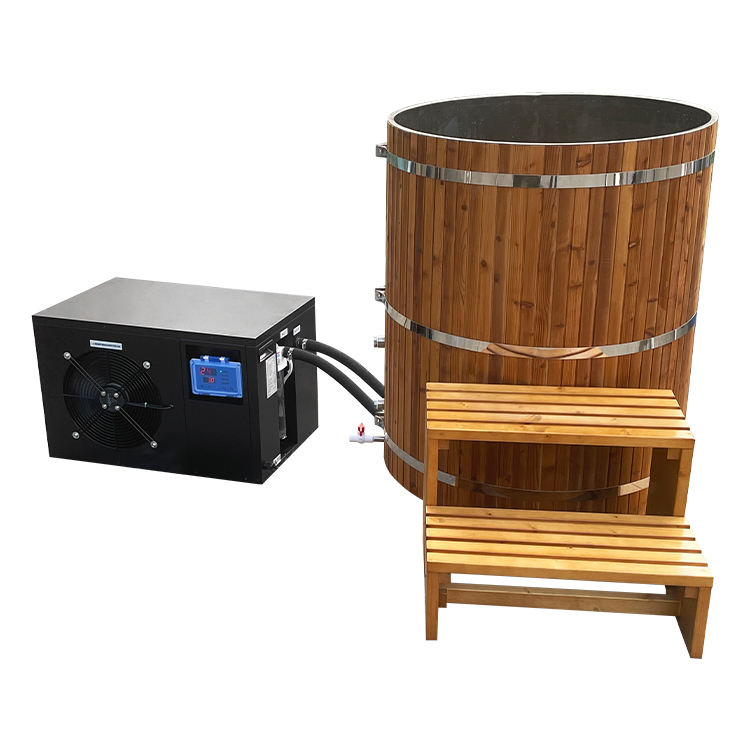
A true 2 person ice bath demands specific internal dimensions. Many brands market their tubs as dual-capacity. Yet, they barely fit two average-sized adults. You need a minimum interior length of 60 inches. You also need at least 30 inches of internal width. These dimensions allow two adults to comfortably submerge. Nobody wants to overlap knees during an intense cold plunge.
Water displacement realities present a major engineering challenge. Two bodies entering the water simultaneously creates a massive spillover effect. Your tub needs smart structural engineering. Look for high-capacity overflow drains. Deep structural walls help contain the sudden surge. If the walls sit too low, water will flood your floor immediately.
Seating configuration directly impacts comfort and water volume. You generally choose between flat-bottom designs and dual built-in benches. Benches offer excellent ergonomic support. They keep your posture upright. However, bench designs require more overall vertical space. You must fill the tub higher to cover your shoulders.
| Feature Focus | Flat-Bottom Design | Dual Built-In Benches |
|---|---|---|
| Ergonomic Support | Minimal. Requires users to support their own torso. | High. Promotes relaxed, upright seated posture. |
| Water Volume Needs | Lower overall volume required to cover shoulders. | Higher water level required to reach upper chest. |
| Leg Room | Maximum stretch capacity for taller users. | Knees remain bent; compact horizontal footprint. |
| Cleaning Difficulty | Simple flat surfaces allow quick wiping. | Corners and under-bench areas require extra scrubbing. |
Proper installation requires serious structural planning. You cannot simply drop a large tub anywhere in your house. You must calculate load-bearing limits accurately. A 100-gallon wooden tub holds immense weight. The water alone weighs over 800 pounds. Add two adult bodies to the calculation. Finally, factor in the structural frame and the cooling unit. The total package easily exceeds 1,500 pounds.
You must address these infrastructure points before delivery:
Reinforce the Flooring: Indoor installations require reinforced floor joists. Always consult a structural engineer first. Standard residential floors span 16 inches on center. They rarely support 1,500 pounds in a concentrated area. Outdoor setups typically need a poured concrete pad. A standard deck will likely warp or collapse under this load.
Assess Plumbing and Drainage: Standard hose bib connections work for temporary outdoor setups. Hard-plumbed commercial-grade drains offer better long-term reliability indoors. Assess the necessity of a floor drain in your designated room. Spills happen frequently during dual plunging. A dedicated floor drain prevents catastrophic water damage.
Verify Power Supply Needs: Small units run on standard 110V/15A outlets. Large dual-capacity units often require dedicated 20A circuits. The chiller pulls significant amperage upon startup. Review proximity rules for GFCI outlets. Residential electrical codes mandate GFCI protection near any water source. Ensure your electrician follows local code compliance perfectly.
Cooling an expanded body of water requires industrial strength. You must upgrade your mechanical systems. A standard 1/4 horsepower chiller will fail on a dual-capacity tub. It will run continuously trying to chill the massive water volume. This continuous strain leads to early compressor failure. You must establish 1/2 horsepower as the absolute baseline. Select a 1 horsepower unit for rapid cooling. A 1 HP chiller handles frequent daily use without overheating. It forms the backbone of reliable home wellness equipment.
Filtration systems also need an upgrade. Dual occupancy doubles the organic load instantly. Two people introduce significantly more skin cells, sweat, and oils. Single-stage filtration cannot keep up with this debris. You must require two-stage filtration to maintain water clarity. Look for a 20-micron pleated filter system. Combine this with Ozone or UV sanitation technology. Ozone oxidizes contaminants rapidly. UV light sterilizes microscopic bacteria. This combination minimizes the need for complete water changes.
Temperature recovery time dictates your scheduling flexibility. You must assess how quickly the unit cools down after use. Two warm bodies raise the water temperature rapidly. A premium chiller returns the water to 39°F (4°C) within an hour. This recovery speed proves vital for rapid contrast therapy. If you alternate between a sauna and a cold plunge, you need immediate chilling power.
Owning natural wood takes consistent effort. You must follow a strict care protocol. The reality of owning these units involves routine manual labor. You must sand the exterior frame periodically. You will need to apply natural penetrating oils every six to twelve months. Tung oil or Linseed oil nourishes the grain effectively. Marine varnishes work well for extreme outdoor environments. Neglecting this maintenance leads to severe UV damage and cracking.
Condensation management presents a hidden challenge indoors. Cold water inside creates condensation on the outside panels. You must discuss vapor barriers with your manufacturer. Indoor models lacking proper vapor barriers suffer from internal wood rot. Moisture gets trapped behind the decorative exterior. Eventually, the structural frame decays from the inside out. Good ventilation in the room prevents excessive condensation buildup.
Finally, evaluate the warranty structure carefully. Manufacturers usually split their coverage. Distinguish between the warranty on the mechanical chiller unit and the structural frame. Chillers often carry only a 1-year warranty. They contain moving parts prone to wear. The wooden structural frame should offer a 3-5 year minimum guarantee. Protect your investment by reading the fine print.
Selecting the ideal dual-capacity unit comes down to a clear shortlisting logic. Base your final decision on the triad of budget, placement, and maintenance willingness. An indoor stainless-steel lined unit requires less upkeep but demands heavy structural reinforcement. An outdoor cedar model looks stunning but requires religious oiling schedules. Acknowledge what you can comfortably manage long-term.
Take immediate action on your spatial planning. Measure your access doorways carefully today. Many large tubs will not fit through a standard 28-inch residential door. Consult a structural contractor to inspect your floor joists. Once you verify your infrastructure limits, you can confidently finalize your material selection. Build a space that supports your daily recovery habit beautifully.
A: Generally, no. A fully loaded dual-capacity tub easily exceeds 1,500 pounds. Most standard residential balconies lack the structural load capacity to support concentrated dead weight of this magnitude. Placing one on a balcony risks catastrophic structural failure and violates building codes. Always hire a licensed structural engineer to evaluate your balcony joists before attempting installation.
A: Water change frequency depends heavily on your filtration system and usage rates. If your unit features 20-micron pleated filters combined with Ozone or UV sanitation, you only need to change the water every 3 to 4 months. Without advanced filtration, dual daily use requires a complete water change every two weeks to prevent bacterial growth.
A: Yes. Wood paired with injected closed-cell polyurethane foam provides a vastly superior R-value compared to drop-stitch PVC. Inflatable tubs bleed cold temperatures rapidly into the surrounding air. A properly insulated wooden unit traps the cold inside, reducing the workload on your chiller and lowering your monthly electricity usage significantly.
A: Yes. Western Red Cedar and Teak naturally repel insects. Cedar contains natural aromatic oils and resins that deter termites and pests. Teak is incredibly dense and produces natural waterproofing oils, making it highly resistant to both insects and fungal decay. These properties make them the premium choices for any outdoor installation.


