Views: 0 Author: Site Editor Publish Time: 2026-07-10 Origin: Site
Treat a sauna purchase as a major infrastructural investment. It transcends a simple retail transaction. You are adding a complex micro-environment to your property. The stakes are surprisingly high for homeowners. Selecting wrong materials causes serious issues over time. Underestimating site preparation leads to rapid structural decay. You might face electrical hazards or experience poor heat retention. This wastes energy and ruins the experience.
This article provides an objective framework for your project. We offer manufacturer-agnostic advice to evaluate options safely. You will learn exactly how to shortlist vendors. We explain how to prepare your property for a successful home installation. By understanding the physics of heat and moisture, you protect your investment. You ensure decades of reliable performance.
Site location dictates material requirements: an indoor cabin requires distinct ventilation and moisture management compared to a purpose-built backyard sauna cabin.
The longevity of a solid wood sauna cabin depends heavily on wood species, plank thickness, and thermal mass rather than aesthetic finishes.
Achieving a true steam wood sauna room experience requires specific traditional heating elements and targeted electrical infrastructure (often 240V).
You must carefully match your cabin type to your available space. An indoor unit operates under different physics than an outdoor model. Site location dictates your entire project scope.
Always measure your usable footprint accurately before buying. Calculate the exact floor dimensions required. Account for the exterior door swing in your measurements. An inward-swinging door violates major safety codes. You must allow for outward clearance. Calculate required clearance for exterior maintenance. We recommend leaving at least 24 inches around the exterior. A crowded installation restricts access. It makes future repairs extremely difficult.
A successful backyard sauna cabin project requires aggressive weatherproofing. Mother Nature will test your structure daily. Consider these strict success criteria:
Weather-resistant roofing: Choose asphalt shingles or metal roofing over flat wood profiles. Flat roofs trap water and accelerate decay. Pitched roofs shed snow and rain efficiently.
Foundation requirements: You cannot place a cabin directly on grass. You need a solid concrete pad. Alternatively, use heavy deck reinforcement. The base must support extreme weight.
Localized climate constraints: Harsh winters demand specific upgrades. You need higher insulation values. Thick timber walls prevent rapid heat loss in sub-zero environments.
Common Mistake: Many homeowners skip foundation leveling. An unlevel base twists the timber frame. This causes doors to jam and compromises structural integrity.
Indoor installations eliminate weather concerns. However, they introduce complex indoor air quality challenges. Evaluate these indoor success criteria:
Floor load capacities: Water, heating stones, and solid timber add immense weight. Verify your subfloor can handle the concentrated load safely.
HVAC proximity: Check proximity to existing exhaust systems. You must vent heat efficiently.
Moisture management: You must manage ambient room humidity. Poor ventilation transfers mold into your home walls. Consider installing a dedicated vapor barrier.
Construction quality dictates lifespan. Do not compromise on base materials. Aesthetics matter, but structural integrity matters more.
A true solid wood sauna cabin outperforms modular veneer alternatives easily. It offers superior thermal mass. This mass absorbs and radiates heat evenly. Solid timber ensures off-gassing safety under high temperatures. Veneers often contain chemical glues. These glues release toxic formaldehyde when heated. Solid wood also provides excellent structural warp resistance. It expands and contracts naturally without delaminating.
Below is a performance-based comparison chart of popular wood species.
| Wood Species | Key Characteristics | Best Application | Cost Profile |
|---|---|---|---|
| Clear Western Red Cedar | Naturally antimicrobial; high rot resistance; rich aroma. | Premium outdoor and high-humidity indoor units. | High |
| Nordic Spruce / Pine | Traditional aesthetic; dense growth rings; requires tight knot-grading. | Budget-friendly outdoor or dry indoor setups. | Low to Medium |
| Hemlock | Hypoallergenic; consistent grain; zero toxic sap leakage. | Indoor applications; users sensitive to strong aromas. | Medium |
Assess wall thickness criteria closely. Look for 1-3/8" to 1-1/2" minimums. Thicker walls retain heat better. They reduce your monthly energy bills. Tight-fitting tongue-and-groove joints are strictly necessary. They create natural insulation without synthetic barriers. Loose joints allow cold air infiltration. This ruins the internal thermal envelope.
Best Practice: Always ask the manufacturer for lumber grading details. Specify clear lumber to avoid loose knots. Knots eventually shrink and fall out, leaving drafts.
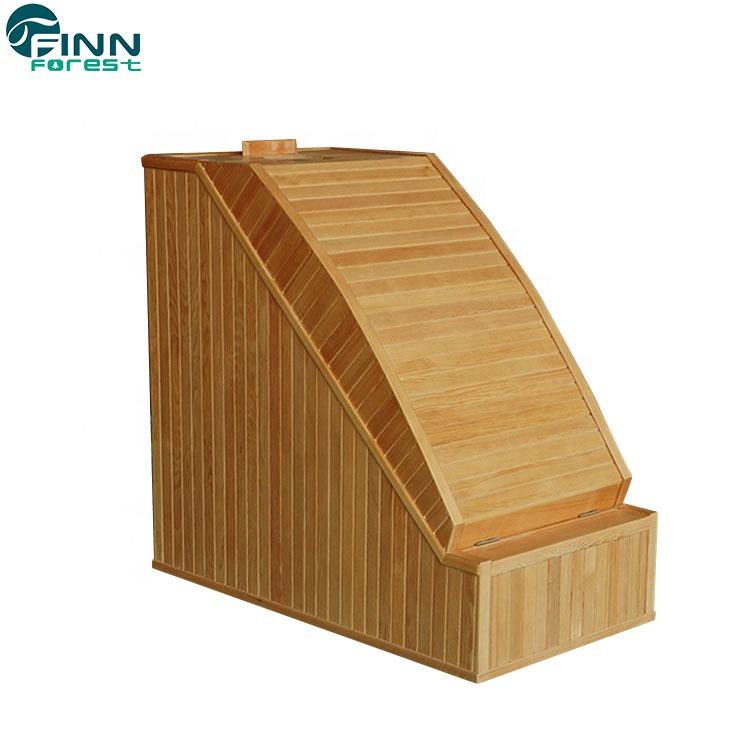
Your heater acts as the engine. An underpowered engine struggles. Select a technology matching your therapeutic goals.
This creates a classic steam wood sauna room. The mechanism relies on convection heating over stones. It allows for direct water application. This creates a blast of steam, known as löyly. Evaluate the kilowatt (kW) rating relative to cubic footage. A mismatch causes sluggish heating. A standard rule is 1 kW per 45 cubic feet. Check the rock capacity for sustained heat. More rocks yield softer, more consistent steam. Look for a corrosion-resistant stainless steel casing.
Infrared systems use radiant heat. They target the body directly instead of heating the air. You experience lower ambient temperatures. There is zero moisture involved. Evaluate low EMF/ELF testing data for safety. Readings should sit below 3 milligauss (mG). Panel placement must provide 360-degree surround coverage. Peak surface temperatures dictate therapeutic effectiveness. Infrared requires less electrical infrastructure than traditional units.
Wood-burning stoves suit outdoor units only. Implementation carries specific risks. It requires complex chimney routing. You typically need Class A double-wall chimney pipes. You must follow strict clearance-to-combustible ratios. Heat shields are mandatory. Maintain awareness of local municipal fire codes. Smoke ordinances might restrict usage in densely populated urban areas. Wood stoves demand active tending during sessions.
A successful project requires accurate budgeting. The base kit price rarely reflects the final installed price. Prepare for several implementation realities.
Electrical infrastructure is paramount. Almost 90% of high-performance cabins require dedicated power. You typically need a 240V/30Amp or 40Amp hardwired circuit. A licensed electrician must install this safely. Do not rely on standard 110V household outlets. Standard outlets lack the necessary amperage. Trenching a new electrical line to your backyard significantly increases costs. Get a firm quote before buying your kit.
Foundation requirements dictate structural longevity. Installing on unlevel ground creates massive risks. It causes immediate door binding. It introduces uneven structural stress. This stress warps the cabin permanently over time. You need specific base materials. Use compacted crushed gravel, poured concrete, or reinforced decking. Proper drainage prevents base rot. Ensure water flows away from the cabin footprint.
Ventilation protocols require careful planning. Understand the physics of internal airflow. Proper intake sits directly under the heater. Cold air enters and heats immediately. Exhaust placement belongs on the opposite wall, high up near the ceiling. This convective loop ensures fresh oxygen flow. It removes stale carbon dioxide. Proper ventilation also prevents localized wood rot. It dries the interior out after every session.
Common Mistake: Many builders seal the room completely. A completely sealed room suffocates occupants. It also traps moisture, leading to rapid fungal growth.
The market contains many unreliable importers. You must vet vendors aggressively. Look beyond glossy marketing photos.
Watch out for warranty traps. Read between the lines on "lifetime" warranties. Vendors often differentiate coverage types creatively. They might cover the structural wood for a lifetime. However, they frequently limit electrical component coverage to a single year. Heating elements degrade over time. Ensure you understand replacement part costs. Demand a written warranty breakdown before purchasing.
Compliance and safety remain non-negotiable. Always check for proper electrical certifications. Look for official UL (Underwriters Laboratories) marks. ETL certifications are equally valid. These marks belong on heaters, sensors, and controllers. Uncertified electronics pose severe fire hazards. Your homeowner's insurance might deny claims involving uncertified high-voltage equipment.
Consider sourcing origins and lead times. Assess pre-cut versus pre-built kits. Pre-cut requires significant assembly time and basic carpentry skills. Pre-built models arrive ready to use but require heavy lifting equipment. Evaluate domestic support versus white-labeled imports. Domestic customer support often resolves issues faster. Check long-term parts availability. You want a vendor who stocks replacement heating elements locally.
Selecting the right sauna demands careful technical planning. The best choice aligns your required specs with realistic site capabilities. Always match your wood grade and heater kW to your local environment. Avoid rushing the foundation phase.
Take specific next steps today. First, finalize your location as either indoor or outdoor. Second, measure the space accurately, accounting for door swings. Finally, secure a licensed electrician's quote for a 240V circuit. Complete these structural checks before putting down a deposit on any cabin.
A: Yes, in many municipalities. Permit requirements depend heavily on square footage thresholds and local zoning variances. Structures under 100 or 120 square feet often bypass major permits. However, hardwired electrical work almost always requires a specific electrical permit and inspection. Always call your local building department first.
A: No. Pouring water over infrared heating panels is incredibly dangerous. It will instantly destroy the electronic panels and create a severe shock hazard. Infrared technology relies entirely on dry radiant heat. To experience wet steam, you must purchase a traditional convection heater with dedicated heating stones.
A: Most well-insulated units take between 30 to 60 minutes to reach optimal temperatures. This timeline depends on ambient starting temperature, your heater's kW rating, and wall thickness. Outdoor cabins in sub-zero winter conditions may require up to 90 minutes. Upgrading to a higher kW heater reduces this wait time.
A: You must maintain proper post-session ventilation habits. Prop the door open slightly after use to let moisture escape. For interior maintenance, lightly sand the benches annually to remove sweat stains. Never paint or varnish the interior. For outdoor units, apply a high-quality UV-resistant sealant to the exterior wood annually.


