Views: 0 Author: Site Editor Publish Time: 2026-07-04 Origin: Site
A sauna stove is not merely a room heater. It operates as the core engine of your commercial sauna center. Equipment failure brings immediate revenue loss. Customer dissatisfaction spikes quickly. Facility downtime harms your brand reputation permanently. Replacing broken equipment constantly destroys your profit margins. Making the right initial choice guarantees years of smooth operation.
Casual residential use differs completely from commercial reality. Home saunas run maybe one hour daily. Commercial environments demand grueling 12-to-18-hour continuous duty cycles. Consumer-grade parts simply cannot survive this daily stress. This guide delivers a pragmatic framework for evaluating heating systems. We help you shortlist the ideal unit based on durability, capacity, and safety compliance. You will learn how to calculate precise room requirements. We also explore why industrial materials matter for long-term survival. Let us dive into the specifics of selecting reliable commercial hardware.
Sizing is mathematical, not subjective: Accurate kW calculation must account for room volume plus a strict multiplier for uninsulated surfaces like glass or stone.
Material dictates lifespan: Investing in an SS304 sauna stove prevents rapid corrosion from constant thermal shock and water exposure.
Compliance is non-negotiable: Only commercial-grade, certified units (UL/CE) will satisfy insurance and local fire code requirements.
Many operators mistakenly install residential units in commercial spaces. They assume a heater is just a heater. This assumption causes rapid failures. We must examine duty cycles first. A home sauna operates one or two hours daily. It has plenty of time to cool down. Commercial environments demand continuous operation. These facilities run their rooms for 12 to 18 hours every single day. The heat load is immense.
Think about the internal components. Residential heating elements use thinner gauge metals. They handle occasional use perfectly fine. However, they cannot survive constant high-temperature exposure. Commercial elements usually feature 8mm or 10mm tubular stainless steel. Residential units often use 6mm. This thickness difference dictates component survival. Under commercial loads, thin elements degrade quickly. They warp, crack, and eventually snap. You will face sudden equipment failure mid-operation. Guests will complain about cold rooms immediately.
Warranty voidance adds another major risk. Manufacturers know exactly how their units should perform. They build internal diagnostics into modern digital controllers. Installing a consumer-grade unit in a business violates the terms immediately. Manufacturers will strictly void your warranty. You lose all replacement coverage. You must pay out of pocket for every broken part. This reality makes a dedicated commercial sauna stove absolutely essential for your business survival.
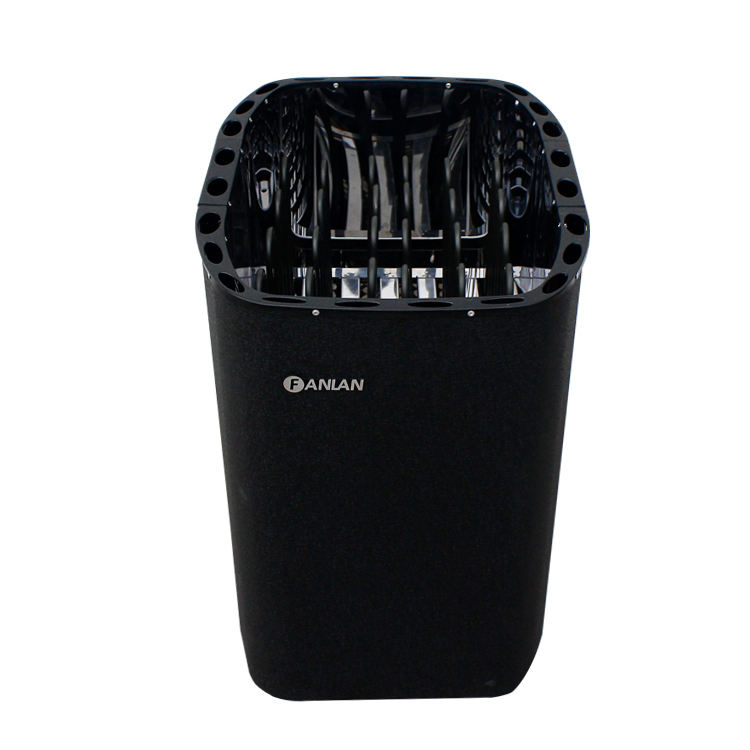
Sizing your heater requires strict math. You cannot guess the required power. We start out by using a baseline volume formula. Measure your room carefully. Multiply the length by the width and the height. This gives you the total cubic volume. The general industry rule recommends 1 kilowatt (kW) of power for every 45 to 50 cubic feet of space.
However, raw volume only tells half the story. The uninsulated surface multiplier is critical. Commercial saunas often feature glass doors, stone walls, or concrete floors. These heavy materials absorb massive amounts of heat. They pull thermal energy away from the room air. For every single square meter of uninsulated surface, you must add 1.2 cubic meters to your total volume calculation. Ignoring this step guarantees your heater will fail to reach target temperatures.
Mismatching your heater size creates severe operational problems. Under-sizing remains a very common mistake. An undersized unit runs constantly. It never cycles off to rest. The heating elements remain glowing red for hours. This causes premature element burnout. Your room will also feel lukewarm during peak customer hours.
Over-sizing carries different but equally frustrating risks. You might think more power equals better performance. It does not. An oversized unit heats the air extremely fast. The room thermostat registers the high air temperature quickly. It shuts the heater off. However, the sauna stones remain too cold. When guests pour water over cold stones, you get no steam. You only get water pooling below the heater. This phenomenon is called short-cycling. It completely ruins the traditional Löyly steam experience.
The chart below illustrates effective volume adjustments.
| Base Room Volume (m³) | Glass/Stone Surface (m²) | Volume Adjustment (m³) | Effective Heating Volume (m³) | Recommended Heater Size (kW) |
|---|---|---|---|---|
| 10 | 0 | +0 | 10 | 9 kW |
| 10 | 2 (Glass Door) | +2.4 | 12.4 | 10.5 kW - 12 kW |
| 15 | 4 (Stone Wall) | +4.8 | 19.8 | 18 kW |
| 20 | 5 (Custom Tile) | +6.0 | 26.0 | 24 kW |
Common Mistake: Do not measure the ceiling height above 8 feet for the calculation unless necessary. Heat rises naturally. Extra ceiling height traps hot air where guests cannot feel it, forcing the heater to work twice as hard.
Commercial saunas create a brutal micro-environment. The equipment faces extreme torture daily. Temperatures regularly exceed 190°F. Guests constantly pour cold water over the hot stones. This creates violent, rapid thermal shock. Imagine metal sitting at 200°F. Suddenly, cold water hits the surface. The metal contracts violently. A few minutes later, it expands again. This constant expansion and contraction causes severe metal fatigue. Furthermore, many facilities mix essential oils into the water. These oils become highly corrosive over time. Standard metals simply cannot withstand this combination.
This is why an SS304 sauna stove serves as the industry benchmark. Material science explains its absolute dominance. Type 304 stainless steel contains high levels of chromium and nickel. The chromium forms an invisible, self-healing oxide layer on the metal surface. This passive layer provides superior resistance to oxidation. It stops rust from forming entirely. The nickel content adds extreme toughness. It prevents structural warping when the metal undergoes massive temperature swings.
Galvanized steel and powder-coated metals fail quickly here. Their protective coatings chip away easily. Moisture penetrates the raw steel underneath. Rust spreads rapidly across the chassis.
Maintenance and hygiene also improve dramatically. Commercial facilities must maintain spotless aesthetics. Guests judge your cleanliness harshly. SS304 surfaces are incredibly easy to clean. They resist water spots and oil stains effortlessly. More importantly, they prevent rust flaking. When cheaper stoves rust, iron oxide flakes fall directly into the stone cavity. This contaminates the sauna stones. It produces a harsh, metallic smell during operation. Investing in 304 stainless steel ensures a pure, clean breathing environment for your guests.
Choosing the right fuel source determines your daily operational workflow. The two primary options are electric and wood-burning. Each technology serves specific facility types. You must align your choice carefully based on your staffing capabilities.
Electric heaters dominate the modern commercial wellness industry. They offer massive logistical advantages for standard indoor facilities.
Pros: Automated scheduling allows the room to pre-heat before staff arrives. Precise thermostatic control maintains exact temperatures automatically. They require minimal daily labor from your employees. They integrate seamlessly into standard spa and gym facilities.
Cons: They require heavy-duty 3-phase electrical infrastructure. Installation demands specialized commercial electricians.
Wood-burning heaters serve a very distinct niche market. They appeal specifically to boutique wellness retreats and off-grid resorts.
Pros: They deliver an authentic, traditional sensory experience. The natural wood scent and radiant heat easily justify premium pricing. They operate independently of the local electrical grid.
Cons: They demand high operational labor for sourcing wood and constant stoking. Staff must perform daily ash removal and flue cleaning. They involve strict chimney venting requirements. Complex fire code compliance often complicates the permitting process.
We highly recommend following a clear decision matrix. Standard health clubs, hotels, and day spas should always default to electric heaters. They provide predictable, reliable daily service. You should reserve wood-burning units for highly specialized, staff-heavy outdoor retreat centers. Proper sauna center equipment must complement your underlying business model.
Evaluating your long-term operational framework requires looking past the outer shell. You must examine how the unit utilizes energy and maintains safety standards. Stone capacity plays a surprising role in overall energy efficiency.
Many buyers incorrectly assume fewer stones mean less energy used. The exact opposite is true in commercial settings. A larger stone cavity certainly requires more energy to heat initially. However, those stones act as a massive thermal battery. They retain intense heat for hours. This allows the internal heating elements to cycle off more frequently. The radiant heat from the stones keeps the room hot. This reduces continuous electrical draw significantly.
Best Practice: Inspect your stone cavity weekly. Remove broken stone fragments immediately. Small fragments block airflow around the heating elements. Poor airflow traps heat against the metal, causing premature element failure.
Serviceability dictates your facility uptime. You must examine the internal architecture. Check if the heating elements are individually replaceable. Smart commercial designs allow technicians to swap a single burnt resistor. They do not require dismantling the entire stove. Quick element swaps keep your rooms open and generating revenue.
Certifications and electrical requirements demand strict attention. You cannot ignore local commercial building codes. Uncertified equipment introduces massive liability. Your facility insurance policy likely requires specific safety marks. Look for UL or ETL certifications in the United States. Require CE certification for European markets. These marks prove the unit passed rigorous fire and electrical safety testing.
Control systems also impact safety heavily. We strongly recommend external, commercial-grade digital controllers. You must mount these outside the sauna room. Placing them outside prevents guests from tampering. It stops people from cranking the heat to dangerous levels. External placement also protects the delicate printed circuit boards from the brutal internal moisture.
Choosing the right sauna stove determines the success of your wellness facility. You must balance precise volume calculations with industrial-grade materials. Remember that an SS304 chassis provides necessary armor against daily thermal shock. Your operational workflows will dictate whether electric or wood-burning technology fits your brand best.
Follow this simple three-step action plan for your next equipment purchase:
Measure your room carefully. Calculate your baseline volume and add the strict multiplier for all uninsulated surfaces like glass doors and stone walls.
Verify your facility's electrical capacity. Confirm you have 208V or 400V 3-phase power available to handle high-amperage commercial equipment safely.
Confirm component serviceability. Ask manufacturers to demonstrate how quickly technicians can replace individual heating elements without dismantling the entire unit.
Take these evaluation steps seriously. High-quality equipment keeps your guests happy, your maintenance low, and your facility running smoothly.
A: In a commercial setting, stones should be inspected monthly and replaced every 4 to 6 months. Continuous heat causes them to crack and crumble. This structural breakdown restricts airflow and heavily damages the internal heating elements.
A: The stainless steel chassis can easily last 10 to 15 years. However, the internal heating elements are consumable parts. They will typically need replacing every 12 to 24 months under heavy, daily commercial use.
A: No. Aside from instantly voiding the manufacturer warranty and risking rapid failure, commercial facilities generally require 3-phase power. Depending on the region, 208V or 400V is necessary to efficiently handle the high continuous amperage required by heavy-duty commercial heating equipment.


