Views: 0 Author: Site Editor Publish Time: 2026-07-14 Origin: Site
A reliable heating unit serves as the absolute core of any genuine sauna experience. You rely on it for consistent heat, soothing steam, and daily relaxation. However, experiencing premature equipment failure from hidden corrosion or burned-out elements remains a very costly reality.
Buyers frequently under-size their chosen units or miscalculate the demands of their room. They often misunderstand how intense water usage rapidly degrades lower-quality metals over time. This lack of knowledge inevitably leads to cold rooms and expensive repair bills.
This guide provides a complete, evidence-based framework to evaluate and size your next heating unit. You will discover exactly how to select a premium model guaranteeing maximum efficiency and daily safety. Following these steps ensures you secure a durable setup designed for a decade-plus lifespan.
Material Matters: True longevity requires high-grade stainless steel (like 304 or 316) for both the outer casing and the internal heating elements, especially if used as a dry steam heater.
Sizing is Non-Negotiable: A heater must be scaled accurately to the room’s cubic volume, with specific kW multipliers applied for outdoor climates or uninsulated surfaces (glass/stone).
Control Types Dictate Experience: The choice between mechanical (built-in) and digital (external) controls directly impacts heat-up times, user convenience, and failure rates.
Maintenance Drives Lifespan: Heater death is rarely a manufacturing defect; it is most often caused by improper stone packing, poor water quality, or inadequate ventilation.
Constant thermal cycling creates a highly corrosive environment inside your cabin. The equipment heats up intensely and then cools down rapidly. Adding water into this mix accelerates chemical reactions. This specific combination easily destroys inferior metals. You must differentiate between cosmetic marketing and actual industrial durability.
Many brands boast about a shiny metal exterior. An outer casing made of basic stainless steel prevents cosmetic surface rust. However, outer beauty means nothing if the internal components fail. You must focus your attention on the heating elements themselves. The internal elements require premium materials like Incoloy or specialized steel alloys. These specific alloys prevent internal burnout under extreme stress.
Frequent water tossing heavily tests the thermal shock resistance of the metal. Users often treat their equipment as a traditional dry steam heater by pouring ladles of cold water over hot rocks. Lower-grade steel warps, bends, and eventually cracks under this sudden temperature change. High-grade alloys resist this scaling and physical fatigue. They maintain their structural integrity season after season.
You need strict success criteria when evaluating a stainless steel sauna heater. Always look for continuous-welded seams instead of cheap spot-welded joints. Spot welds often pop under thermal expansion. Furthermore, prioritize manufacturers explicitly listing the exact steel grade used for the rock basket. A rock basket built from 304 or 316-grade steel indicates a premium manufacturing approach. This attention to detail guarantees your unit survives daily moisture exposure.
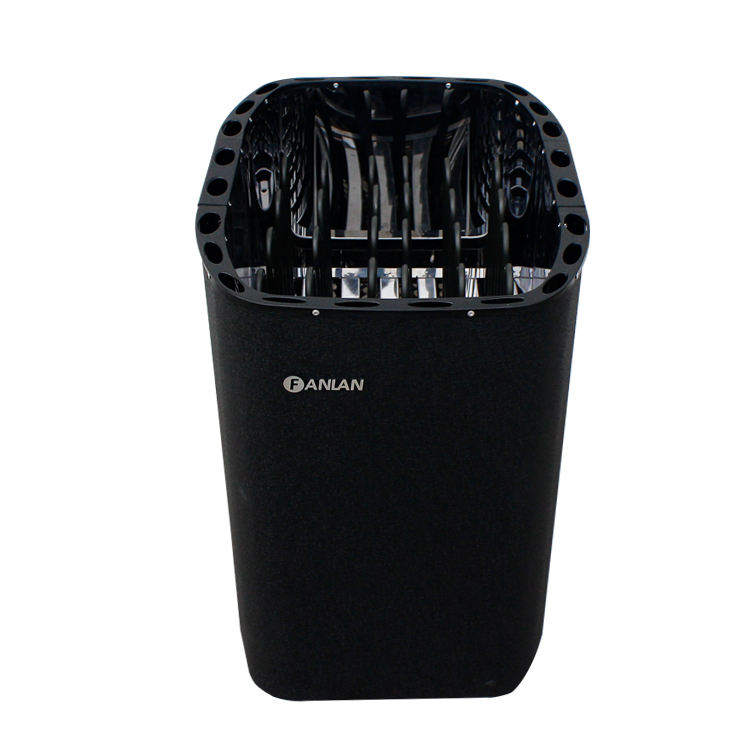
Scalability dictates your ultimate comfort level. A perfectly constructed heater fails completely if it lacks the proper power output. You must evaluate sizing based on physical room requirements and surrounding climate logic. Guessing the required kilowatts leads to deeply frustrating outcomes.
The baseline sizing formula remains quite simple. You need exactly 1 kW of electrical power for every 45 to 50 cubic feet of interior space. You calculate this by measuring the interior length, width, and height. Multiplying these three numbers yields your base cubic volume.
However, bare walls introduce a massive "uninsulated penalty" into your math. Glass doors, stone accents, or bare concrete walls bleed heat rapidly. You must add 1.2 cubic meters (approximately 42 cubic feet) to your base volume for every single square meter of uninsulated surface. Ignoring this penalty guarantees a cold room.
Outdoor climate considerations completely change the baseline requirements. Extreme winter climates aggressively pull heat away from outdoor cabins. We strongly recommend scaling up by one standard kW size for outdoor builds. Upgrading from a 6kW to an 8kW model effectively counteracts deep winter cold-soak. This extra power heavily reduces your pre-heating times during December freezes.
Implementation reality requires a delicate balance. You might feel tempted to massively oversize the unit to heat the room instantly. We strongly warn against this approach. An oversized heater heats the air too quickly and cycles off prematurely. The stones remain completely cold. Pouring water on cold stones ruins the steam production and simply floods the floor.
Sauna Sizing Calculation Guide
| Room Volume (Cubic Feet) | Insulated Indoor kW Need | Uninsulated/Outdoor kW Need |
|---|---|---|
| 100 - 150 | 3.0 kW - 4.5 kW | 4.5 kW - 6.0 kW |
| 150 - 250 | 6.0 kW | 8.0 kW |
| 250 - 350 | 8.0 kW | 9.0 kW - 10.5 kW |
| 350 - 450 | 9.0 kW - 10.5 kW | 12.0 kW+ (Commercial) |
A well-sized sauna heater reliably reaches target temperatures between 175°F and 190°F within 45 to 60 minutes. Extended heat-up times rank among the highest customer complaints. Furthermore, lower-tier models generate a loud "clanking" noise during operation. Thin metal expands rapidly, creating jarring sounds. Premium units utilize thicker steel to minimize this distracting thermal expansion noise.
Your choice of control panel heavily influences daily usability. Manufacturers generally offer two distinct control pathways. You must choose the interface matching your personal lifestyle and technical comfort level.
Built-In (Mechanical) Controls:
Pros: They offer a much lower initial cost. They require no complex external wiring through the walls. They feature fewer digital failure points, increasing basic reliability.
Cons: You must bend down close to a hot machine to adjust the dials. The standard 60-minute safety timer limits feel quite rigid during longer sessions.
External (Digital) Controllers:
Pros: They provide pinpoint, precise temperature control. Many offer Wi-Fi and smartphone app integration. You can pre-heat the room from your office. They deliver a much cleaner interior aesthetic.
Cons: They carry a higher upfront installation cost. The digital keypad requires external mounting outside the primary hot zone. Circuit boards remain sensitive to local power surges.
Matching your expectations to these realities ensures long-term satisfaction. Mechanical dials suit rustic, off-grid cabins perfectly. Digital controllers elevate modern, indoor residential setups by adding effortless convenience.
Many users wrongly blame manufacturing defects for unexpected equipment failure. In reality, user error and poor maintenance habits destroy most units. Understanding these hidden risks protects your substantial investment.
The stone-packing error remains the number one cause of premature death. Owners often pack the rocks tightly together to fit more into the basket. Tight packing completely chokes vital airflow. The trapped heat triggers the internal high-limit safety switch. Repeatedly tripping this switch forces the heating elements to overheat, warp, and violently snap.
Water quality directly dictates the survival of the internal components. Hard water contains high levels of calcium and magnesium. These minerals instantly calcify on the red-hot elements. This calcification creates a thick insulating blanket around the metal. The elements then overheat and burn out. Chlorinated pool water acts like a corrosive acid, dramatically reducing the lifespan of any metallic surface.
You must actively manage the stone replacement lifecycle. Sauna stones expand and contract constantly. They eventually crack, crumble, and settle densely at the bottom of the basket. This settling suffocates the lower elements. We recommend completely emptying the basket every one to two years. Inspect the stones, discard any crumbling pieces, and carefully repack them loosely.
Electrical realities demand strict professional respect. You cannot simply plug a powerful unit into a standard wall outlet. Nearly all reliable units rated 6kW and above require dedicated 240V hardwired connections. You must hire a certified electrician to run the appropriate gauge wire. Plug-and-play 110V units only function adequately for extremely small, single-person indoor closets.
Navigating the crowded marketplace requires disciplined shortlisting criteria. You need a logical progression to finalize your purchase. Focusing strictly on warranty coverage and precise room metrics eliminates poor choices entirely.
Warranty verification separates reputable brands from cheap imports. You must differentiate between residential and commercial coverage. Residential warranties often span five years or even offer lifetime coverage on specific parts. Commercial warranties usually max out at one single year due to heavy daily abuse. Most importantly, carefully read the fine print. Ensure the warranty explicitly covers the internal heating elements, not just the outer protective casing.
Follow these actionable next steps to finalize your exact requirements:
Measure your exact interior room dimensions carefully using length, width, and height.
Calculate the adjusted cubic volume by factoring in glass doors and uninsulated stone walls.
Consult a licensed electrician regarding the available amperage capacity in your current household breaker panel.
Select a reputable brand demonstrating a strong, proven track record of domestic parts availability.
Executing these steps properly guarantees a seamless installation. You remove the guesswork and rely on hard math. This preparation prevents frustrating delays when the electrician arrives to wire your new equipment.
Buying a premium heating unit serves as a vital investment in your daily reliability. Cutting corners on core equipment only leads to cold rooms and expensive repair cycles. You deserve a setup yielding consistent, soothing heat every single session.
Balancing cubic volume, climate demands, and high-grade materials yields the absolute best long-term return on your investment. Remember to accurately account for uninsulated surfaces and always pack your stones loosely. Simple maintenance routines add years to the equipment's lifespan.
Take the next step toward completing your perfect wellness space today. Review our curated product collections, utilize our precise sizing calculators, or reach out directly for a personalized technical consultation.
A: A high-quality unit generally lasts 10 to 15 years regarding the main outer chassis. However, the internal heating elements act as consumable items. Depending on your water usage, water quality, and stone maintenance habits, you will likely need to replace the elements every 5 to 8 years.
A: You can only pour water on units explicitly designed as traditional dry steam models featuring a dedicated rock basket. Pouring water over infrared panels or unapproved electrical heaters causes immediate, catastrophic electrical failure and poses a severe shock hazard. Always verify the manufacturer's operational guidelines first.
A: Extended heat-up times usually stem from an undersized kW rating relative to the room's volume. Poor wall insulation, extremely cold ambient starting temperatures, or deteriorated stones densely blocking crucial internal airflow also cause major delays. Repacking your stones loosely often resolves minor heating inefficiencies instantly.
A: Wall-mounted designs remain the standard choice for units up to 9kW, saving valuable interior floor space. Floor-standing models become strictly necessary for heavy, high-capacity commercial units exceeding 10kW. These larger models hold massive amounts of stones and require structural floor support to operate safely.


