Views: 0 Author: Site Editor Publish Time: 2026-07-02 Origin: Site
Building a steam room is a high-stakes construction project. You invest heavy capital into creating a luxurious home spa or a commercial wellness center. Selecting the wrong equipment often leads to weak steam production. It can also cause excessive energy bills or costly plumbing tear-outs. We must shift past basic aesthetic planning. You have to face the technical realities of powering a reliable shower. This applies equally to commercial-grade facilities and high-end residential builds.
To evaluate modern steam room solutions effectively, buyers must look beyond glossy marketing claims. You need to assess generators based on material-adjusted sizing. You should demand automated maintenance capabilities for long-term reliability. You also need to verify strict infrastructural compatibility before you break ground. These foundational elements ensure you build a safe, durable sanctuary. We will guide you through the exact technical features you must verify before making a purchase.
Sizing is material-dependent: Volume (cubic feet) is only the baseline; surface materials like natural stone require significantly higher kW output than acrylic.
Automated maintenance is non-negotiable: Auto-flush and descaling features are critical for extending the lifespan of any bath generator and preventing mineral buildup.
Infrastructure dictates options: Available electrical voltage (208V vs. 240V) and plumbing access heavily restrict which models can be safely installed.
Hidden costs matter: The total cost of ownership extends beyond the unit price to include dedicated wiring, secondary drip pans, and proprietary control panels.
Proper sizing is the most critical step in your steam room project. Many buyers make the mistake of relying solely on room dimensions. They ignore the thermal mass of their chosen interior finishes. This oversight leads to underpowered rooms and frustrating spa experiences.
You must start with a basic volume calculation. Measure your shower interior carefully. Multiply the length by the width by the height. This formula gives you the baseline cubic footage. A standard 4-foot by 5-foot shower with an 8-foot ceiling equals 160 cubic feet. If you use standard non-porous acrylic walls, a smaller kilowatt (kW) unit easily heats this space.
Your surface materials drastically change power requirements. Natural stone absorbs massive amounts of heat. Marble, granite, and slate act as thermal sponges. They pull heat out of the air before it can warm your body. Glass blocks behave similarly. If you line your shower in porous stone, you often need a 50% to 100% higher kW rating. Porcelain and ceramic tiles are less demanding. Acrylic and fiberglass are the most efficient.
Material Heat-Loss Multipliers
| Wall Material | Heat Absorption Rate | Required kW Adjustment |
|---|---|---|
| Acrylic / Fiberglass | Very Low | Baseline Output (No change) |
| Porcelain / Ceramic Tile | Low to Moderate | Add 20% to Baseline |
| Glass Block / Heavy Glass Doors | High | Add 50% to Baseline |
| Natural Stone (Marble, Slate, Granite) | Very High | Add 75% - 100% to Baseline |
Location impacts performance heavily. Exterior walls expose your shower to colder outdoor temperatures. Skylights let valuable heat escape upward. If your shower features an exterior wall or a ceiling skylight, you must increase your power output. Most manufacturers recommend adding 10% to 20% more cubic footage to your calculation for each external factor.
Many contractors advise oversizing the unit just to be safe. We strongly caution against this practice. An oversized unit heats the small room too quickly. It reaches the target temperature and abruptly shuts off. You lose the continuous, soothing steam cloud. The room feels cold for several minutes. The machine kicks back on violently. This creates uncomfortable temperature spikes. You want a perfectly sized unit. It should deliver a steady, uninterrupted flow of soft vapor.
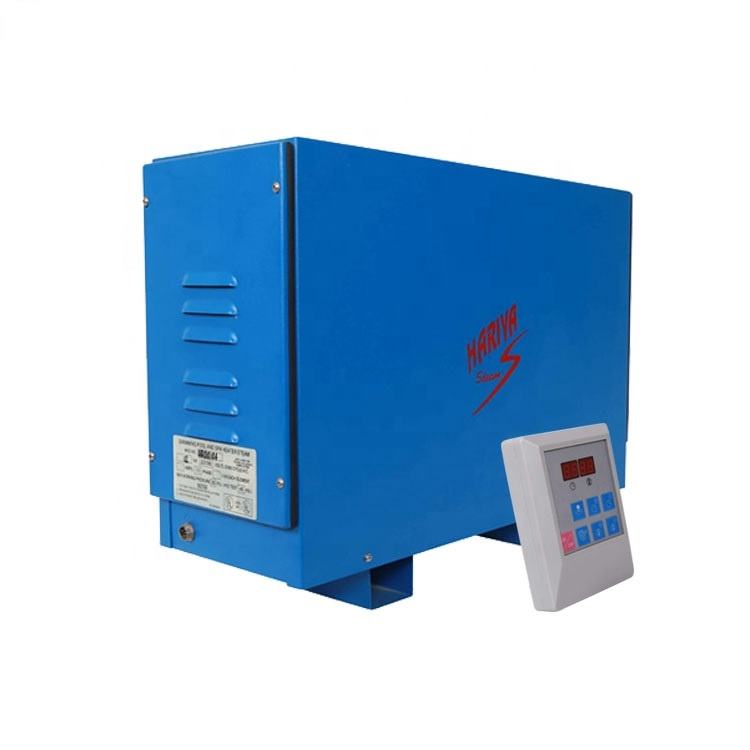
Boiling water leaves behind harsh minerals. These minerals destroy internal components over time. You must prioritize equipment built to handle continuous abuse. The right maintenance features protect your investment.
Automated maintenance is absolutely vital. You should never buy a machine lacking an auto-flush feature. Boiling water concentrates calcium and magnesium inside the tank. When the unit cools down, stagnant water breeds bacteria. It also allows hard minerals to bond to the metal walls. Auto-flush systems solve this problem. They utilize a gravity-fed or pump-assisted valve. They purge all remaining water down the drain after every single use. This simple action prevents aggressive scale buildup.
The tank is the heart of your system. It endures extreme thermal stress daily. You must verify the specific metal used in its construction. Look for high-grade surgical stainless steel. Cheaper aluminum alloys or low-grade steel will corrode rapidly. Continuous boiling causes lesser metals to pit and rust. Surgical stainless steel resists this chemical degradation. It ensures your tank remains leak-free for decades.
Even the best machines occasionally need replacement parts. The heating element does the hardest work. It is the most likely component to fail. You need incoloy heating elements. Incoloy is a superalloy designed to resist high-temperature oxidation. It repels mineral calcification better than standard copper.
Furthermore, ensure the elements are easily replaceable. Some poorly designed units weld the elements directly into the tank. When a single part fails, you have to discard the entire machine. A premium bath generator uses a flanged, bolt-on element design. A plumber can swap out a dead element in fifteen minutes. This saves you thousands of dollars in replacement costs.
The control panel determines how you interact with your spa daily. Clunky controls ruin relaxation. You need intuitive interfaces built for wet environments.
High-end controls monitor the room temperature constantly. They should maintain heat within a tight, one-degree variance. Cheaper thermostats allow the room to drop three or four degrees before firing up. This variance causes the user to shiver. Precise thermostatic control ensures you stay entirely comfortable throughout a twenty-minute session.
Modern buyers love convenience. Wi-Fi-enabled controls allow you to pre-heat the room remotely. You can tap an app on your smartphone while still in bed. By the time you walk to the bathroom, the spa is fully heated. Many systems now integrate natively with Alexa or Google Home.
We must apply a skeptical lens to smart technology. Wi-Fi routers drop signals. Smartphone apps crash after OS updates. You should never rely strictly on wireless controls. Always purchase a model including a hardwired, waterproof in-shower keypad. This serves as an essential failsafe. If your home network goes down, you can still operate your shower manually. Mount this keypad directly inside the wet zone for immediate access.
A true spa experience targets multiple senses. Look for modular control boards. They allow you to add auxiliary features later.
Chromatherapy: Waterproof LED lighting systems. They shift colors to promote relaxation or energy.
Aromatherapy: Essential oil injection pumps. They blend eucalyptus or lavender directly into the steam line.
Audiotherapy: Bluetooth-enabled waterproof speakers hidden in the ceiling.
You cannot simply plug these machines into a standard wall outlet. They demand robust infrastructure. Failing to plan for these requirements causes severe construction delays.
Steam units draw massive electrical loads. They require dedicated circuit breakers. You cannot share this line with your bathroom lighting or hair dryers. You must also align the voltage correctly.
Residential Power: Homes typically run on 240V, single-phase power. Verify your electrical panel has enough open slots for a double-pole breaker.
Commercial Power: Gyms and hotels often use 208V, multi-phase power. Installing a 240V unit on a 208V line drops heating efficiency drastically.
Wire Gauge: High-kW machines require thicker 6-gauge or 8-gauge wiring. Ensure your electrician runs the correct copper wire size.
Boiling water creates noise. Solenoid valves click loudly when they open. You should never install the primary unit directly inside the shower enclosure. You must place it in a dry, accessible location. Popular spots include a nearby linen closet, a heated attic, or a vanity cabinet. Most high-quality models allow you to run the insulated steam pipe up to 50 feet away. This distance completely isolates the mechanical noise from your peaceful spa environment.
Your plumber must follow specific rules for high-temperature applications. You need a dedicated water supply line. Include a primary water shut-off valve for emergency maintenance. You must also install a pressure relief valve (PRV).
The drain line is equally critical. Auto-flush systems dump 212°F boiling water. Standard PVC pipes will melt and warp under this extreme heat. You must use copper, cast iron, or high-temperature CPVC for the drain path. Finally, always place the machine inside a stainless steel secondary drip pan. Plumb this pan to an approved drain. This protects your drywall and floors from accidental leaks.
A shiny exterior tells you nothing about internal safety. You must look for objective proof of reliability. Industry certifications and robust warranties separate premium brands from cheap imports.
Mixing water and 240V electricity is inherently dangerous. You must never install uncertified equipment in your home. Any viable machine must hold recognizable safety listings. Look for UL (Underwriters Laboratories), CSA (Canadian Standards Association), or CE marks. These badges prove the unit passed rigorous third-party testing. They guarantee electrical isolation. They ensure the pressure vessels will not burst under stress.
Marketing departments love the phrase "limited lifetime warranty." You need to read the fine print closely. These warranties frequently cover the stainless steel tank forever. However, they often exclude the fragile heating elements after one year. They usually drop labor coverage entirely after the first ninety days. We advise you to seek out straightforward warranties. Look for brands offering comprehensive coverage on both parts and labor for at least three to five years.
When you face a strict budget, use this decision framework. Prioritize heavy build quality over superficial tech features. A thick stainless steel tank beats a fancy touchscreen every time. Reliable safety certifications matter more than Bluetooth speakers. Invest your money in a durable steam bath generator that focuses on core heating and flushing mechanics.
Building a reliable home spa requires careful technical planning. The best equipment balances raw heating power with smart automated maintenance. You must account for your specific wall materials when calculating size. Do not let porous natural stone ruin your experience by absorbing all the heat. Prioritize incoloy heating elements and surgical steel tanks.
Your next step is finalizing your shower blueprint. Confirm your exact interior dimensions and surface materials. Bring these numbers to a licensed electrician and plumber. They need to verify your home has the electrical capacity and drain access required.
Do not rush the purchasing process. Take time to view a curated selection of highly-rated models. Focus on reliable mechanics and proven safety certifications. Consult with a sizing specialist if you have complex room geometry or skylights.
A: No. You must never install it inside the wet enclosure. High humidity and direct water exposure will destroy the electrical components quickly. For safety and longevity, you must install it in a dry, accessible location. Suitable spots include a nearby closet, a basement, or a heated attic. You then pipe the vapor directly into the shower.
A: These machines are highly water-efficient. A typical 20-minute session uses less than 2 gallons of water. By comparison, a standard showerhead flows at 2.5 gallons per minute. This efficiency makes steam bathing significantly more eco-friendly and cheaper to operate than a traditional hot shower.
A: Yes, if your local water supply is hard. Hard water contains high levels of calcium and magnesium. These minerals form thick scale on heating elements, causing premature failure. We highly recommend installing a water softener or a dedicated inline filtration system. It protects your investment and ensures optimal performance.
A: An under-sized unit struggles to heat the room. It will run continuously at maximum capacity without ever reaching your set temperature. This leads to a weak, thin cloud rather than a dense fog. It creates a subpar user experience. It also causes the heating elements to burn out prematurely due to overwork.


