Views: 0 Author: Site Editor Publish Time: 2026-07-15 Origin: Site
You have reached a critical stage in your buyer journey. Ordering a sauna heater represents a high-stakes investment where electrical compatibility, strict safety compliance, and optimal thermal performance must intersect seamlessly. Getting this decision wrong carries real consequences for your property. Purchasing an incompatible unit frequently leads to blown breakers, drastically inadequate room temperatures, or even severe fire hazards. Buyers often discover too late they lack the necessary power infrastructure to support their chosen model. We designed this comprehensive guide as a technical, pre-purchase checklist specifically for you. You will learn how to validate your environmental assumptions, navigate complex electrical prerequisites, and evaluate component quality confidently. Ultimately, it gives you the exact framework needed to finalize the right equipment choice safely.
Selecting the right sauna heater equipment requires matching kilowatt (kW) output to room volume, with strict adjustments for uninsulated surfaces.
Electrical infrastructure is the primary purchase bottleneck; 240V hardwiring is standard, and verifying amperage with a licensed electrician is mandatory before checkout.
Safety certifications (UL/ETL) and built-in fail-safes (high-limit switches) are non-negotiable for mitigating fire risks.
The choice between built-in and external control panels directly impacts both installation cost and user experience.
Stone capacity dictates the quality of the steam (löyly) and heat retention in a traditional sauna room.
Your physical environment dictates your heater category long before any brand comparisons begin. You must analyze your structural setup first. Space constraints, location, and desired convenience will quickly eliminate incompatible options.
You generally face two primary architectural paths. You can install an electric unit, or you can build a wood-fired system. Both deliver excellent heat, but their installation realities differ vastly.
Wood-fired units demand extensive structural modifications. You must install a chimney or flue system. You also need heavy-duty fireproof floor protection. Local zoning laws or homeowners associations frequently restrict wood-burning stoves due to smoke emissions and fire risks. These stoves require constant tending during your session.
Electric models stand as the ultimate standard for residential predictability. You simply turn a dial or press a button. They deliver consistent, repeatable temperatures. They do not require complex ventilation shafts. Instead, they require dedicated electrical circuits. For indoor environments, electric heating remains the safest and most practical choice.
Many buyers falsely believe in a "one size fits all" approach. They assume a unit performing flawlessly indoors will deliver identical results outside. This myth leads to deep frustration.
Outdoor saunas face aggressive heat loss. Ambient cold air rapidly strips warmth through the walls. Winter winds accelerate this thermal drain. To combat this, outdoor applications require units built for higher ambient temperature compensation. They also need specific weatherproofing features to protect internal relays from moisture.
You must factor in a power premium for outdoor setups. Industry professionals typically recommend oversizing outdoor units by 10 to 20 percent. If your calculations suggest a 6kW heater for an indoor room, you should likely upgrade to an 8kW model for an identical outdoor structure.
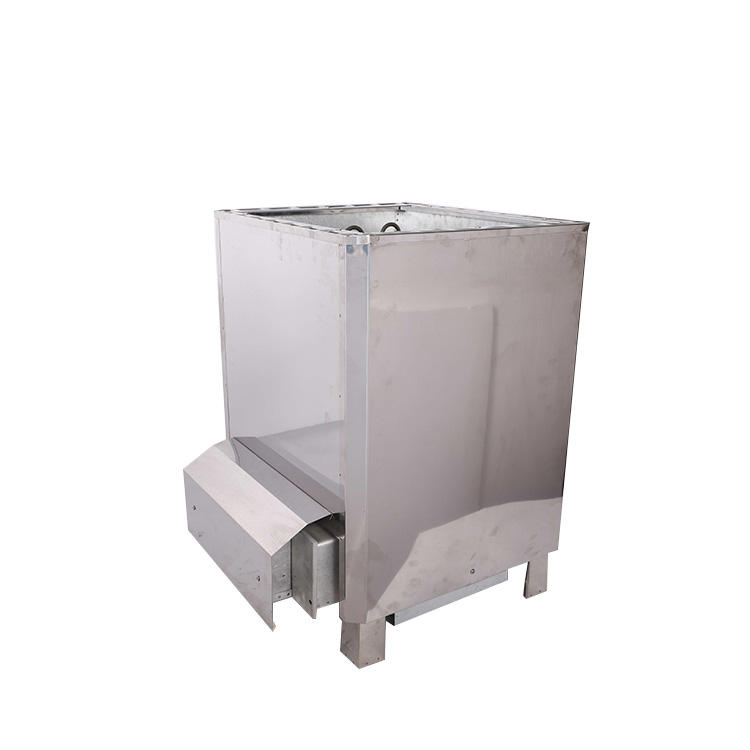
Guessing your required power output leads to disastrous results. You must calculate your exact room volume using strict mathematical guidelines. Properly sized sauna heater equipment ensures rapid heat-up times and consistent steam generation.
Industry standards rely on a universally accepted baseline formula. You need approximately 1 kilowatt (kW) of power for every 45 to 50 cubic feet of interior volume.
Measure your room's length, width, and ceiling height in feet.
Multiply these three numbers together.
This result represents your baseline cubic volume.
Divide this total by 45 to find your minimum baseline kW requirement.
If you have a perfectly insulated room measuring 6x6x7 feet, your volume equals 252 cubic feet. Dividing by 45 gives you 5.6. You would round up to a 6kW model.
The baseline formula assumes perfect insulation. Real-world builds rarely feature perfect insulation. You must apply an adjustment factor for thermal leaks. We call this the uninsulated surface penalty.
For every square foot of uninsulated material, you must add 1.2 cubic feet to your calculated volume. Uninsulated materials include glass doors, stone accent walls, ceramic tile floors, and bare concrete. Glass leaches heat incredibly fast.
Imagine your room has a full glass door measuring 3 feet by 7 feet. This equals 21 square feet. You multiply 21 by 1.2, resulting in 25.2. You must add 25.2 cubic feet to your original baseline volume before finalizing your kW requirement.
Cautionary Note: Never ignore these penalties. Under-sizing your unit causes continuous element strain. The heater runs constantly without reaching optimal temperatures, leading to premature component failure. Conversely, over-sizing introduces its own problems. An oversized heater forces the room to hit the thermostat limit too fast. The air gets hot, but the stones remain lukewarm. When you pour water on lukewarm stones, you get water puddles instead of steam.
Electrical infrastructure acts as the primary bottleneck for new buyers. Many consumers excitedly order a unit only to discover their home cannot safely power it. You must validate your electrical capacities before entering your credit card details.
Do not expect to plug your new investment into a standard wall socket. More than 90 percent of quality heaters require hardwired 240V connections in the US market. Standard 120V circuits simply cannot deliver the raw energy required to heat large volumes of rock and air efficiently.
These hardwired connections require thick, heavy-duty copper wiring routed directly from your main breaker panel. You cannot use extension cords. You cannot piggyback off existing lighting circuits.
High-kilowatt units draw massive amounts of current. You must install appropriately sized dual-pole breakers. You also need specific wire gauges to prevent the cables from melting under heavy loads.
Common Electrical Specifications by Heater Size
| Heater Power (kW) | Dedicated Breaker Size (Amps) | Minimum Wire Gauge (AWG Copper) |
|---|---|---|
| 4.5 kW | 30 Amps | 10 AWG |
| 6.0 kW | 30 Amps | 10 AWG |
| 8.0 kW | 40 Amps | 8 AWG |
| 9.0 kW | 50 Amps | 6 AWG |
You must understand the difference between single-phase and three-phase power. Residential homes almost exclusively utilize single-phase 240V power. Commercial buildings, gyms, and hotels utilize three-phase 208V power.
Commercial units distribute the heavy electrical load across three distinct power legs. If you accidentally purchase a three-phase commercial model for your residential garage, it will not function. Always double-check the phase rating on the specification sheet.
We strongly recommend securing an on-site quote from a licensed electrician before finalizing any equipment purchase. Show them the manual for your desired model. Let them inspect your current breaker panel. Older homes often lack the spare amperage needed for a 40-amp or 50-amp draw. You might require a costly panel upgrade. Discovering this hidden infrastructure cost early saves you immense frustration.
Once you solve the electrical puzzle, you can focus on the user experience. The physical components of your chosen model dictate how the heat feels, how long it lasts, and how easily you can manage it.
The rocks do the heavy lifting in any authentic bathing environment. The volume of rocks directly dictates the quality of your steam, known traditionally as löyly.
Low-stone-capacity units generally hold between 30 and 50 pounds of rock. These models heat the surrounding air very quickly. However, the resulting heat often feels harsh and intensely dry. When you splash water on a small rock mass, it cools down rapidly.
High-stone-capacity tower heaters hold anywhere from 150 to over 200 pounds of rock. These impressive columns take significantly longer to reach operating temperatures. However, they store massive amounts of thermal energy. They produce a vastly superior, softer, and more enveloping steam. The massive rock surface area allows for generous, continuous water splashing without killing the heat.
The internal heating coils face a brutal operating environment. They glow red hot, and then users suddenly douse them in cold water. This extreme thermal shock destroys cheap metals quickly.
Pay close attention to the element material. Standard stainless steel represents the entry-level baseline. It works, but it can scale and corrode over time. Premium units utilize industrial-grade Incoloy elements. Incoloy is a superalloy designed specifically to resist oxidation and thermal shock. Investing in Incoloy elements dramatically extends the lifespan of your unit, especially in high-traffic or highly humid environments.
How you interact with your equipment matters. You must choose between built-in mechanical controls or external digital panels.
Built-in Controls: These feature mechanical dials located directly on the bottom or side of the heater chassis. They offer incredible reliability and fail-proof simplicity. They also cost less. However, they require you to bend down near a hot unit to adjust the temperature or timer.
External Controls: These systems mount a digital interface outside your traditional sauna room. They offer superior convenience, precise temperature tracking to the exact degree, and often feature Wi-Fi integration. You can pre-heat the room from your smartphone. Note, however, they require routing low-voltage data cables through your walls during the framing phase.
You are installing a high-voltage appliance designed to reach extreme temperatures inside a dry wooden box. Safety cannot be an afterthought. You must rigorously vet your equipment for compliance and built-in protections.
Never install uncertified electrical equipment. You must verify the presence of UL (Underwriters Laboratories) or ETL safety listings. These independent testing agencies subject appliances to rigorous safety trials. They test for proper grounding, wire insulation integrity, and electromagnetic shielding.
Cheap, uncertified imports frequently flood online marketplaces. They often lack basic electrical shielding. They use substandard wiring prone to melting. Installing uncertified units violates local building codes and can easily void your homeowner’s insurance policy in the event of a fire.
Every legitimate manufacturer publishes highly specific combustible clearance zones. These dictate the absolute minimum safe distance between the hot metal chassis and any combustible material.
You must adhere strictly to these dimensions. You must measure the distance to wooden benches, cedar wall panels, ceiling boards, and safety guards. Failing to maintain these clearances creates a massive fire hazard. Over time, radiant heat dries out nearby wood, lowering its ignition temperature in a process called pyrolysis. Follow the manual exactly.
You should understand how the internal safety mechanisms protect you. The most critical component is the high-limit thermal switch.
This switch acts as a mandatory fail-safe. If the ambient temperature at the ceiling level exceeds safe operational thresholds—typically around 194°F (90°C)—this switch automatically cuts all power to the elements. It prevents runaway heating scenarios. This feature proves absolutely vital for unattended operation or instances where a timer mechanism fails.
Smart buyers look past the initial marketing brochures. You need to evaluate the long-term support network backing your purchase. Mechanical parts eventually wear out. How the manufacturer handles these inevitable realities should guide your final decision.
You must read the fine print on warranty documents carefully. Manufacturers separate their coverage based on intended usage.
Residential warranties usually offer robust coverage. You frequently see one to five years of coverage on replaceable parts like heating elements and control boards. Some premium brands even offer limited lifetime warranties on the exterior chassis and structural welds.
Commercial warranties differ entirely. Even if you buy an expensive, heavy-duty model, utilizing it in a commercial gym usually limits the warranty to a strict one-year period. High daily usage degrades components faster, and manufacturers price this risk accordingly.
A great warranty means nothing if you cannot actually acquire the replacement parts. You should prioritize brands maintaining robust domestic parts inventories.
If a heating element burns out in January, you want a replacement shipped from a local warehouse within days. If you buy a niche brand with no domestic presence, you might wait three months for a proprietary part to cross the ocean. Always research a company's customer service responsiveness. Call their technical support line before you buy. If they do not answer the phone for a potential sale, they will not answer when you need technical assistance. For ongoing maintenance needs, reliable sauna heater equipment support networks prove invaluable.
Choosing the correct equipment defines your entire bathing experience. You must approach this purchase systematically rather than emotionally. Start by measuring your environment and running the exact sizing formulas. Never ignore the thermal penalties for glass or stone. Validate your home's electrical capacity by consulting a licensed professional before committing to a high-amperage model. Finally, evaluate the stone capacity and element materials to guarantee long-term performance and optimal steam quality.
Take action today by mapping out your room. Measure your exact interior dimensions. Open your electrical panel and check your available breaker space. Once you gather these concrete numbers, contact a qualified sales engineer to verify your final selection. Taking these deliberate steps ensures a safe, compliant, and deeply relaxing installation.
A: Generally, no. Most quality traditional units require hardwired 240V circuits to generate sufficient heat for rocks and air. A standard 120V plug only supports extremely compact, 1-to-2 person infrared cabins or tiny traditional units that drastically underperform in standard room sizes.
A: High-quality stones are usually sold and shipped separately. Dense volcanic rocks like Vulcanite or Olivine Diabase weigh heavily, increasing freight costs. You must acquire them separately and arrange them properly around the elements to ensure safe airflow and prevent element burnout.
A: You should expect a realistic baseline of 45 to 60 minutes. This timeframe depends heavily on proper kW sizing, the ambient starting temperature of the room, and the quality of your wall insulation. High-stone-capacity tower models may take slightly longer.
A: Mechanical dials sit directly on the unit. They offer fail-proof simplicity and cost less, but require bending down to operate. Digital controllers mount outside the room. They offer exact temperature precision, delayed start timers, and often include remote Wi-Fi operation.


