Views: 0 Author: Site Editor Publish Time: 2026-07-09 Origin: Site
Purchasing a home sauna transforms your property. It also deeply upgrades your daily wellness routine. However, buyers often face a highly confusing choice. You might feel completely paralyzed by the available options. Should you pick traditional heating methods? Or does modern infrared technology serve you better? Conflicting health claims frequently complicate this important decision. Furthermore, ambiguous installation requirements add to buyer frustration. You need clear, reliable facts before proceeding. We aim to strip away all the marketing jargon. We objectively compare the authentic experience of a solid wood sauna cabin. We weigh it directly against the overall heating efficiency of an infrared sauna room. You will understand their distinct physiological impacts. We will also clarify their strict real-world installation realities. Let us explore which specific option truly fits your lifestyle and physical space.
Heating Mechanism: Traditional solid wood cabins heat the air (convection) allowing for steam and high temperatures (150°F–195°F); infrared sauna rooms use light panels to heat the body directly (radiant) at lower, more tolerable temperatures (110°F–140°F).
Installation Reality: Traditional cabins typically require hardwired 240V electrical connections, professional installation, and moisture ventilation. Infrared rooms often feature plug-and-play 120V setups suitable for existing indoor spaces.
Health Outcomes: Both provide cardiovascular and recovery benefits via thermal stress; the choice depends on heat tolerance and desired session length rather than one being medically superior to the other.
The Verdict: Choose a solid wood cabin for outdoor installations, authentic steam experiences, and high-heat tolerance. Choose an infrared room for quick indoor sessions, limited electrical infrastructure, and sensitivity to extreme heat.
Traditional setups rely on fundamental convection physics. An electric or wood-burning heater sits inside the enclosure. This heater warms a dense compartment of specialized stones. The stones absorb the thermal energy. They then radiate intense heat into the ambient air. Hot air rises toward the ceiling. Cold air drops to the floor. This cycle creates a deeply heated environment. You sit inside this superheated pocket of air.
This environment is highly dynamic. It allows for a practice known as "loyly." You pour ladles of water over the hot rocks. This action instantly generates a thick burst of steam. The steam quickly fills the cabin. It raises the ambient humidity. It also creates a sudden, intense spike in perceived heat. Traditional setups operate in a variable-humidity climate. The air temperature generally hovers between 150°F and 195°F. You control the harshness of the environment. You add water to increase the steam shock. You withhold water for a drier, baking heat.
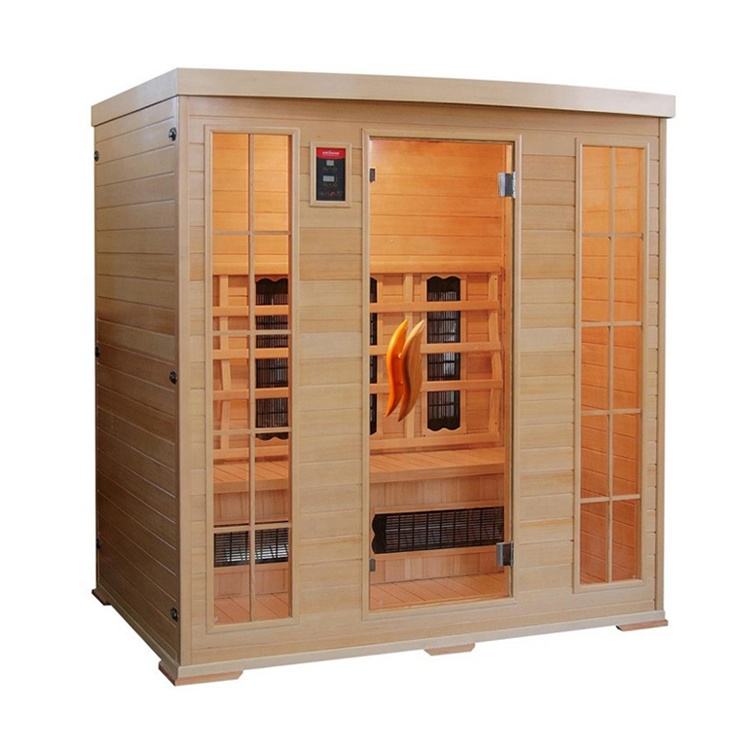
Infrared models operate on a completely different scientific principle. They utilize the electromagnetic spectrum. Instead of a central stone heater, they use flat panels. These panels line the walls of the enclosure. They emit invisible light waves. These include Far, Mid, or Near-infrared radiation. The panels do not waste energy heating the empty air. Instead, the invisible light waves travel through space. They strike your skin.
The radiant heat penetrates human tissue deeply. It excites the water molecules inside your body. This elevates your core temperature from within. Consequently, the surrounding air remains relatively mild. The ambient temperature typically stays between 110°F and 140°F. This creates a strictly dry climate. There is absolutely no steam capability. You cannot pour water on these electrical panels. Doing so would damage the delicate emitters. It would also pose a severe safety hazard.
Your body reacts differently to each environment. Traditional convection heat triggers a rapid physiological shock. The intense environmental heat hits your skin immediately. Your brain senses this extreme external temperature. It triggers a fast, heavy surface sweat. Your eccrine glands pump out moisture to cool your skin. This environment is best for brief, intense sessions. Most users stay inside for 10 to 20 minutes.
Conversely, radiant heat causes a gradual adaptation. The deep tissue penetration slowly raises your internal thermometer. Sweating takes significantly longer to begin. You might sit for ten minutes before noticing moisture. However, once sweating begins, it becomes profuse. The thermal stress builds from the inside out. This gentler onset is ideal for prolonged relaxation. Users comfortably enjoy longer sessions spanning 30 to 45 minutes. You can often read a book. You can even meditate comfortably without feeling overwhelmed.
We must separate medical facts from aggressive marketing. Both heating methods provide excellent cardiovascular benefits. They both elevate your heart rate. They improve peripheral circulation. They aid heavily in muscle recovery. Sitting in high heat mimics moderate steady-state exercise. Your blood vessels dilate. Your heart pumps harder to push blood to your skin. This thermal stress is highly beneficial for longevity.
However, we must critically evaluate "detox" claims. Marketers often tout "superior detoxification" for infrared models. These claims are frequently exaggerated. The human body relies on the liver and kidneys for primary detoxification. Sweating does remove trace impurities. It expels minimal amounts of heavy metals. Yet, sweat is mainly for thermoregulation. The exact heat source does not magically alter human biology. Sweating benefits you regardless of the specific technology used.
Respiratory health is another crucial consideration. Traditional steam can work wonders for sinus congestion. The moist air lubricates dry nasal passages. It loosens mucus effectively. However, the stifling heat can feel claustrophobic. Some individuals find the dense, hot air difficult to breathe. Infrared environments sidestep this issue. The air remains cooler. It stays exceptionally dry. This makes it far easier on sensitive lungs. It is often preferred by those with mild respiratory sensitivities.
Hydrate with electrolytes before entering the enclosure.
Limit your first few sessions to 10 minutes to build tolerance.
Always cool down slowly after exiting the heated environment.
Consult a medical professional if you have cardiovascular conditions.
Installation logistics often dictate your final choice. Traditional models demand significant electrical infrastructure. They carry a heavy electrical load to heat the dense stones. You generally need a dedicated 240V circuit. This usually requires a 30 to 40-amp breaker. You cannot simply plug these units into a wall. You must hire a licensed electrician. They will hardwire the unit directly to your home panel. This requires pulling thick-gauge wire through your walls.
Infrared models feature a much lighter electrical footprint. Many smaller units are incredibly convenient. A standard 1-2 person model often offers a plug-and-play setup. You simply plug it into a standard 120V household outlet. Most require a 15A or 20A circuit. You likely have these outlets in your current living space. This eliminates the need for expensive electrical modifications. You can set it up yourself in a single afternoon.
Location drastically limits your options. Outdoor installations demand robust materials. A traditional wooden sauna cabin thrives outdoors. Builders often construct them in barrel or classic cabin styles. They use thick timber profiles. Popular choices include dense cedar or Nordic hemlock. These woods naturally resist rot and insect damage. They handle drastic outdoor temperature fluctuations seamlessly. They retain internal heat even during freezing winters.
Indoor constraints define radiant heat models. Manufacturers overwhelmingly design them for indoor use only. You usually place them in basements, home gyms, or master bathrooms. They feature thinner wall construction. They also house highly sensitive electronics. An indoor model struggles to retain heat in freezing outdoor climates. The thin walls simply cannot block the cold wind.
Moisture management is the final installation hurdle. Traditional steam usage requires proper room ventilation. If installed indoors, you must manage the escaping humidity. Poor ventilation can cause mold or drywall rot in your home. Infrared units generate absolute zero ambient moisture. You sweat, but you do not create steam clouds. Therefore, they pose zero moisture risk to your indoor drywall. You do not need specialized exhaust fans.
Placing an indoor-rated unit on an uncovered patio.
Using an extension cord for a high-wattage heater.
Failing to provide a level foundation for outdoor wooden cabins.
Forgetting to account for door-swing clearance in tight basements.
Your specific lifestyle should guide your final decision. Consider your heat tolerance and available home infrastructure carefully.
Choose a solid wood option if:
You want the authentic, ritualistic experience of tossing water on hot rocks.
You are installing the unit outdoors in a backyard or garden.
You crave intense, 170°F+ heat and find low temperatures underwhelming.
You have the electrical capacity for 240V system upgrades.
Choose an infrared option if:
You are placing the unit indoors and want a fast, plug-and-play setup.
You prefer a gentler heat that allows you to read or meditate for longer periods.
You require minimal electrical modifications to your home.
You are highly sensitive to extreme ambient heat or heavy humidity.
Feature Comparison Chart
| Feature | Traditional Convection | Infrared Radiant |
|---|---|---|
| Heat Type | Heats the air (Convection) | Heats the body (Radiant) |
| Temperature | 150°F – 195°F | 110°F – 140°F |
| Humidity Level | Variable (Steam possible) | Strictly Dry (No steam) |
| Session Length | 10 – 20 minutes | 30 – 45 minutes |
| Location Suitability | Excellent for Outdoors | Strictly Indoors |
Neither heating style is objectively superior across the board. The optimal choice hinges strictly on your personal heat tolerance. It also depends on your installation location and home infrastructure limits. A traditional setup rewards those seeking intense, authentic steam rituals outdoors. An infrared unit serves those needing mild, convenient indoor relaxation.
You must take immediate practical steps before purchasing. First, assess your home's main electrical panel capacity. Verify if you have room for new 240V breakers. Second, measure your available indoor or outdoor floor space precisely. Finally, determine whether you can tolerate harsh, stifling air or prefer a gentler warmth. Once you finalize these logistics, you can confidently browse specific models.
A: No. Infrared saunas use electrical light panels, not heated stones. Adding water will damage the electronics and create a safety hazard.
A: Infrared saunas are generally ready to use within 15–20 minutes. A traditional wooden sauna cabin requires 45–60 minutes to thoroughly heat the stones and ambient air.
A: Most modern, reputable infrared sauna brands utilize low-EMF or zero-EMF carbon/ceramic heaters to ensure safety. Traditional electric saunas also emit trace EMFs, but it is rarely a practical risk in either type when buying from compliant manufacturers.
A: Generally, no. Unless specifically enclosed in an insulated, weather-proofed shell, standard infrared rooms will struggle to heat up in cold weather and the electronics may fail from outdoor moisture. Solid wood is required for true outdoor durability.


