Views: 0 Author: Site Editor Publish Time: 2026-07-01 Origin: Site
Choosing between a wet and dry wellness space goes beyond personal preference. It dictates your infrastructure layout. It defines your long-term maintenance protocols. You are rapidly closing your project design phase right now. You must finalize hardware specifications before construction starts. Making an uninformed choice often leads to structural damage. It can also cause excessive energy consumption or a compromised user experience.
We built this evidence-based guide to help you navigate these exact challenges. We will provide a thorough architectural and operational comparison. You will discover exactly which system aligns best with your site requirements. Let us explore the core differences closely. This ensures your wellness project succeeds beautifully from day one.
Infrastructure limits choices: A steam room generator requires extensive waterproofing, plumbing, and a dedicated utility space, whereas a sauna heater primarily demands dedicated high-voltage electrical capacity and proper ventilation.
Maintenance realities differ: Steam systems require regular flushing and descaling to prevent mineral buildup; sauna heaters need periodic element checks and stone replacement.
Experiential outcomes: Steam rooms operate at 110–120°F with 100% humidity (focusing on respiratory and skin hydration), while traditional saunas operate at 150–195°F with 10–20% humidity (focusing on dry, intense heat).
Understanding the basic physics behind these systems is crucial. Wet and dry environments require fundamentally different mechanical approaches. They generate heat in entirely unique ways.
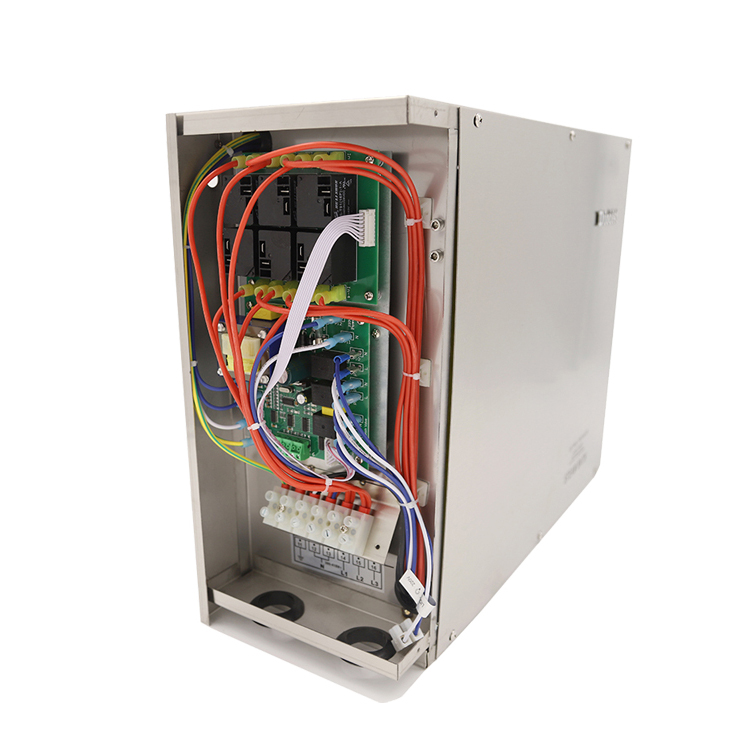
A professional steam bath generator operates entirely outside your bathing envelope. Installers typically place the unit in a nearby closet or utility room. It can sit up to 50 feet away from the shower enclosure.
The unit acts as a localized boiler. It rapidly heats water to produce a continuous flow of hot vapor. This vapor travels through specialized copper or brass plumbing lines. It enters the room through a wall-mounted steam head. This creates a deeply immersive 100% humidity environment.
The entire system requires integration across several components. You must connect the main boiler unit to a digital control panel. You also need an auto-flush valve. This valve empties the tank automatically after every session.
A traditional sauna heater installs directly inside your wooden cabin. You can mount smaller units on the wall. Larger commercial units stand directly on the floor.
These units use heavy-duty electrical elements. The elements sit embedded inside a tray filled with dense stones. We highly recommend using peridotite or vulcanite rocks. These specific minerals absorb massive amounts of thermal energy.
The hot rocks heat the ambient air continuously. This creates natural convection currents throughout the room. The system generates an intensely dry heat. You can create temporary humidity spikes anytime. Simply pour a ladle of fresh water over the hot stones. The industry calls this traditional practice löyly.
Your existing building infrastructure heavily influences your final hardware choice. You must evaluate your site capabilities accurately. Ignoring these physical requirements leads to catastrophic water damage or electrical failures.
Installing a steam room generator demands careful site preparation. Water vapor permeates standard building materials quickly. You must build a highly specialized enclosure.
Plumbing Necessities: The unit requires a dedicated cold water supply line. You also need a standard gravity drain. The system uses this drain for its pressure relief valve. The auto-flush system also purges dirty water through this drain.
Enclosure Mandates: You must completely vapor-proof the entire room. Standard shower waterproofing is never enough. Installers must apply sheet membranes over the ceiling and all walls. The room requires a sloped ceiling. A pitch of two inches per foot prevents boiling water drops from falling on users. You also need a reliable floor drain.
Sizing Complexities: Generator sizing relies on complex mathematics. You cannot simply calculate cubic footage. You must account for your chosen wall materials. Natural stone absorbs immense amounts of heat. You need significantly more electrical power to heat marble compared to simple acrylic walls.
Dry thermal cabins bypass complex plumbing entirely. They rely almost exclusively on robust electrical infrastructure. You must focus on airflow and wire gauges.
Electrical Demands: The equipment requires dedicated 220V or 240V hardwiring. Most residential units pull between 30 and 60 amps. You often need panel upgrades to support this massive electrical draw safely.
Ventilation Rules: Airflow dictates your success. You must follow strict requirements for intake and exhaust vents. Place the intake vent low directly under the heating unit. Place the exhaust vent high on the opposite wall. This ensures proper air exchange. Poor ventilation causes thermal stratification. It also triggers annoying safety shut-offs.
Material Compliance: The cabin environment must remain safe to touch. You cannot use standard hardwoods or plastics. The room must use specialized softwoods. Cedar, hemlock, and Nordic spruce are industry standards. They do not hold thermal energy. They remain comfortable against bare skin at 190°F.
Your hardware choice dictates your weekly maintenance routines. You must understand how these systems age. Proper care extends equipment life by decades.
Energy Consumption Dynamics: We measure energy consumption in kilowatt-hours (kWh). You must compare typical session lengths. Steam generators often run for shorter durations. Most sessions last 20 minutes. However, boiling water draws heavy continuous electrical loads. Conversely, dry cabins require 45 minutes just to preheat. The elements cycle on and off once they reach the target temperature. Both systems require substantial power grids.
Hard Water Impacts: Boiling tap water creates serious scale issues. Calcium carbonate bonds to the internal heating elements. You must install water softeners or in-line filters before the unit. Mineral buildup causes elements to overheat and rupture. You must specify an auto-drain feature. It is a non-negotiable upgrade. It flushes corrosive minerals out of the tank daily.
Stone Degradation Realities: Dry environments face their own physical wear. You must inspect your rocks annually. Constant heating and rapid water cooling cause thermal shock. The stones become brittle over time. They crack and crumble into the element tray. Small stone fragments restrict internal airflow. This suffocates the heating elements. They will prematurely fail if you ignore this maintenance step.
Both environments trigger profound physiological responses. You must align your hardware choice with your specific health goals. We rely on established medical frameworks to evaluate these outcomes.
Wet environments excel at surface-level hydration. The room operates constantly at 100% relative humidity. The actual air temperature stays relatively low. It rarely exceeds 120°F.
This heavy vapor provides excellent mucous membrane hydration. It soothes irritated nasal passages quickly. The moist heat causes rapid pore dilation. This loosens trapped dirt and sebum easily. You will experience immediate respiratory relief. We advise against unverified "toxin sweating" claims. The primary verifiable benefit remains respiratory soothing and epidermal hydration.
Dry cabins push the human body much harder. The temperature regularly exceeds 150°F. The ambient humidity drops below 20%. The body must work aggressively to cool itself.
This intense environment triggers strong cardiovascular responses. Your resting heart rate increases significantly. This mimics moderate aerobic exercise. The dry heat causes massive vasodilation. Your blood vessels widen dramatically. This pumps oxygen-rich blood deep into muscle tissues. Athletes utilize this specific physiological mechanism constantly. It accelerates muscle recovery after heavy training.
User tolerance varies wildly between these two environments. You must consider user sensitivities carefully. Users sensitive to extreme heat often tolerate wet environments much better. The absolute temperature remains safely under 120°F.
Conversely, users experiencing respiratory sensitivities might struggle. Breathing dense water vapor feels claustrophobic to some individuals. They strongly prefer the crisp air of a dry cabin. You must evaluate the primary users before building.
You now understand the mechanical and physiological differences. You must apply this knowledge directly to your building site. Use the following frameworks to finalize your choice.
You are executing a full bathroom gut-remodel. You can easily integrate heavy waterproofing behind the new tile.
You possess an accessible utility space located within 50 feet of the shower enclosure.
You have easy access to existing cold water lines and gravity drains.
The primary user goal centers on respiratory relief and fast pre-shower integration.
You have unused dry space available. Basements, garages, or backyard concrete pads work perfectly for modular wooden cabins.
Plumbing access is either severely limited or completely impossible.
You can easily upgrade your electrical panel to support an extra 40 amps.
The primary user goal focuses on intense athletic recovery or traditional thermal bathing rituals.
Never install uncertified high-voltage equipment. Always look for UL-listed or CSA-certified badges on your hardware. These marks guarantee rigorous safety testing. You must ensure your local municipal codes allow for the required electrical draw. Always pull the proper permits before altering structural plumbing or electrical grids.
| System Feature | Steam Bath Environment | Traditional Sauna Cabin |
|---|---|---|
| Ideal Location | Primary bathroom remodel | Basement, garage, or outdoors |
| Climate Profile | 110-120°F at 100% humidity | 150-195°F at 10-20% humidity |
| Core Requirement | Vapor barrier and floor drain | Dedicated 220V/240V circuit |
| Routine Maintenance | Filter changes and tank descaling | Rock inspection and replacement |
Your final hardware choice relies heavily on site realities. Infrastructure capabilities dictate 70% of your decision. Personal wellness preferences dictate the remaining 30%. You cannot force a wet environment into a space lacking plumbing. You cannot install high-heat elements without robust electrical panels.
Your next step requires immediate action. Grab a tape measure. Calculate your exact room volume by multiplying length, width, and height. Document your existing wall materials. Finally, consult your licensed electrician or plumber. Show them your volume calculations. They will confirm your site capacity before you finalize any hardware purchase.
A: No. Combining them violates basic material physics and safety codes. Wood cabins rot rapidly in constant 100% humidity. Conversely, tile and glass enclosures become dangerously hot under the intense dry heat of a traditional unit. You must keep these environments completely separate.
A: You start by calculating the basic room volume. You multiply length by width by height. You then add adjustment percentages based on materials. Natural stone requires a 100% volume penalty. Exterior walls and glass doors require further percentage increases to ensure adequate heating power.
A: A dry cabin installs much faster. You can assemble a pre-fabricated wooden room in just a few hours. Your electrician then wires the unit. A custom wet enclosure requires weeks. You must coordinate framers, plumbers, waterproofers, and tile setters sequentially.


