Views: 0 Author: Site Editor Publish Time: 2026-07-14 Origin: Site
A failing unit in a commercial setting does more than ruin a post-workout sweat. It invites negative reviews, spikes liability risks, and creates endless maintenance headaches. Gym owners and spa operators face immense pressure to keep facilities running smoothly. Unfortunately, many prioritize visual appeal over continuous-duty reliability. They often ignore crucial factors like energy efficiency and strict safety compliance. We created this objective framework to change your approach entirely. You will discover how to properly evaluate, shortlist, and procure the exact heating engine for your facility. Our guide relies exclusively on engineering facts and operational realities. You will learn to match equipment accurately to your unique cubic footage and daily traffic. Stop guessing about electrical requirements. Start building a safer, more reliable experience for your guests today.
Residential heaters used in commercial spaces void warranties and create fire hazards due to inadequate duty cycles.
The optimal commercial sauna heater is determined by a combination of cubic footage, electrical infrastructure (usually 3-phase power), and expected daily operating hours.
Building Management System (BMS) integration and external digital controls are critical for mitigating unauthorized user tampering in high-traffic wellness space equipment setups.
Facility managers frequently attempt to cut corners during initial construction. They mistakenly install residential units in high-traffic public spaces. This decision inevitably leads to catastrophic equipment failure.
Engineering differences between residential and commercial models are profound. Engineers build residential units for one or two hours of daily use. They expect these units to cool down completely between sessions. In stark contrast, manufacturers engineer commercial units for continuous operation. A busy health club demands 12 to 24 hours of non-stop heating. Residential contactors simply cannot handle this extreme duty cycle. The internal relays will fuse together or burn out rapidly under continuous loads.
Public environments subject equipment to intense thermal cycling. Guests constantly toss heavy amounts of water over the stones. This creates extreme temperature shocks. Standard stainless steel elements warp and split under this abuse. Commercial units counter this fatigue using heavy-gauge Incoloy heating elements. Incoloy is a superalloy designed specifically to resist high-temperature oxidation and aggressive water quenching. You must verify the element material before installation.
Installing a standard sauna heater in a gym or spa immediately voids the manufacturer’s warranty. Brands track commercial purchases carefully. If a residential unit fails in a business setting, you bear 100% of the replacement liability. Furthermore, using unrated equipment exposes the facility to immense legal and insurance risks if a fire occurs.
| Specification Feature | Residential Models | Commercial Models |
|---|---|---|
| Daily Duty Cycle | 1 to 2 hours | 12 to 24 hours continuously |
| Heating Elements | Standard stainless steel | Heavy-duty Incoloy superalloy |
| Control Accessibility | Built-in dials or local panels | External, tamper-proof BMS panels |
| Rock Capacity | 20 to 50 lbs | 100 to 200+ lbs |
Choosing the correct unit requires understanding thermodynamics and user behavior. You cannot rely on guesswork when outfitting a professional space.
The standard baseline rule dictates roughly 1 kilowatt (kW) of power for every 45 to 50 cubic feet of room volume. However, commercial realities demand significant adjustments. Modern designs often feature heavy glass doors or uninsulated stone walls. These materials bleed heat rapidly. You must calculate an additional 20% to 30% power requirement for uninsulated surfaces. Rapid heat recovery is equally vital. Guests open the door constantly in public facilities. An underpowered unit will never recover the lost heat, leaving bathers shivering in lukewarm air.
Use the following baseline power sizing chart to estimate your needs:
| Room Volume (Cubic Feet) | Standard Power Need (kW) | Adjusted Need for Glass/Tile (kW) |
|---|---|---|
| 150 - 250 | 4.5 kW | 6.0 kW |
| 250 - 350 | 6.0 kW | 8.0 kW |
| 350 - 425 | 8.0 kW | 10.5 kW |
| 425 - 600 | 10.5 kW | 12.0 kW to 14.4 kW |
Stone capacity directly influences steam generation, traditionally known as löyly. Small residential units hold around 50 lbs of rocks. They produce a harsh, stinging heat. Commercial units hold 150 lbs or more. This massive thermal mass creates a softer, more enveloping steam cloud. Larger rock beds also serve a critical protective function. They absorb the water before it reaches the bare heating elements. This prevents rapid element oxidation and extends the life of the internal hardware considerably.
Never install localized dials inside a public cabin. Guests will tamper with the temperature settings aggressively. They will push the equipment past safe limits. You must utilize commercial-grade external control panels. Keep these interfaces at the reception desk or securely locked in a utility room. Modern facilities require Building Management System (BMS) compatibility. BMS integration allows for automated scheduling, remote pre-heating, and precise energy monitoring across multiple zones.
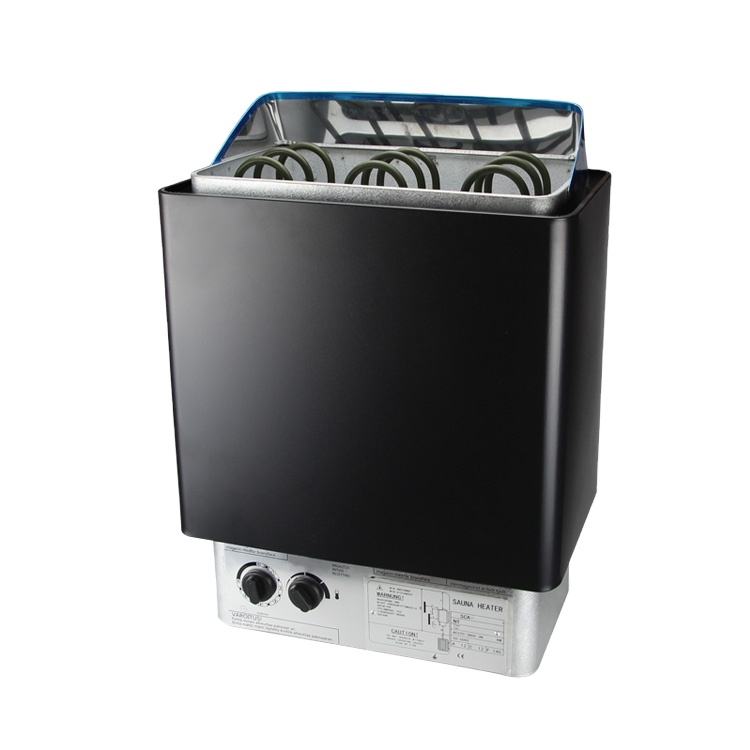
No single heating unit serves every business model perfectly. You must match the engineering profile to your specific operational goals.
Public health clubs face the highest abuse rates. Members pour entire water bottles over the rocks. Doors open every three minutes.
Priorities: Maximum physical durability, 14+ hour daily run times, tamper-proof controls, and fast heat recovery.
Ideal Specs: Choose massive floor-standing electric heaters. Look for heavy-duty steel rock cages and specialized delayed-start capabilities. The chassis must withstand physical impacts and continuous moisture exposure.
High-end guests expect flawless aesthetics and a deeply relaxing atmosphere. Harsh temperatures ruin the luxury experience.
Priorities: Seamless aesthetic integration, precise digital temperature control, and soft steam generation.
Ideal Specs: Opt for tall tower-style units. These hold massive rock capacities from top to bottom, delivering sustained, gentle heat. Alternatively, install hidden behind-bench commercial units. These models maximize bench seating and eliminate burn risks entirely.
Private wellness suites operate on strict appointment schedules. Efficiency and rapid turnover dictate profitability.
Priorities: Rapid thermal cycling for individual back-to-back bookings, a compact physical footprint, and seamless integration with other smart devices.
Ideal Specs: Wall-mounted commercial units work best here. Pair them with smart-app remote triggering. This allows staff to adjust daily schedules dynamically without entering the suite.
Power infrastructure often dictates your final equipment choices. Upgrading electrical panels mid-project causes massive delays. Always audit your building's power supply before finalizing a purchase.
Commercial spaces generally utilize 3-phase (208V) power systems. High-kW commercial heaters draw massive amounts of electricity. They almost exclusively require a 3-phase connection to distribute the electrical load safely. Conversely, residential buildings use single-phase (240V) power. If your commercial building only offers single-phase power, you face significant challenges. You will either pay heavily to upgrade the electrical service or settle for multiple low-kW units. Connecting a 208V unit to a 240V line will damage the contactors permanently.
Proper airflow is non-negotiable. Stagnant air stratifies rapidly. The ceiling becomes dangerously hot while the floor remains cold. You must install active mechanical ventilation. Proper intake vents bring fresh air under the unit. Exhaust vents pull stale air out from the opposite wall. Without mechanical ventilation, the internal sensors will trip the high-limit switch prematurely. This shuts down the entire room during peak operating hours. Proper airflow prevents sensor malfunction and improves bather respiration.
Inspectors will shut down non-compliant facilities immediately. You must adhere to mandatory safety benchmarks.
Certifications: Look for strict UL, ETL, or CSA safety listings specifically rated for commercial use.
Clearances: Strictly follow manufacturer clearance-to-combustible requirements. Do not place wooden benches too close to the steel chassis.
Guardrails: Install sturdy safety guardrails or heat shields. This mitigates public liability and prevents accidental guest burns.
Evaluating equipment requires looking beyond the initial installation phase. True reliability depends on how easily you can maintain the unit over a decade of heavy use. Smart operators evaluate the long-term support ecosystem before making a decision.
You must establish a realistic maintenance schedule. Heating elements and sauna stones are strictly consumable items. They will fail eventually. Track the frequency of element replacement required by different brands. High-grade Incoloy elements last longer, reducing your labor downtime. Stones crack and crumble under intense heat. You must replace them regularly to maintain proper airflow. If you ignore broken stones, the elements will suffocate, overheat, and snap.
Properly sizing the equipment prevents over-working. An undersized unit runs continuously at maximum output. It drains massive amounts of electricity and burns out its components rapidly. An appropriately sized unit reaches the target temperature quickly. It then cycles off and on efficiently to maintain the room. This smart cycling significantly reduces your monthly utility draw. Always factor local insulation levels into your sizing math to maximize this efficiency.
Brand selection matters immensely when parts break. You cannot afford weeks of revenue-losing downtime while waiting for international shipping. Choose a brand with domestic warehouses and accessible replacement parts. Verify their customer support responsiveness before purchasing. A dedicated technical support hotline proves invaluable when an electrician is standing on-site trying to troubleshoot a tripped sensor.
Follow a clear framework before requesting your final quote. First, hire a licensed electrician to audit the facility's electrical panel. Confirm your available phase power and amperage strictly. Second, measure the exact cubic footage of the room. Calculate any material loss from glass walls or uninsulated tile. Finally, consult directly with specialized vendors. Share your daily operating hours and bather capacity expectations clearly.
There is no single universally perfect unit for every business. The right choice depends entirely on your specific cubic footage, existing electrical capacity, and anticipated daily traffic volume. You must match the engineering profile strictly to your operational reality.
We strongly recommend prioritizing continuous-duty engineering and robust commercial warranties over sleek aesthetic designs. A beautiful unit holds no value if it fails during your busiest weekend rush. Heavy-duty contactors, Incoloy elements, and massive rock capacities define true professional reliability.
Take proactive action today. Prompt your facility manager to consult with a commercial wellness equipment specialist or a master electrician. Verify your phase-power limitations and room dimensions carefully before finalizing any purchase orders. Build your professional space on a foundation of unyielding reliability.
A: The stainless steel chassis and external housing typically last 5 to 10 years or more with proper care. However, the internal heating elements are consumable parts. They endure extreme thermal stress and require replacement every 1 to 3 years. This timeline depends heavily on your daily operating hours, bather volume, and water chemistry.
A: No. Using residential equipment in any commercial setting immediately voids the manufacturer warranty. It also creates severe potential code violations. Residential models are engineered for a strict 1 to 2 hour duty cycle. Exceeding this limit causes rapid element burnout, relay failure, and serious fire hazards.
A: 208V represents standard 3-phase power used in commercial buildings to handle heavy electrical loads efficiently. 240V is typical single-phase power found in residential homes. Connecting equipment to the wrong voltage severely damages the internal contactors or results in critically inadequate heating performance. Always verify your panel.
A: We recommend conducting visual inspections annually and replacing the stones entirely every 12 to 18 months. Continuous thermal shock causes stones to crack, crumble, and settle densely. This debris blocks crucial airflow inside the chassis. Restricted airflow causes the internal elements to overheat rapidly and fail prematurely.


