Views: 0 Author: Site Editor Publish Time: 2026-07-18 Origin: Site
Demand for cold exposure is skyrocketing among fitness clients. Studio owners face mounting pressure to deliver premium recovery options. They must do this without sacrificing valuable floor space or their brand's carefully curated aesthetic.
This creates a difficult operational dilemma. Cheap inflatable or plastic tubs look highly unprofessional in commercial settings. They degrade quickly under heavy use. Conversely, massive custom plunge builds demand heavy renovations. They also require steep capital investments.
Enter the commercial-grade small ice bath. It serves as a highly strategic middle ground for boutique gyms. You can perfectly balance upscale aesthetics, a compact footprint, and long-lasting operational durability. This guide reveals how natural wood transforms cold plunging into a profitable studio amenity.
Premium Positioning: Wood finishes elevate the perceived value of cold plunging, aligning with high-end spa recovery equipment standards.
Optimized Footprint: Vertical or compact tub profiles maximize revenue per square foot in boutique fitness spaces.
Thermal Efficiency: Natural wood acts as an excellent insulator, reducing the operational load on commercial water chillers.
Commercial Viability: Success hinges on commercial-grade filtration (UV/Ozone) and rigorous moisture-proofing of the wood to handle back-to-back member use.
Gyms are evolving rapidly. Members no longer want just a place to lift weights. They seek comprehensive wellness destinations. Your choice of equipment materials heavily influences their perception. A beautifully crafted wooden ice bath signals luxury. It instantly transitions your facility from a standard workout zone to an elite health club.
We see this transition clearly when integrating new amenities. Wood aesthetics effortlessly complement existing spa recovery equipment. Picture a dimly lit recovery room. Cedar paneling, warm ambient lighting, and glass-front saunas create a cohesive vibe. Utilitarian acrylic or PVC pods disrupt this harmony. They look like clinical medical devices rather than premium wellness tools.
Consider the psychological impact on your members. Biophilic design incorporates natural elements into indoor environments. This approach significantly reduces clinical intimidation factors. First-time cold plungers often feel nervous. A sterile, plastic tub amplifies their anxiety. Natural wood feels inviting, grounding, and inherently safe. It encourages hesitant members to finally take the plunge.
However, you must exercise caution. Not all wood survives commercial environments. You cannot place a basic residential tub in a busy gym. You need thermally modified woods. Cedar and Thermo-Ayous are excellent choices. They naturally resist warping, rotting, and fungal growth. High-humidity gym environments destroy untreated timber within months. Always verify the wood grading before you purchase.
Floor space dictates your studio's profitability. Every square foot must generate revenue. The compact nature of modern plunge systems offers a massive advantage. You can install them in retrofitted utility rooms, unused corners, or existing locker areas. They require surprisingly little dedicated space.
Studio owners typically choose between two main structural profiles. Upright models and horizontal tubs serve different spatial needs. We highly recommend evaluating your layout before deciding.
Upright or barrel models squeeze into tight corners easily. They mimic a natural, seated submersion posture. This forces a smaller water volume. A smaller volume means faster chilling times. Horizontal tubs require a longer dedicated wall space. However, they easily accommodate taller athletes. They allow users to recline fully, which some find more relaxing.
| Feature | Upright / Barrel Profile | Horizontal / Tub Profile |
|---|---|---|
| Best For | Micro-gyms and tight corners | Spacious recovery suites |
| Water Volume | Low (faster chilling) | High (slower chilling) |
| User Posture | Seated / Squatting | Reclined / Laying flat |
| Footprint | Roughly 3x3 feet | Roughly 6x3 feet |
Installation requires strict adherence to clearance and ventilation rules. You cannot simply push a unit against a wall. The chiller needs adequate airflow to function efficiently. Blocked exhaust vents cause immediate overheating.
Follow this practical clearance checklist for your installation:
Leave at least 18 inches of clearance around the chiller vents.
Verify floor load-bearing capacities. Water and an adult user easily exceed 800 pounds.
Ensure proximity to a dedicated GFCI outlet to prevent electrical hazards.
Locate the unit near accessible floor drains for routine maintenance.
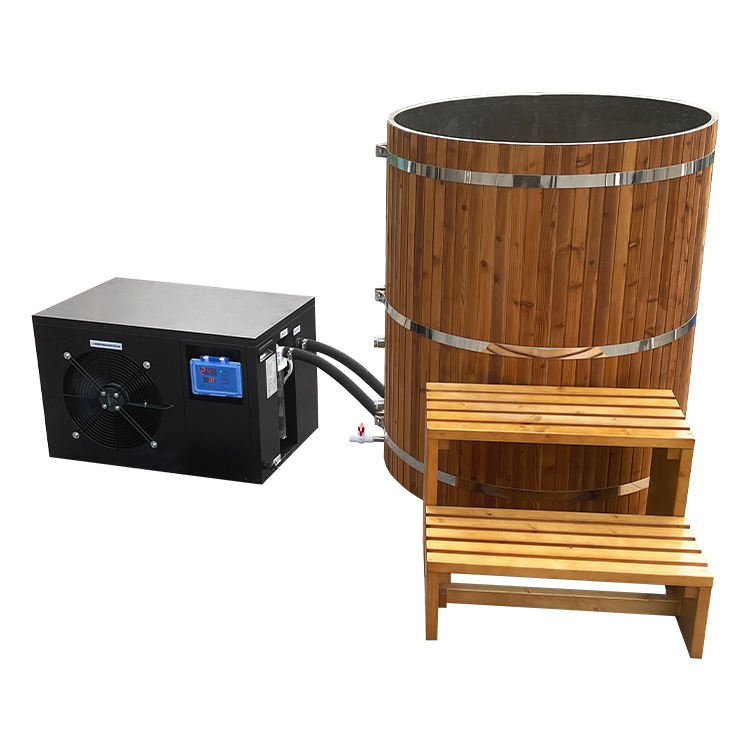
Insulation economics play a crucial role in commercial settings. Natural wood possesses an incredibly high R-value. It traps cold air inside the unit effectively. Manufacturers pair this wooden exterior with a stainless steel or acrylic interior liner. This dual-layer system prevents condensation from pooling on your gym floor. Slippery floors create massive liability risks. Wood eliminates this sweating issue entirely.
High-traffic studios demand robust chiller specifications. You cannot rely on residential chiller units. They will fail under commercial stress. A busy gym might see ten or more plunges per hour. Each warm body introduces heat into the water. The chiller must strip this heat away instantly.
A 0.5 to 1 HP commercial chiller is strictly necessary. It maintains a stable 39°F–45°F (4°C–7°C) temperature during peak operating hours. Undersized chillers run continuously without ever reaching the target temperature. They burn out their compressors rapidly. Investing in horsepower upfront saves you from catastrophic equipment failures later.
Energy consumption concerns many facility managers. Fortunately, proper insulation keeps energy cost projections reasonable. You can easily estimate monthly costs based on your studio hours. A well-insulated wooden unit running a 1 HP chiller typically consumes similar energy to a standard commercial refrigerator. Keeping the ambient room temperature cool further reduces the chiller's workload.
Sanitation is entirely non-negotiable in multi-user environments. Back-to-back plunging introduces sweat, dead skin cells, and body oils into the water. You must utilize multi-stage commercial filtration systems. A basic residential pump will not keep your members safe.
Continuous water circulation prevents stagnation. You need 20-micron pleated filters to capture fine physical debris. Beyond physical filtration, you must deploy active sanitation. Ozone generators or UV light systems destroy bacteria and viruses instantly. They neutralize contaminants before they can multiply.
Facility staff need crystal-clear maintenance routines. Implementing a Standard Operating Procedure (SOP) ensures consistent water quality.
Daily Duties: Staff must skim the surface for visible debris. They should check the water chemistry and ensure the chiller maintains the correct temperature.
Weekly Duties: Staff must wipe down the external wood surfaces. They should apply appropriate non-abrasive, moisture-repellent sealants to protect the finish.
Monthly Duties: Maintenance teams must replace the 20-micron filters. They must also perform a full system flush and deep clean the internal liner.
Risk mitigation defines successful gym operations. Mold and rot present significant threats. You must emphasize internal water containment. A commercial wooden plunge must feature a completely sealed waterproof internal liner. Bare wood holding water is an immediate health code violation. It guarantees structural failure within months. The wood should only act as an insulating and aesthetic shell.
A premium recovery amenity transforms your studio's profitability. Gyms generate significant returns on investment through strategic monetization models. You simply need to position the amenity correctly to your existing member base.
Many successful gyms implement tiered memberships. You can add unlimited plunge access exclusively to your VIP or Premium tiers. Members happily upgrade their monthly subscriptions for this perk. This strategy directly increases your predictable recurring revenue.
Pay-per-session models also work exceptionally well. You can offer drop-in rates or sell punch cards for recovery days. Athletes often visit specifically for recovery when they aren't training. A $20 drop-in fee quickly adds up. It can cover the equipment's monthly energy and maintenance costs within a few days.
Retention metrics offer the most substantial long-term value. Premium amenities reduce overall member churn. When members can lift, do cardio, and recover in one building, they stay loyal. They stop visiting competing spas. Your studio becomes their exclusive wellness hub.
When evaluating units, use a strict shortlisting criteria. Demand a commercial-use warranty. Many residential warranties void immediately if installed in a gym. Verify the ready availability of replacement filters. Ensure the manufacturer offers a strong customer support SLA (Service Level Agreement). Downtime costs you money and frustrates your members.
A compact wooden plunge represents a highly viable investment for boutique studios. It instantly upgrades your facility's aesthetic appeal while commanding premium membership rates. However, this holds true only if you purchase a unit equipped with a heavy-duty commercial chiller and strict, multi-stage hygiene systems.
Take these actionable next steps today:
Audit your facility’s floor plan immediately. Identify potential dead zones or underutilized corners.
Inspect your chosen location for necessary plumbing, drainage, and ventilation access.
Calculate your potential daily usage volume. Determine if you need a 0.5 HP or 1 HP chiller.
Survey your members to gauge their interest in a premium recovery tier.
A: Most local health codes mandate floor drains for commercial water features. Even if not strictly required, drains make routine water changes effortless. You should also install spill trays underneath the unit. Trays catch accidental overflow from displacement, protecting your gym floors from structural water damage.
A: Commercial setups with ozone or UV sanitation significantly extend water life. If you enforce strict mandatory pre-plunge shower rules, you only need full water changes every three to four weeks. High-volume studios might require bi-weekly changes. Always monitor water clarity and chemistry daily.
A: Yes, provided you purchase thermally modified wood. Manufacturers must treat the exterior with marine-grade sealants. Furthermore, your recovery room requires excellent HVAC ventilation. Proper airflow prevents ambient moisture from settling on the wood, effectively eliminating the risk of exterior rot or degradation over time.


