Views: 0 Author: Site Editor Publish Time: 2026-07-06 Origin: Site
Commercial wellness facilities subject their saunas to intense operational stress every single day. High-use environments run heaters for twelve or more hours daily. They endure constant thermal shock, heavy humidity, and exposure to corrosive sweat and salts. Standard heaters simply cannot survive these brutal conditions. They quickly corrode, warp, or fail prematurely. This rapid degradation leads to sudden facility downtime. It frustrates your paying guests and creates logistical nightmares for your staff. You need equipment built explicitly to endure this punishment. The metallurgical properties of SS304 make it the definitive industry baseline. It delivers commercial-grade reliability under extreme daily abuse. This guide provides facility managers and contractors a clear, evidence-based framework. You will learn how to evaluate an SS304 sauna stove against strict operational requirements. We explore material science, structural integrity, and long-term performance metrics deeply. Our insights ensure you make an informed procurement decision.
Corrosion Resistance: SS304’s specific chromium-nickel alloy composition prevents oxidation in high-moisture, high-temperature environments.
Lifecycle ROI: The higher initial procurement cost is offset by significantly lower replacement rates and reduced maintenance downtime.
Structural Integrity: Superior tensile strength at extreme temperatures prevents casing warpage, protecting internal heating elements.
Risk Mitigation: Quality stainless steel sauna room equipment ensures compliance with commercial safety and hygiene standards.
Inferior metals struggle constantly in commercial settings. Rapid heating and cooling cycles create intense physical tolls on the equipment. The steel expands rapidly when heated to operating temperatures. It then contracts quickly once the cycle ends and it cools down. This relentless thermal cycling causes severe metal fatigue over time. Micro-fractures begin to develop along the inner casing walls. Eventually, the structural frame begins warping under the stress. This warping compromises the internal components completely.
The micro-climate inside a commercial cabin accelerates this destruction drastically. Guests frequently throw water over hot rocks to create traditional löyly steam. This process introduces massive amounts of airborne moisture into the cabin. Human sweat adds aggressive salt compounds into the equation. Users often pour essential oils onto the rocks. These oils leave acidic residues on the hot metal surfaces. Together, these elements form a highly corrosive, hostile environment. Mild steel rapidly degrades here. Even basic stainless grades struggle to survive this onslaught.
Heater failures disrupt your daily business operations severely. You must pay expensive emergency repair fees to specialized technicians. Your staff might need to refund angry members who expected a functional spa. Consistent breakdowns severely damage the reputation of your wellness center. Reliable equipment prevents these costly headaches from occurring. Choosing inferior materials always backfires in high-use environments. You need heavy-duty hardware capable of resisting constant attacks. Facilities must prioritize durability over upfront savings.
Understanding the underlying science helps you select better equipment for your facility. SS304 refers to a specific grade of austenitic stainless steel. It contains exactly 18% chromium and 8% nickel. This precise 18/8 composition defines its exceptional durability. The chromium reacts instantly upon exposure to oxygen in the air. It forms a microscopic, passive oxide layer across the metal surface. This layer acts as an invisible shield against moisture and aggressive chemicals. If someone scratches the surface accidentally, this brilliant oxide layer self-heals immediately. It re-oxidizes to protect the vulnerable steel beneath.
Facility managers must compare different metals before finalizing a major purchasing decision. Mild steel, SS430, and SS304 behave very differently under intense heat.
| Material Type | Composition Trait | Performance in Commercial Saunas |
|---|---|---|
| Galvanized / Mild Steel | Zinc-coated basic steel | Rusts rapidly once the protective coating burns off. Fails quickly under humidity. |
| SS430 Stainless Steel | High chromium, zero nickel | Cheaper alternative. Highly prone to stress-corrosion cracking in humid heat. |
| SS304 Stainless Steel | 18% chromium, 8% nickel | Optimal balance of workability, tensile strength, and robust corrosion resistance. |
A high-quality stainless steel sauna stove relies on this exact chemical balance. It provides maximum longevity for standard spa environments. However, we must acknowledge specific boundary conditions in wellness design. SS304 excels in standard high-use facilities. Yet, some wellness centers now incorporate heavy salt therapy into their cabins. Halotherapy sessions release massive amounts of airborne salt particles. Salt aggressively attacks the microscopic oxide layer we mentioned earlier. If your facility runs intense halotherapy sessions daily, you should upgrade. Grade SS316 offers added molybdenum for extreme salt resistance. Otherwise, SS304 remains the absolute industry standard.
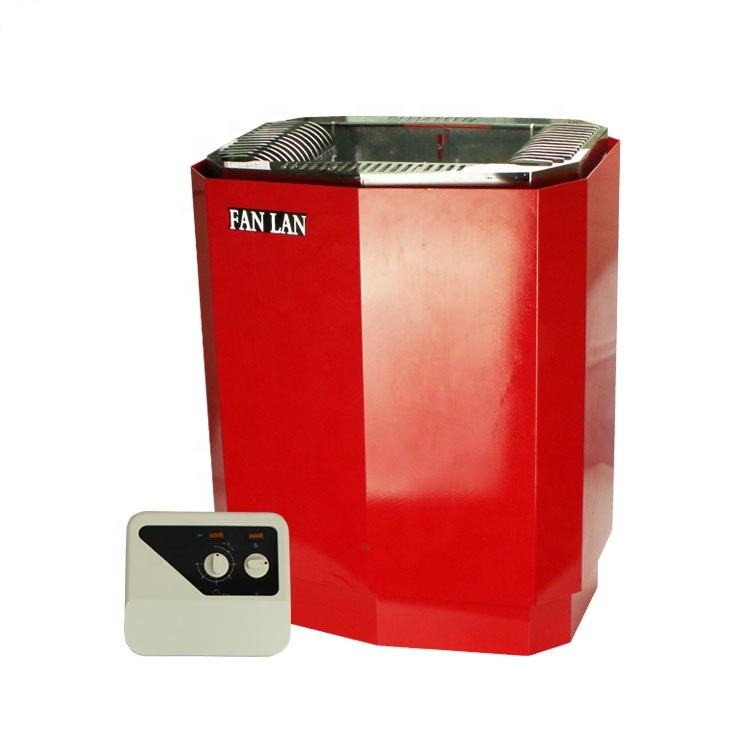
You must evaluate the physical construction of the heater carefully. Not all stainless units offer the same longevity or performance. Material thickness plays a highly critical role in durability. Thicker steel prevents unwanted deformation under heavy stone loads. Stones expand and shift constantly during intense heating cycles. They exert immense outward pressure against the metal basket. Instruct your procurement team to verify the metal gauge closely. You must check both the outer casing and the inner rock basket. Thin metals will eventually cave inward under this immense pressure.
Welding quality directly determines the moisture resistance of the unit. Look closely at how the manufacturer joins the individual panels together.
TIG welding provides superior strength over standard spot welding techniques.
Seamless joints block external moisture ingress entirely from the inside.
Fully welded corners protect internal electrical components from stray water splashes.
Next, examine the heating element protection mechanisms closely. Incoloy heating elements generate the intense heat needed for the cabin. They are highly fragile components. The stove design must physically separate these delicate elements. They should never bear the crushing weight of the rocks directly. Smart commercial designs use robust protective grates. This physical separation prevents direct thermal water shock. It also extends the lifespan of the heating elements significantly.
Finally, calculate the stone capacity to heat output ratio. An adequately sized SS304 rock basket holds substantial thermal mass. The stones absorb and retain the heat energy effectively over time. This retention reduces the constant workload on the internal elements. They do not have to cycle on and off as frequently. A larger stone capacity ultimately saves massive amounts of energy. It provides a much softer, more consistent steam experience for your users.
Commercial environments require incredibly strict safety protocols. External surface temperatures present a major liability for facility owners. Guests occasionally brush against the hot equipment by accident. High-quality multi-layer SS304 casing designs manage these external temperatures effectively. The engineered air gaps between the steel layers dissipate internal heat. This clever engineering keeps the outer shell relatively cooler to the touch. It protects careless users from severe accidental burns. Proper clearance zones around the heater remain necessary. However, the advanced casing helps mitigate risks significantly.
Hygiene directly impacts the overall guest experience. The non-porous nature of SS304 naturally resists dangerous bacterial growth. Sweat and essential oils cannot penetrate the sleek metal surface. This characteristic makes the heater significantly easier to sanitize daily. Routine facility cleaning becomes faster and much more effective. Your staff simply wipes the smooth metal down quickly. It leaves no lingering odors or sticky residues behind. Properly maintained sauna room equipment always looks highly professional and inviting.
Never ignore official certification standards when specifying hardware. Electrical safety is absolutely paramount in high-humidity commercial cabins. Remind your buyers to look for official validation marks before purchasing.
Check the compliance plate for CE marks indicating European manufacturing standards.
Look for UL listings if operating your facility within the United States.
Verify CSA certifications for strict Canadian facility electrical compliance.
These prominent marks validate the electrical safety of the entire assembly. They prove the manufacturer passed rigorous third-party safety testing.
Installing heavy commercial units requires careful upfront planning. You must establish proper electrical prerequisites before finalizing your purchasing decision. Commercial heaters pull significant electrical amperage during their heating cycles. They almost always require dedicated 3-phase power connections to operate. Standard residential wiring simply cannot support them safely or legally. You also need comprehensive ventilation planning for the space. Intake vents must supply fresh air directly under the heavy heater. Exhaust vents pull the rising heat efficiently across the entire room. Proper airflow maximizes the stove's efficiency and improves user comfort.
You must implement a strict preventative maintenance schedule immediately. Regular care prevents catastrophic failures and unexpected downtime.
Monthly Tasks:
Inspect the internal stone compartment thoroughly. You must rearrange the sauna stones carefully and methodically. Over time, they settle downward and block internal airflow. Proper arrangement ensures cold air passes freely around the glowing elements.
Quarterly Tasks:
Remove and inspect every single stone in the basket. Discard any broken, crumbling, or degraded rocks immediately. Broken fragments trap extreme heat tightly against the fragile incoloy elements. This trapped heat causes them to burn out prematurely. You must also wipe down the SS304 casing completely. Use safe, mild cleaners to remove calcium and mineral buildup effectively.
Follow a logical shortlisting framework when buying new equipment. It helps you navigate the confusing options efficiently.
Calculate the exact required kilowatts based on the total cubic volume of your room.
Verify the specific SS304 material gauge and detailed welding specifications.
Assess the warranty terms specifically covering intense commercial use.
Following these structured steps guarantees you buy a highly capable, durable unit.
Specifying the right equipment acts as a critical protective measure. It is not merely an aesthetic choice for your new wellness facility. It directly impacts daily operations, safety, and overall guest satisfaction. An SS304 frame rigorously resists corrosion, warping, and premature mechanical failure. It handles constant, brutal thermal cycling with absolute ease. Reliable gear keeps your facility doors open and your clients incredibly happy.
You should take immediate steps to upgrade your strict procurement process. Request detailed material spec sheets from your current suppliers immediately. Always review the exact warranty limitations for commercial use before signing anything. Finally, consult directly with a certified commercial sauna designer. They will help you finalize the exact sizing and complex electrical requirements easily.
A: A high-quality commercial unit typically lasts between five and ten years. However, this benchmark depends heavily on your daily maintenance habits. Strict stone maintenance and excellent water quality extend its lifespan dramatically. Neglecting regular inspections or using hard water will degrade the delicate components much faster.
A: Both fuel types benefit greatly from SS304 durability. Wood-burning models offer an authentic, off-grid experience without any electrical dependency. However, electric models provide much easier, automated temperature control for commercial operators. Your choice depends heavily on whether you value off-grid independence or automated consistency in your facility.
A: You should always use a safe, non-abrasive cleaning method. Harsh chemicals can quickly damage the protective passive chromium layer. Apply a mild acid, such as diluted white vinegar, directly to the metal casing. Let it sit briefly, then wipe it away smoothly with a soft microfiber cloth. This safely removes the minerals.


