
Views: 0 Author: Site Editor Publish Time: 2026-06-29 Origin: Site


The demand for commercial cold water therapy is surging globally. Premium fitness centers are constantly looking for new ways to stand out. A beautifully crafted wooden ice bath offers unmatched aesthetic appeal. It provides a luxurious focal point for high-end facility branding.
However, facility managers face a significant gap between design desires and commercial realities. Natural wood units look incredibly high-end. Yet, they require rigorous evaluation before installation. You must assess durability, hygiene compliance, and chiller integration. Commercial environments experience high client turnover. Your equipment must withstand relentless daily use.
This guide provides recovery center managers and gym owners an objective framework. We will help you evaluate and shortlist the best cold plunge systems. You will learn how to balance visual appeal, operational efficiency, and commercial performance. Make informed decisions to elevate your wellness space.
Aesthetic vs. Function: A wooden ice bath tub offers superior biophilic design and natural insulation, but commercial viability depends heavily on the interior lining (stainless steel, acrylic, or epoxy-sealed).
Throughput dictates chiller power: High-traffic facilities require commercial-grade chillers (typically 0.8 HP to 1 HP+) to maintain stable temperatures during back-to-back sessions.
Sanitation is paramount: Commercial compliance requires robust filtration (Ozone, UV, and 20-micron filters) to prevent bacterial buildup in a high-turnover environment.
Total Cost of Ownership (TCO): Budgeting must include upfront unit costs, specialized wood maintenance, electricity overhead, and routine filter replacements.
Investing in wellness infrastructure requires clear strategic alignment. You must understand how this equipment fits your broader business model. Commercial gyms operate differently than private home spaces.
Assess your current membership tiers carefully. The premium look of a natural wood exterior appeals to affluent demographics. It aligns perfectly with high-ticket recovery packages. A visually striking ice bath tub justifies premium pricing. Clients expect an elevated experience when they pay top dollar. Cheap inflatable models often dilute a luxury brand image. Wood signals permanence, quality, and holistic wellness. Evaluate if your target market values these biophilic design elements. If you sell VIP recovery memberships, wood aesthetics offer an excellent return on investment.
Wood is not just visually appealing. It serves a highly functional purpose. Dense woods offer exceptional natural thermal regulation. This inherent insulation creates a barrier against ambient room temperatures. It reduces the ongoing energy load on the cooling system. Thin acrylic shells or PVC inflatable models lose cold rapidly. Your chiller works overtime to compensate for this thermal loss. Natural wood maintains steady temperatures for longer periods. This passive insulation ultimately saves electricity during peak operational hours.
You must evaluate structural load limits before purchasing. Water is extremely heavy. It weighs roughly 8.34 pounds per gallon. Fully loaded wooden tubs weigh over a thousand pounds. Commercial chillers add even more weight to the footprint. These loads present significant floor-weight considerations. Upper-level indoor facilities require structural engineer sign-offs. Ground-floor concrete slabs usually handle these loads effortlessly. Always measure door frames, hallways, and freight elevators beforehand. Pre-assembled wooden cabinets often cannot easily be dismantled for tight corners.
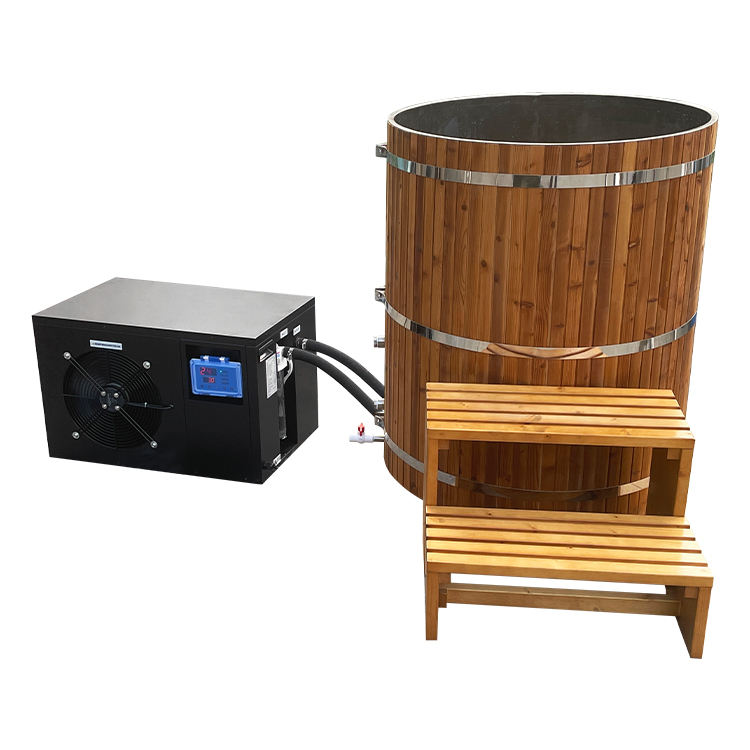
You cannot judge a commercial unit purely by its exterior. The underlying specifications determine how long the unit survives in a gym. Let us break down the materials required for high-volume use.
Not all lumber suits wet, commercial environments. Facility owners must select materials engineered for extreme moisture tolerance. The wrong wood rots, warps, or splinters within months. We recommend choosing from three ideal commercial wood types.
| Wood Species | Natural Resistance | Moisture Tolerance | Commercial Suitability |
|---|---|---|---|
| Western Red Cedar | Highly rot-resistant | Excellent | Top tier. Natural oils repel insects and decay. |
| Teak | Very dense grain | Superior | Premium choice. Often used in marine applications. |
| Thermowood | Heat-treated stability | High | Cost-effective alternative. Resists warping effectively. |
Exterior finishing requirements dictate your maintenance schedule. Some woods feature UV-resistant marine-grade varnishes. These create a hard, glossy shell against water splashes. However, varnishes eventually peel and require tedious sanding to reapply. Natural oil finishes offer an alternative. Oils penetrate deep into the wood grain. They do not blister or peel over time. Gym staff can easily wipe on a fresh coat of oil quarterly. Consider your facility's maintenance bandwidth when choosing a finish.
The interior liner separates the water from the structural frame. It is the most critical component for commercial viability.
Traditional Unlined Wood: This style mimics traditional Japanese soaking tubs. It offers immense aesthetic appeal. However, it poses severe hygiene risks for B2B use. Unlined wood is porous. It absorbs body oils, sweat, and bacteria. Biofilms build up quickly inside the grain. They are impossible to sanitize fully. Unlined wood also presents severe leakage risks over time. We highly discourage unlined tubs for high-volume gym environments.
Stainless Steel Inserts: This represents the gold standard for commercial facilities. Stainless steel boasts excellent thermal conductivity. It chills the water faster. The metal surface is inherently antibacterial and non-porous. Staff can wipe it down aggressively daily. It withstands heavy physical impact from clients entering and exiting. It guarantees zero water ingress into the surrounding wooden frame.
Acrylic/Fiberglass Inserts: These liners provide a cost-effective alternative. They are completely seamless and easy to clean. Dirt and oils wipe off the smooth surface effortlessly. They protect the outer wooden cabinet from moisture perfectly. While less thermally conductive than steel, acrylic remains highly durable. It suits most mid-tier commercial recovery centers perfectly.
A beautiful design means nothing if the water runs warm. Commercial throughput demands immense cooling power. You must prepare for back-to-back client bookings.
You must map chiller horsepower (HP) directly to your expected client volume. Standard residential chillers range from 0.25 to 0.5 HP. They work perfectly for a single family. They will fail catastrophically during peak gym hours. Twenty clients plunge back-to-back on a Saturday morning. Each client transfers 98-degree body heat into the small body of water. A residential compressor runs continuously to compensate. It quickly overheats and burns out. High-traffic facilities require commercial-grade chillers. Look for minimum ratings of 0.8 HP to 1.5 HP. These robust compressors handle continuous thermal loads safely.
Gym operators must establish acceptable temperature bounce-back windows. Clients expect the water to hit 39°F (4°C) precisely. They complain if the water feels moderately cool instead of freezing. A strong commercial chiller guarantees rapid temperature recovery. It pulls the heat out of the water fast. You want a system returning to target temperatures within 10 minutes between clients. Ask manufacturers for specific data on recovery times. Do not accept vague promises about cooling speed. Demand exact bounce-back metrics under continuous use scenarios.
You face a choice regarding equipment footprint. Integrated systems hide the chiller inside the wooden cabinet. This creates a sleek, minimalist aesthetic. However, integrated units are notoriously harder to service. Technicians must dismantle wooden panels to reach broken components. External chiller boxes sit outside the tub. They require more floor space. They sometimes disrupt the biophilic design. Yet, external units offer massive advantages. You can swap them out instantly if they break. They also ventilate heat better. Weigh footprint and noise levels against ease of maintenance.
Operating a public water feature involves legal and ethical obligations. You must prioritize member safety above all else. Proper maintenance prevents costly shutdowns and reputational damage.
Local health departments heavily regulate public water features. You must detail the necessity of multi-stage filtration to your staff. Gyms encounter heavy biological loads daily. Sweat, dead skin, and lotions enter the water constantly. Standardize the expectation for combined sterilization methods.
Ozone Generators: Ozone is a powerful oxidizer. It breaks down organic matter instantly upon contact.
UV-C Sterilization: Ultraviolet light disrupts bacterial DNA. It prevents pathogens from replicating in the water.
20-Micron Filters: Physical pleated filters catch visible debris, hair, and larger particulates.
Combined Ozone and UV-C sterilization meets stringent health department guidelines. Do not rely on basic paper filters alone. Robust sanitation prevents foul odors and cloudy water.
Natural materials require deliberate care. Outline a strict workflow for your gym staff. Neglect leads to rapid aesthetic deterioration.
Wipe down exterior condensation every evening. Standing water causes wood to soften.
Check all wooden panels for expansion or contraction monthly. Seasonal humidity changes affect natural wood joints.
Apply marine-grade wood oil quarterly. This replenishes the protective barrier against ambient moisture.
Inspect internal caulking around the liner. Replace any degrading silicone to prevent hidden leaks.
Indoor facilities face unique splash zone challenges. Clients displace water when they submerge. They drip water when they exit. You need clear strategies for managing these splash zones. Install required floor drainage near the unit. Gravity drains prevent water from pooling under the wooden cabinet. Place non-slip, water-resistant matting around the tub. This protects clients from slipping on wet tile. It also protects your primary flooring from continuous water exposure. Build proper ventilation to manage ambient room humidity.
Procurement requires careful financial and operational planning. You must evaluate vendors based on long-term viability, not just aesthetics.
Break down the upfront purchase price first. Then map out your monthly operational costs. Commercial setups consume significant power. A 1 HP chiller running constantly spikes your electricity bill. Budget for routine filter cartridges. You must change paper filters every few weeks. Factor in water replacement costs and specialized wood sealants. Understanding these recurring expenses prevents budget shock. It allows you to price your recovery memberships accurately.
Never settle for consumer-grade warranties. Residential warranties void immediately if deployed in a commercial gym. You must specify the need for B2B Service Level Agreements (SLAs). Time is money in the fitness industry. A broken plunge tub costs you daily revenue. Demand expedited parts shipping clauses. Secure dedicated commercial support lines. You need technicians who understand gym operational hours. Your vendor should act as a business partner, not just a retail seller.
Use these key questions to challenge manufacturers before signing contracts.
What is the continuous run-time rating of the compressor?
Is the wood sustainably sourced and kiln-dried to prevent warping?
Do you offer an extended commercial SLA covering parts and labor?
Can the filtration system integrate with external drainage lines?
What are the exact decibel ratings of the chiller fan?
Choosing a wooden ice bath represents a commitment to premium experiences. It requires equally premium operational discipline from your team. A beautiful facility attracts members, but flawless execution retains them. Keep these action-oriented next steps in mind.
Prioritize the interior lining material over exterior aesthetics to ensure hygiene.
Over-spec your chiller capacity to handle back-to-back weekend rush hours.
Implement rigid daily sanitation workflows to meet health department standards.
Select wood types specifically engineered for high moisture commercial environments.
Encourage your management team to weigh all operational factors. Look beyond the initial visual impact. A well-maintained, powerful cold plunge system drives immense value. It elevates your brand and builds deep client loyalty.
A: Turnover rates depend heavily on user volume and filtration quality. Facilities utilizing commercial-grade Ozone, UV-C, and 20-micron filtration typically replace water every 2 to 4 weeks. High-volume gyms should test water chemistry daily. Optimal sanitization extends water life, but regular full draining is mandatory for commercial hygiene compliance.
A: Yes, but it requires careful placement. Direct sunlight degrades natural wood finishes rapidly. Extreme weather fluctuations cause wood to expand and contract, risking structural integrity. Outdoor installations demand UV-resistant sealants and custom all-weather covers. Placing the unit under a shaded canopy greatly extends the lifespan of the wood.
A: Never use harsh industrial bleach or ammonia on natural wood. These chemicals strip the protective oils and discolor the grain. We highly recommend using pH-neutral, non-abrasive cleaners specifically formulated for wood surfaces. Wipe the exterior gently to preserve the natural finish while maintaining a sanitary environment.
A: Commercial chillers generate average decibel ratings between 50 and 65 dB. This sounds similar to a standard conversation or an active refrigerator. To mitigate acoustic issues in quiet wellness zones, consider installing external chillers in a separate utility closet or using sound-dampening acoustic panels around the equipment.


